Hardscape Materials: Safe and Unsafe Rocks
Updated June 2026
You can spend weeks dialing in your water parameters, only to watch them creep upward after adding a few “decorative” rocks from the garden or a pet store bin. The culprit is almost always carbonate mineral content reacting with the slightly acidic water you worked so hard to create. Knowing which rocks are aquarium safe, and why, saves you from chasing chemistry problems that have a simple hardscape explanation.
Why the Rock in Your Tank Is Changing Your Water
Most aquarium water problems trace back to one thing: rocks that contain calcium carbonate or magnesium carbonate slowly dissolving under acidic conditions. The lower your pH, the faster the dissolution happens. This releases calcium and magnesium ions into the water, raising both general hardness (GH) and carbonate hardness (KH), which in turn buffers the water toward a higher pH.
For a cichlid or goldfish tank, that process is actually welcome. For a blackwater setup, an aquascaping for beginners project targeting pH 6.0, or a shrimp colony that needs stable soft water, it is a slow disaster.
The problem compounds because carbonate dissolution accelerates as pH drops. If you add driftwood or botanicals to push pH down, the acidic water attacks carbonate rocks harder, which then buffers pH back up. You end up in a chemistry tug-of-war, and neither side wins cleanly.
The Vinegar Test: How to Check Any Rock Before It Goes In
The Vinegar Test (step by step)
- Pick up the dry rock and bring it to a sink or outside. Do not test over the tank.
- Drop a small amount of white vinegar, roughly a teaspoon, directly onto the surface of the rock.
- Watch for 30 to 60 seconds. Any fizzing, bubbling, or audible hissing is a positive result.
- A positive result means the rock contains carbonate minerals. It will alter your water chemistry.
- A rock that shows zero reaction is unlikely to affect pH or hardness significantly.
- Test multiple spots on the rock, including edges and undersides. Some rocks have carbonate veins or mineral pockets that vary by surface.
Vinegar is dilute acetic acid. Carbonate minerals react with acids to produce carbon dioxide, which is the fizzing you see. The stronger the fizz, the higher the carbonate content. A faint occasional bubble is borderline; a vigorous foam means leave it out.
The test is not perfect. Very slow-dissolving carbonates may show minimal reaction to vinegar but still shift water parameters over months. When in doubt, test the rock in a separate container of RO or distilled water over two weeks and measure pH and KH before and after.
Common Aquascaping Rocks: Safe, Caution, or Avoid
| Rock Type | Aquarium Safe? | pH / GH Effect | Notes |
|---|---|---|---|
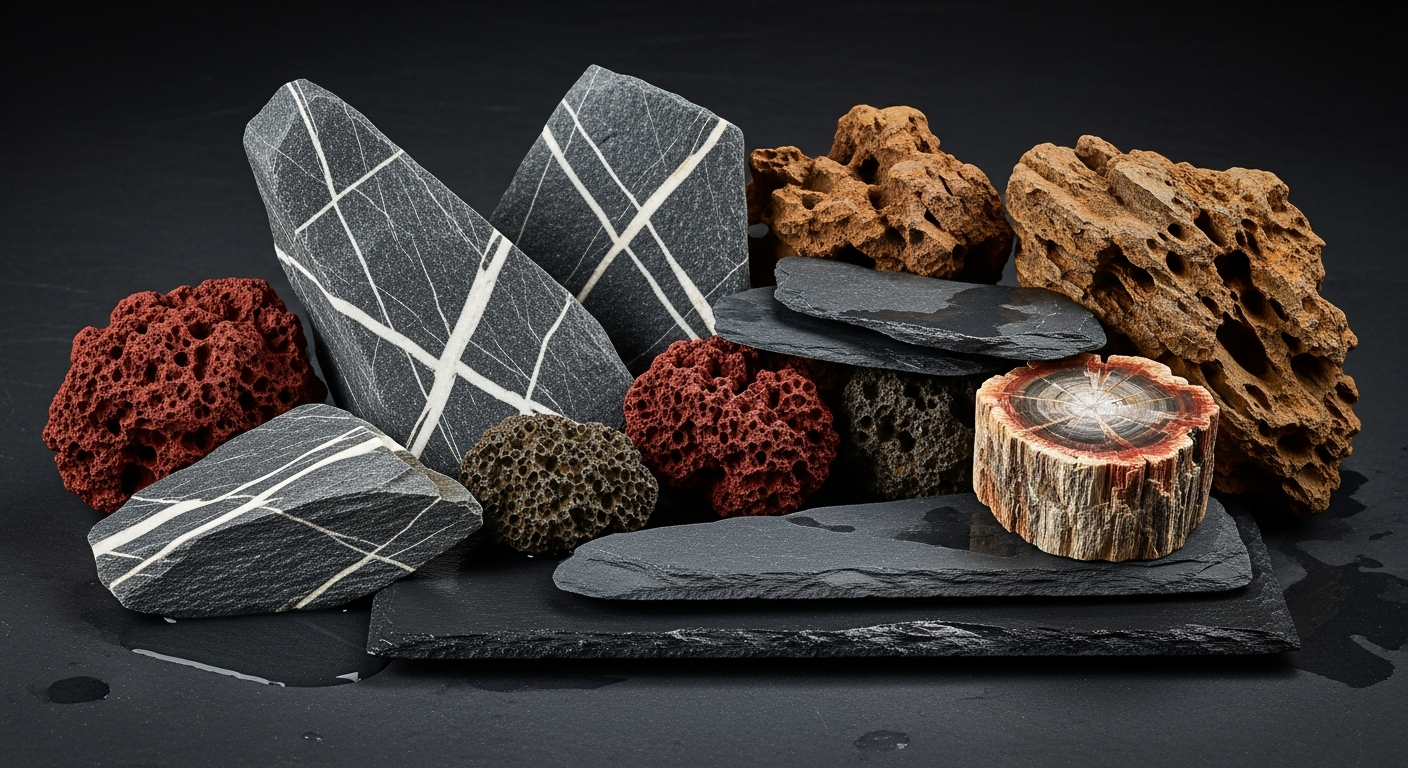
| Lava Rock | Yes | Neutral | Porous surface colonizes beneficial bacteria well. Excellent for shrimp tanks. No carbonate content. |
| Dragon Stone (Ohko) | Yes, with caveat | Slight pH rise possible | Mostly inert but some batches contain trace carbonates. Run a vinegar test on each piece. Highly popular in Iwagumi layouts. |
| Slate | Yes | Neutral | Pure slate is silica-based and inert. Avoid slate with visible white mineral veins, which can indicate carbonate intrusions. |
| Petrified Wood | Yes | Neutral to slight softening | Silicified organic material. Genuinely inert in most cases. Works well in blackwater and soft-water setups. |
| Seiryu Stone | Caution | Raises pH and GH / KH | Contains calcium carbonate. Visually stunning but unsuitable for soft-water or blackwater tanks. Fine for hard-water iwagumi if you buffer accordingly. |
| Limestone | Avoid for soft-water | Significant pH and KH increase | Pure carbonate rock. Will drive pH toward 7.5 to 8.5 depending on tank volume and rock mass. Only appropriate for African cichlid and hard-water biotopes. |
The Seiryu Stone Situation
Seiryu stone has become one of the most photographed rocks in aquascaping. The jagged grey peaks, the white mineral veins running through dark stone, the way it photographs in an Iwagumi layout are genuinely hard to beat. The problem is chemistry.
Seiryu contains significant calcium carbonate. In a tank with pH below 7.0, that carbonate dissolves continuously, raising both KH and GH over time. Most hobbyists who add seiryu to a soft-water planted tank notice pH creeping from 6.5 toward 7.2 over the first month, even with CO2 injection and tannins from botanicals.
If your target is pH 7.0 to 7.8 and you are keeping species adapted to harder water, seiryu is a perfectly valid choice. If you are building a blackwater biotope, running RO water, or keeping soft-water shrimp, choose a different stone. No amount of peat or driftwood will fully offset continuous carbonate dissolution from a large piece of seiryu in a small tank.
Cleaning and Sterilizing Rocks Before They Go In
Even rocks that pass the vinegar test need preparation. Wild-collected rocks carry bacteria, algae spores, parasites, and potential chemical residues from soil runoff or pesticides. Store-bought “aquarium” rocks are usually safer but not sterile.
Scrub the rock thoroughly with a stiff brush under running water. No soap, no detergent: soap residue strips the protective slime coat from fish and kills shrimp. A dedicated old toothbrush handles crevices well.
For deeper sterilization, boil rocks that are small enough to fit in a pot. Keep a rolling boil for 10 to 20 minutes. Do not boil rocks with visible internal fractures or any rock you are unsure about, as rapid thermal expansion can cause cracking or shattering. Let boiled rocks cool completely before placing them in the tank.
For large rocks that cannot be boiled, soak them in a 1:20 bleach-to-water solution for 24 hours, then rinse thoroughly and soak in dechlorinated water for another 24 hours before use. Smell the rock before adding it: if you can detect any bleach scent, extend the rinse period.
Rocks and Shrimp: A Specific Concern
Shrimp are the most chemistry-sensitive animals most planted tank hobbyists keep. A mineral leaching from an unknown rock that causes no visible problems in a fish tank can trigger failed molts, white ring of death, or reproductive shutdown in a shrimp colony.
The mineral concern cuts both directions. Neocaridina shrimp care targets a GH of around 6 to 8 and a KH of 2 to 4. A carbonate rock slowly pushing GH to 14 over two months creates osmotic stress that accumulates over each molting cycle. You will not see immediate deaths; you will see thinning of the colony over time and attribute it to something else.
On the other side, metallic rocks, rocks with visible rust-colored oxidation, or anything with a metallic sheen can leach heavy metals. Even trace amounts of copper are lethal to invertebrates. Never add a rock to a shrimp tank without knowing its mineral composition.
Lava rock is the safest hardscape choice for shrimp. Its porous surface also colonizes biofilm, which shrimp graze on constantly. Petrified wood and plain slate are the next-best options.
Metallic and Dyed Rocks: Hard No
Any rock with a metallic finish, painted surface, or artificial dye is a risk you do not need to take. The dye or coating leaches over time as water chemistry and UV light degrade the surface. Some coatings contain heavy metals in the pigment itself.
The real trap here is craft stores and home decor shops. Decorative stones sold for vases or floral arrangements often have resin coatings that look aquarium-safe but are not rated for long-term water submersion. The coating breaks down over weeks and can foul the water column with compounds that are acutely toxic to invertebrates and harmful to fish.
If the rock was not sold specifically for aquarium use, or has any surface treatment other than natural stone, run a vinegar test and a 2-week water parameter soak before trusting it. When there is any doubt, leave it out.
Rocks in Blackwater Tanks
Blackwater aquariums already have a chemistry challenge: you are deliberately lowering pH and KH using tannins from driftwood and botanicals. Any carbonate hardness in the rock is fighting directly against that goal. The best driftwood for blackwater setups releases tannins steadily, but even significant tannin load cannot outpace a large seiryu stone in a 20-gallon tank.
For blackwater hardscape, slate and petrified wood are the practical choices. Both are visually interesting, inert, and will not fight your water chemistry. Lava rock works too, though its darker, chunkier texture fits some blackwater aesthetics better than others.
Test your parameters weekly for the first month after adding any new rock to a blackwater setup, even one that passed the vinegar test. That two-week water soak test is worth doing before hardscape goes in at all.
Common Questions About Aquarium Rock Safety
Does dragon stone raise pH?
Most dragon stone (ohko stone) is largely inert and does not raise pH noticeably. Some batches do contain trace carbonate minerals, so the vinegar test is worth running on each individual piece before use. If it fizzes even slightly, factor that into your water chemistry plan or use it only in tanks where a slight pH increase is acceptable.
Can I use rocks from outside in my aquarium?
Yes, but with preparation. Wild-collected rocks need the vinegar test first to screen for carbonate content, then a thorough scrub and sterilization cycle (boiling or bleach soak followed by full rinse). Avoid rocks collected near roads due to salt and chemical runoff, rocks with metallic veins or rust staining, and anything with a painted or coated surface.
Why is my pH rising in my planted tank?
Three common causes: carbonate rocks dissolving in slightly acidic water, CO2 fluctuations where CO2 drops at night and pH rises, and substrate leaching if you used a carbonate-containing substrate. Isolate the rock first by running a vinegar test on each piece and doing a 2-week water parameter soak test on any suspect stone. If removing the rocks stabilizes pH, you have your answer.
Is seiryu stone safe for shrimp?
It depends on the shrimp species. Seiryu stone raises GH and KH over time due to its calcium carbonate content. Neocaridina shrimp are moderately adaptable to higher hardness and may tolerate a seiryu-heavy tank if parameters remain consistent. Caridina shrimp, which need soft, acidic water, are not compatible with seiryu in most setups. For any shrimp tank, test parameters weekly for the first month after adding seiryu to confirm stability.
What is the safest rock for a shrimp tank?
Lava rock is the top pick. It is completely inert, releases nothing, and its porous surface supports the biofilm colonies that shrimp actively graze on. Slate is the next-best option. Both pass the vinegar test with zero reaction and have been used successfully in soft-water shrimp setups without any measurable effect on pH, GH, or KH.
Marcus Chen
Aquarist & Founder, TanninLab
Marcus has been keeping planted tanks for 14 years. He tests every product recommendation in his own tanks and publishes the raw data.
Last updated: June 2026