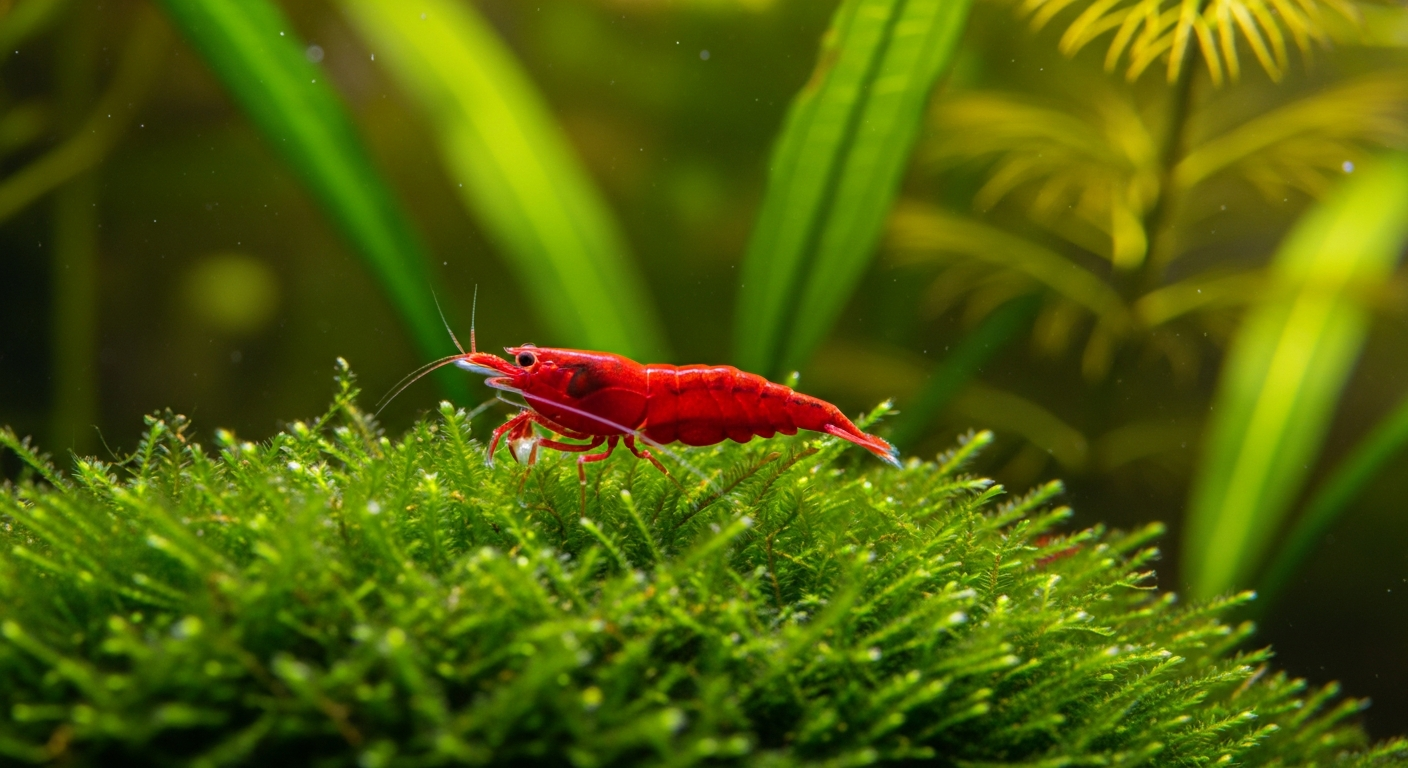
Neocaridina Shrimp Care and Water Parameters
Updated June 2026
Neocaridina davidi is about as forgiving as freshwater invertebrates get, but “forgiving” is not a synonym for “careless.” These shrimp crash fast when ammonia spikes or parameters swing. Set the tank up properly before you buy a single animal, and you will not lose a colony to beginner mistakes.
This guide covers everything from tank size and cycling through exact water chemistry, drip acclimation, feeding schedules, molting signals, and the breeding cycle that makes a healthy colony genuinely self-sustaining.
What Are Neocaridina Shrimp and Which Colors Can You Keep
Neocaridina davidi is a single species bred selectively into a wide range of color morphs. The most common is the Red Cherry Shrimp, ranging from pale pink entry-grade animals to the deep, opaque scarlet of “Painted Fire Red” specimens. Other established morphs include Yellow Neocaridina (sometimes sold as Yellow Fire), Blue Velvet, Orange Pumpkin, Chocolate, and Black Rose.
All of these are the same species. Cross-breeding different color morphs produces offspring that revert toward the wild brown-olive ancestor, so keep only one morph per tank if color integrity matters to you. That is not a rule about survival, just genetics.
Wild-type Neocaridina davidi originates from freshwater streams in Taiwan and mainland China, which explains the moderate, buffered water chemistry the species performs best in. They are not blackwater animals. They want neutral to slightly alkaline conditions, not the soft acidic water that Caridina shrimp need. If you are comparing the two before committing, our Caridina vs Neocaridina breakdown covers the tradeoffs in detail.
Tank Size, Filtration, and Setup
Five gallons is the practical minimum, but ten gallons gives you a much larger buffer against parameter swings and allows a colony to grow to a visible, active population of 50–100 animals. Shrimp are tiny, but they generate bioload, eat algae, and need stable chemistry, all of which become easier to manage in a larger volume.
Filtration is non-negotiable, and the right choice here matters. Standard hang-on-back filters and canisters create strong intakes that kill juvenile shrimp and shrimplets. The solution is a pre-filter sponge over any intake, or better yet, a dedicated sponge filter sized for shrimp tanks. Sponge filters provide surface area for the beneficial bacteria your colony depends on, produce gentle flow, and give shrimp a constant grazing surface.
Substrate choice affects water chemistry. Inert substrates like pool filter sand or plain aquarium gravel will not buffer pH at all, which works well if your tap water already falls in the target range. Active substrates like ADA Amazonia buffer pH downward, which is better suited to Caridina species. For Neocaridina, stick with inert substrate unless you have a specific reason to adjust pH from the substrate itself.
Add cover in the form of moss, fine-leafed plants, and any surface that shrimp can hide behind during molts. Java Moss, Christmas Moss, Bucephalandra, and floating plants like frogbit all work. Dense planting also grows the biofilm and microorganisms that baby shrimp feed on exclusively in their first weeks.
Cycling Before You Add Shrimp
A shrimp tank needs a complete nitrogen cycle before any animals go in. That means running the filter with an ammonia source for four to six weeks until ammonia reads zero, nitrite reads zero, and nitrate is measurable but low (under 20 ppm).
Shrimp are more sensitive to ammonia than most fish. A cycled tank that crashes mid-colony because you overfed or lost a plant is a common beginner failure mode. Test with a liquid test kit, not strip tests, before you buy shrimp. If ammonia registers anything above zero on the day you plan to add animals, wait.
Seeding with an established sponge filter or filter media from a running tank cuts cycle time significantly, sometimes to two weeks or less.
Neocaridina Water Parameters: Exact Target Ranges
Parameter stability matters more than hitting precise midpoints. A tank sitting at pH 7.6 consistently is safer than one swinging between 7.0 and 7.8 weekly. That said, here are the consensus target ranges the hobby has converged on after years of collective experience.
| Parameter | Minimum | Ideal Range | Maximum | Notes |
|---|---|---|---|---|
| pH | 6.8 | 7.0 – 7.6 | 8.0 | Avoid sustained values above 8.0 |
| GH (General Hardness) | 4 dGH | 6 – 8 dGH | 12 dGH | Calcium and magnesium for shell health |
| KH (Carbonate Hardness) | 2 dKH | 2 – 5 dKH | 8 dKH | Buffers pH; too high limits CO2 penetration |
| TDS (Total Dissolved Solids) | 100 ppm | 150 – 250 ppm | 350 ppm | Monitor with a TDS pen; rises as water evaporates |
| Temperature | 65°F (18°C) | 68 – 76°F (20 – 24.5°C) | 80°F (27°C) | Higher temps increase metabolism and breeding rate but shorten lifespan |
| Ammonia | 0 ppm at all times | Any reading is an emergency | ||
| Nitrite | 0 ppm at all times | Fatal to shrimp even at low levels | ||
| Nitrate | 0 ppm | Under 20 ppm | 40 ppm | Above 40 ppm causes stress and reproductive slowdown |
Tap water tip: Most municipal tap water in North America falls between pH 7.0–7.8 and GH 5–10, which puts it squarely in Neocaridina range. Run your tap through a TDS pen and GH/KH test kit before buying remineralizer or pH adjusters. Many keepers can use conditioned tap water directly, with no modification required.
How to Acclimate Neocaridina Shrimp (Drip Method)
Never dump shrimp from a bag directly into your tank. The parameter difference between the seller’s water and yours, even when both fall within acceptable ranges, can send shrimp into shock. Drip acclimation is the standard and it works.
Float the sealed bag in your tank for 15 minutes to equalize temperature. Then open the bag, pour shrimp and water into a small container, and set up a slow drip from your tank using airline tubing tied into a loose knot to control flow rate. You are targeting roughly one drop per second.
Over 60 to 90 minutes, your tank water gradually replaces the seller’s water. When the volume in the container has doubled, the shrimp are acclimated. Use a net to transfer them into the tank. Discard the acclimation water rather than adding it, since it may carry pathogens or medication residue.
Expect shrimp to hide for the first 24 to 48 hours after introduction. This is normal stress behavior, not a sign that something is wrong.
Feeding: What, How Much, and How Often
A planted tank produces biofilm and algae constantly, which covers much of a shrimp colony’s daily nutrition. Supplemental feeding fills the gaps and provides the mineral-dense nutrition that drives breeding and healthy molts.
Feed every one to two days, not daily. Overfeeding is the fastest way to foul water chemistry and grow harmful bacterial blooms. Whatever goes uneaten after two to three hours should come out.
Rotate food types to cover the nutritional bases shrimp need. Blanched vegetables, specifically zucchini, spinach, and cucumber, provide plant matter and minerals. Specialty shrimp foods, leaves like Indian Almond (catappa), and powdered biofilm foods round out the diet. Protein-heavy foods like bloodworm can be offered occasionally but should not be a staple. The full breakdown of what actually drives colony health is in our best shrimp food guide, which covers specific brands and rotation schedules.
Shrimplets, the juveniles that appear after eggs hatch, are too small to eat most pellets. They graze on biofilm and bacterial film on surfaces. A tank with healthy plant mass and some botanical matter on the substrate, like a catappa leaf or two, provides exactly what they need without any intervention from you.
Molting: What’s Normal and When to Worry
Shrimp grow by shedding their exoskeleton, a process called molting. During a molt, a shrimp is completely soft and vulnerable for several hours. This is when most deaths happen, either from predation or from a failed molt.
A healthy molt happens cleanly and quickly. You will find an empty, translucent shell on the substrate, and the shrimp will look slightly smaller and paler for a day before hardening back up. Leave the shell in the tank for a day or two; shrimp will eat it to reclaim minerals.
A failed molt, where the shrimp cannot exit its old shell or dies trying, usually signals a mineral deficiency, specifically calcium or magnesium. Low GH is the most common culprit. If you are seeing frequent failed molts, test GH and raise it to the mid-range using a shrimp-specific remineralizer. Problems with failed molts also appear in newly added shrimp adjusting to a new tank, so do not panic after the first one. For a detailed walkthrough of the specific failure modes and fixes, see our guide on shrimp molting problems.
Female shrimp molt roughly 24 hours before becoming receptive to breeding. If you see males swarming frantically around the tank and chasing a specific female, she has just molted and released pheromones. This behavior, called a “swarm,” is completely normal and a sign that your colony is healthy and ready to breed.
Breeding Neocaridina Shrimp
Given stable parameters and regular feeding, Neocaridina shrimp breed without any effort on your part. A female carries 20–40 eggs under her tail for approximately 25–30 days at 72°F. She fans the eggs constantly with her swimmerets to keep them oxygenated. These eggs are visible as a green or yellow cluster beneath the saddle area of her back before fertilization, and as a tighter cluster under the abdomen afterward.
Shrimplets hatch as fully formed miniature shrimp, not larvae. They are 1–2 mm long and immediately begin foraging. The primary threat to juveniles is suction from a standard filter intake, which is why a sponge filter or intake guard is mandatory in a breeding colony.
Population grows exponentially once a colony establishes. A tank of 10 shrimp can become 100 in four to six months at breeding temperatures. If the colony is outgrowing the tank, thin it by selling or trading with local fish stores or hobbyist groups.
Plants, Botanicals, and the Shrimp Environment
Neocaridina shrimp are not blackwater animals, but they benefit from botanical matter in the tank. A single Indian Almond leaf (Terminalia catappa) on the substrate provides tannins that have mild antifungal and antibacterial properties, creates grazing surface area from the moment it starts breaking down, and gives juvenile shrimp shelter. Replace it every three to four weeks as it dissolves.
Unlike Caridina setups where heavy tannin addition lowers pH intentionally, a Neocaridina tank only needs light botanical use. One or two leaves at a time is enough. The goal is biofilm production and environmental enrichment, not a pH shift.
Dense planting benefits the colony in three specific ways: it oxygenates the water through photosynthesis, it grows surface biofilm for grazing, and it provides cover that keeps shrimp behaving naturally rather than hiding constantly from perceived threat. Java Moss in particular is almost universally recommended for shrimp tanks because its fine, intertwining structure traps microfood particles and gives shrimplets a survival advantage in the first weeks of life. If you are new to planted tanks, the aquascaping for beginners guide covers plant selection and placement without assuming prior experience.
The Most Common Neocaridina Mistakes
The fastest way to lose a colony is adding shrimp to an uncycled tank. Ammonia kills shrimp within hours. If you have not confirmed zero ammonia and zero nitrite with a liquid kit, the tank is not ready.
The second most common failure is using copper-containing medications or plant fertilizers in a shrimp tank. Copper is acutely toxic to all crustaceans at even very low concentrations. Read every product label before it goes near a shrimp tank.
Large water changes with untreated tap water cause pH and temperature swings that trigger mass molting. Keep water changes to 10–20% per week, use dechlorinator, and match the temperature of replacement water to the tank before adding it.
Keeping incompatible tank mates is the third major issue. Any fish that fits a shrimp in its mouth will eat one. Suitable tank mates for Neocaridina include small, non-predatory species like Otocinclus, Pygmy Corydoras, and small nano fish like Chili Rasboras. Most other community fish, including bettas and gouramis, will prey on adult shrimp and devastate the juvenile population.
Frequently Asked Questions
How many neocaridina shrimp can I keep per gallon?
The commonly cited figure is 10 shrimp per gallon for a dedicated shrimp-only setup, but that assumes mature filtration, regular water changes, and no fish. In a planted tank with a sponge filter, 10 per gallon is a reasonable starting point that the colony will quickly exceed as breeding kicks in.
Why are my cherry shrimp dying after water changes?
The most common cause is parameter shock from a large, abrupt water change. If you are replacing more than 20% at once, or adding water that is a different pH or temperature than the tank, shrimp are forced into sudden molts they may not survive. Keep changes small and consistent, and test replacement water before adding it.
Are neocaridina shrimp better for beginners than caridina?
Yes, by a significant margin. Neocaridina tolerate a wider pH and hardness range, do not require active-buffering substrate, and are far less sensitive to parameter fluctuations than Caridina species like Crystal Red Shrimp or Taiwan Bee variants. If you are new to shrimp keeping, start with Neocaridina and build your chemistry management skills before moving to the more demanding species.
How long do neocaridina shrimp live?
In good conditions, Neocaridina davidi lives approximately one to two years. Higher temperatures accelerate the metabolism and breeding rate but reduce lifespan. A tank kept at 68–72°F tends to produce longer-lived individuals than one running at 76–78°F.
Do neocaridina shrimp need a heater?
It depends on your ambient room temperature. Neocaridina can handle temperatures down to about 65°F without immediate harm, so in a climate-controlled home, many keepers manage without a heater year-round. If your room drops below 65°F seasonally, a small adjustable heater set to 70–72°F is worth the investment.
Marcus Chen
Aquarist & Founder, TanninLab
Marcus has been keeping planted tanks for 14 years. He tests every product recommendation in his own tanks and publishes the raw data.
Last updated: June 2026