Neocaridina Shrimp for Sale: What to Check Before You Buy
Updated September 2026
Before you pay for any listing of Neocaridina shrimp, get three things from the seller: their water hardness, what their grade names actually mean, and whether the colony is culled to a single colour. Most disappointing orders trace back to one of those, not to shipping.
Ask for GH, KH and TDS in writing
A seller who cannot tell you their GH is guessing. Neocaridina davidi holds up well in moderately hard water, and a colony raised soft and dropped into hard water tends to fail molts a few weeks later, long after the live arrival window has closed.
Get the numbers, compare them to your tank, and drip acclimate over two to three hours rather than the fifteen minutes most listings suggest. If your parameters sit far from theirs, adjust your water before ordering and read the fundamentals of Neocaridina shrimp care first.
Grade names are marketing, not a standard
Sakura, Fire Red, Painted Fire Red, Bloody Mary. These describe how deep and opaque the colour runs, but no organisation certifies them. Two sellers can use the same word for visibly different animals.
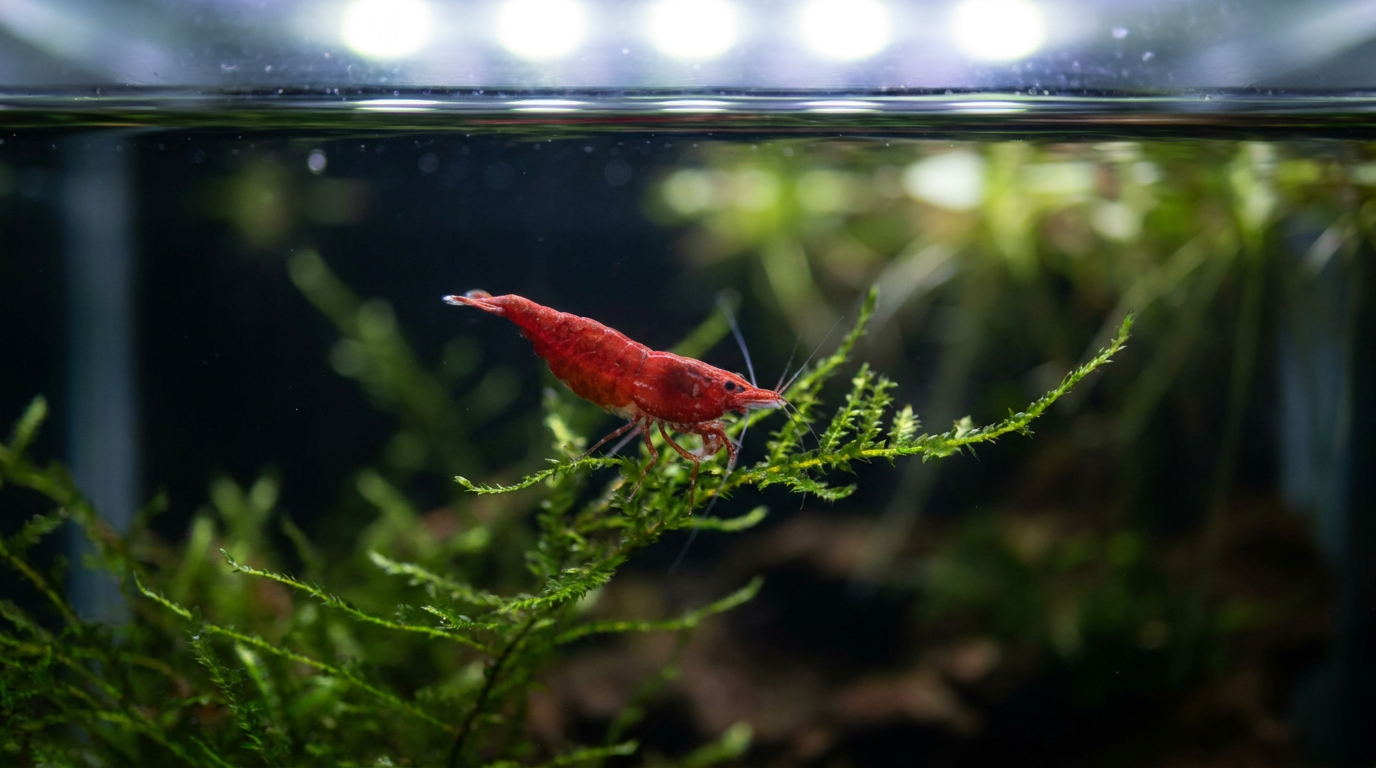
Judge from photos of the stock you are actually buying, not a catalogue image. Opaque colour that carries onto the legs and underside signals a higher cull line. Colour that thins along the back predicts offspring that revert, which is the same mechanism behind cherry shrimp grades fading over generations.
One colour per tank
Every Neocaridina colour morph is the same species. Put blues and reds in one tank and the grandchildren come back wild-type brown, no matter how good the parent stock was.
Buy a single line. If you want two colours, you need two tanks, and any shrimplet you rehome should carry that warning.
Reading a shipped bag
Open the box over a shallow tray. Healthy shrimp grip the bag wall or swim when disturbed; shrimp lying flat and unresponsive are usually chilled or dying.
A small number of losses on multi-day transit is ordinary. Photograph the sealed bag before you open it, since most live arrival guarantees require that image within a few hours of the carrier scan.
Hitchhikers come with the water
Bladder snails, ramshorn eggs, planaria, hydra and scuds all travel in shipping water. Planaria and hydra are the ones that go after shrimplets, and both are far harder to remove from an established colony than to keep out.
Net the shrimp into your tank and discard the shipping water. Better still, run new stock through the same process you would use to quarantine new fish for two to three weeks before they meet your main colony.
Seller signals worth weighting
Sellers who post parameters, state a cull standard, and ship on a fixed weekday tend to send better shrimp than sellers competing on price alone. Street prices climb steeply with grade, and a low price on a deep colour line is usually a sign of an uncalled mixed colony.
Marcus Chen
Aquarist & Founder, TanninLab
Marcus has been keeping planted tanks for 14 years. He tests every product recommendation in his own tanks and publishes the raw data.
Last updated: September 2026