Red Cherry Shrimp Grades: Why Yours Are Turning Clear
Updated August 2026
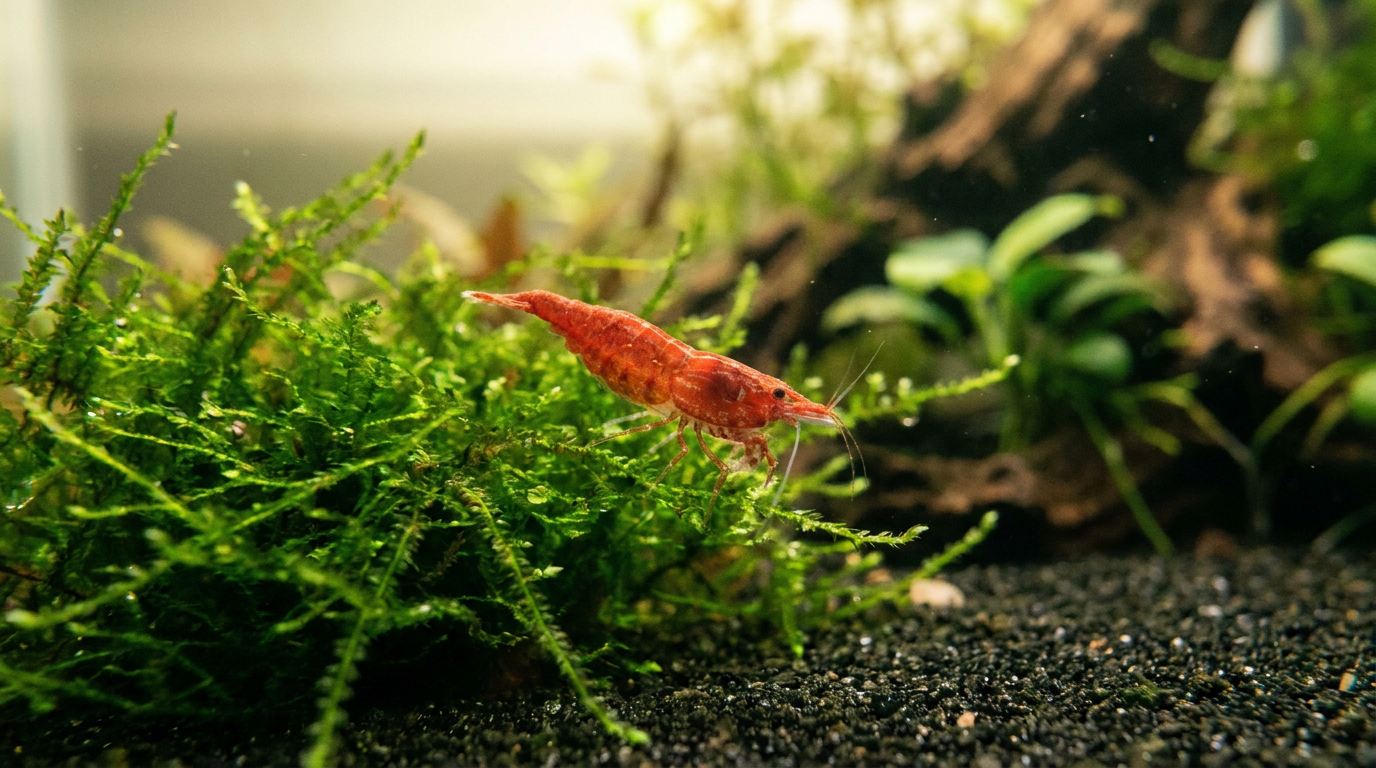
Your red cherry shrimp are turning clear because colour grade is a selectively bred trait, not a fixed one. Breed a mixed colony without culling and each generation drifts back toward the translucent brown wild-type Neocaridina davidi it came from.
Stress and diet can wash out colour temporarily. Genetic reversion does not wash back in.
What the grades actually mean
Grades describe how much red covers the body and how deep it sits. No governing body stands behind the labels, so one seller’s Fire Red can look like another’s Sakura.
- Cherry: patchy red over clear, legs and belly mostly bare.
- Sakura: broader coverage with some clear gaps still visible.
- Fire Red: solid opaque red on the body, clear legs.
- Painted Fire Red: red carried into the legs and rostrum, no clear windows.
A higher grade means more generations of selection sit behind that shrimp. It says nothing about hardiness. Water quality still decides whether the colony lives, so get your Neocaridina shrimp care parameters stable before you worry about colour.
Why a colony fades over generations
Colour here is polygenic. Each shrimp carries a spread of alleles, and pairing two Fire Reds still throws a few low-coverage babies.
Leave those pale offspring in the tank and they breed too. Within three or four generations the average shrimp is noticeably lighter than the ones you bought.
Mixing colour morphs speeds it up badly. Cherries crossed with Blue Dreams or Yellows give you clear, brown, or blotchy young almost immediately, because all those lines were split out of the same wild species.
Culling is what keeps the line
Culling in this hobby means removing, not killing. Move pale shrimp to a second tank, trade them at a club meeting, or sell them on locally.
Pull anything with obvious clear patches once it reaches sexable size, roughly 1.5 cm. Prioritise keeping the deepest-coloured females, since they carry more weight in a colony that breeds continuously.
Expect a year of steady culling before the offspring hold grade reliably. That is the ordinary pace of breeding shrimp toward a specific look.
When it is stress rather than genetics
A shrimp that pales within days is telling you something about the tank. Sudden transparency across several adults at once points at ammonia, a temperature swing, or copper in the water.
Faded shrimp that keep their pattern but stay dull for weeks are usually underfed. Carotenoid-rich shrimp food for color supports the pigment a shrimp already has, though it cannot add coverage that was never in the genes.
Substrate matters more than most keepers expect. Shrimp kept over white sand chromatically adapt and look washed out inside a week, and the same animals darken again over black sand.
Marcus Chen
Aquarist & Founder, TanninLab
Marcus has been keeping planted tanks for 14 years. He tests every product recommendation in his own tanks and publishes the raw data.
Last updated: August 2026