Best Shrimp Food for Color, Growth and Breeding
Updated August 2026
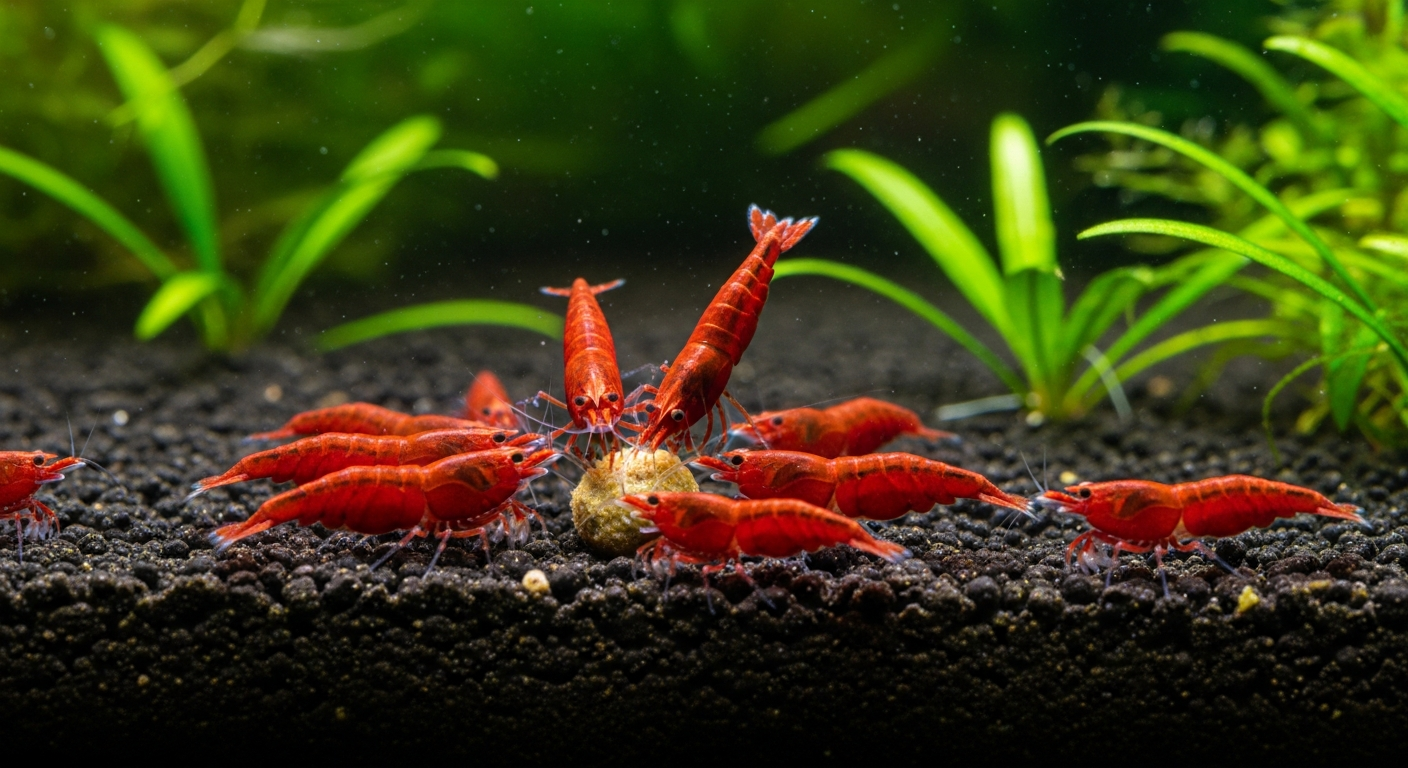
Cherry shrimp, bee shrimp, and most neocaridina varieties spend the majority of their day grazing on biofilm, not waiting for pellets to drop. That biological reality shapes every feeding decision you will make. Get the food types right, keep portions honest, and your colony will grow faster and show better color than any random “shrimp food” bag from the pet store rack would produce.
Why Shrimp Graze Constantly and What That Means for Feeding
In the wild, neocaridina shrimp graze across rocks, substrate, and plant surfaces for hours each day, harvesting microscopic algae, bacteria mats, and decaying organic matter. A well-established aquarium generates real biofilm on every hard surface, and your shrimp will prioritize that over anything you add.
That grazing instinct is useful to understand. It means supplemental feeding is exactly that: supplemental. Shrimp in a mature, planted tank with good surface area (rocks, driftwood, moss) can go two or three days without added food and thrive. Overfeeding is a far more common problem than underfeeding, and it kills more colonies than starvation ever does.
If you keep your neocaridina shrimp in a heavily planted setup, factor the natural biofilm contribution into your feeding schedule before you add anything else.
The Food Categories Every Shrimp Keeper Should Rotate
No single food type hits every nutritional target. Colony health, color intensity, breeding rate, and successful molting each require different inputs. Rotating across these categories covers the full spectrum without relying on marketing claims from any single brand.
| Food Type | Primary Purpose | Recommended Frequency |
|---|---|---|
| Staple pellets (spirulina, chlorella, or veggie base) | Core nutrition, color pigmentation (carotenoids), consistent energy source | 3 to 4x per week |
| Biofilm and powder foods (fine-ground, bacterial-culture based) | Supplements natural grazing, feeds baby shrimp (shrimplets) that cannot reach pellets | Small pinch daily or every other day |
| Blanched vegetables (zucchini, spinach, kale, cucumber, sweet potato) | Fiber, plant-based vitamins, keeps gut motility healthy | 1 to 2x per week, remove after 24 hours |
| Protein sources (snowflake fungus, freeze-dried daphnia, dried blood worms sparingly) | Supports egg development, post-molt recovery, winter conditioning | Once or twice per week, small amounts |
| Mineral and calcium supplements (cuttlebone, montmorillonite clay, GH booster minerals) | Hardens new shells after molting, supports breeding cycles | 1x per month (or after each water change if your source water is soft) |
Tannin Lab earns a commission on qualifying purchases through the Amazon links on this page, at no extra cost to you. Picks are chosen on performance and suitability, not on commission.
Staple Pellets: What to Look For Before You Buy
The shrimp food aisle on Amazon is full of identical-looking pellets with aggressive marketing. You can cut through all of it by checking three things on the ingredient list: where protein falls (plant sources like spirulina and chlorella should lead, with animal protein listed lower), whether astaxanthin or beta-carotene appears (these are the pigments that intensify red coloration in cherry shrimp), and whether the particle size suits your colony.
Sinking pellets are non-negotiable. Anything that floats long enough to be ignored will break down into ammonia before your shrimp reach it. Look for pellets that sink within ten seconds and soften within twenty minutes, which gives your shrimp time to gather without leaving decomposing mush in your substrate.
For neocaridina specifically, spirulina-based and chlorella-based pellets outperform generic “shrimp formula” products because the carotenoid content directly feeds into color expression. Hikari Shrimp Cuisine and Borneowild Spinach are commonly cited options in the shrimp keeper community, and both tick the ingredient criteria above. Check Amazon’s shrimp food category sorted by rating with the filter “ships and sold by Amazon” to find what is currently in stock at fair prices.
Biofilm and Powder Foods: The Real Shrimplet Food
Baby shrimp (shrimplets) cannot compete with adults for a pellet. They are small enough to miss the feeding frenzy entirely and spend their first weeks surviving almost entirely on biofilm. In a heavily populated tank or a bare-bottom setup with little surface area, that biofilm layer gets depleted fast.
Fine powder foods address this directly. Products based on bacterial cultures, spirulina powder, and fine-ground dried algae cloud the water briefly when added, then settle across every surface as a thin nutritional layer that shrimplets can graze on for hours. This food type is especially important in the first few weeks after a berried female releases her young.
A conservative approach: add one small pinch every other day to a breeding colony, watch for uneaten accumulation on the substrate, and cut back if you see it sitting more than two hours after feeding.
Blanched Vegetables: The Underrated Part of the Diet
Most shrimp keepers either skip vegetables entirely or use them inconsistently. That is a missed opportunity. Blanched zucchini, cucumber, kale, spinach, and sweet potato provide plant-based micronutrients that processed pellets lose during manufacturing, and fiber that keeps your shrimp’s gut working properly.
Blanching is required; raw vegetables are too firm for shrimp to rasp effectively. Thirty seconds to two minutes in boiling water is enough, then cool completely before adding to the tank. Do not use salt or oil. Zucchini is the most commonly used vegetable because it sinks reliably, holds its shape for 24 hours, and shrimp of all sizes can access it.
Remove any uneaten pieces within 24 hours. Vegetables decompose faster than pellets and will spike ammonia in a tank with slow surface agitation.
Protein Sources: When Shrimp Need More Than Plants
Snowflake fungus (dried soybean hull) has become the go-to protein supplement in the shrimp hobby for good reason. It grows a visible fungal culture on its surface within 24 to 36 hours of being added to the tank, which shrimp graze on continuously. It breaks down slowly, has almost zero ammonia risk, and the fungal coating provides beneficial bacteria alongside the protein.
Freeze-dried daphnia and freeze-dried bloodworms work as occasional supplements, not staples. The protein content supports females carrying eggs and helps recently molted shrimp rebuild tissue quickly. Once or twice per week is plenty. More than that in a small, low-filtration tank tips water quality in the wrong direction.
If your colony is breeding actively and females are dropping eggs early or carrying small clutches, adding protein twice a week rather than once often makes a measurable difference within a couple of breeding cycles.
Prices move, and stock does too. Each of these opens the product page on Amazon in a new tab.
Minerals for Molting and Breeding
Every molt requires calcium to harden the new shell. Every egg clutch depletes the female’s mineral reserves. If your source water is soft (GH below 6) and you are not supplementing, those deficits accumulate until you start seeing shrimp molting problems like failed molts, stuck shells, or deaths shortly after molting.
Cuttlebone is the easiest fix. Drop one small piece into your tank or your sump; it dissolves slowly and releases calcium carbonate into the water column. It does not dramatically swing your pH in a properly buffered system and costs almost nothing.
Montmorillonite clay supplements (often sold as “shrimp mineral” or similar) provide a broader mineral profile including magnesium, potassium, and trace elements that cuttlebone alone does not cover. Use these once per month or after each water change if your tap water is very soft. GH booster products designed for shrimp tanks (typically a mix of calcium sulfate, magnesium sulfate, and sodium bicarbonate) are also worth using if you keep caridina or high-grade neocaridina where parameter precision matters more.
Feeding Schedule and the Overfeeding Problem
Overfeeding Risk
Leftover food is the leading cause of ammonia spikes in shrimp tanks. Shrimp do not eat on a predictable schedule the way fish do; they graze. If food sits on the substrate longer than two hours after feeding, you gave too much. Reduce quantity, not frequency. A small daily feeding is safer than a large weekly one.
A weekly schedule that works for most neocaridina colonies: staple pellets on Monday, Wednesday, and Friday; blanched vegetables on Tuesday; snowflake or protein on Thursday; powder food in small amounts Monday through Friday if you have shrimplets. Minerals once per month, not tied to a specific day of the week.
The easiest quality-control method is the two-hour rule. Check the tank two hours after feeding. If shrimp are still working the food actively, that amount was appropriate. If nothing remains, you can try a small increase. If food is sitting untouched, remove it with a turkey baster and feed less next time.
Tank size matters too. In a nano tank for shrimp under 5 gallons, the margin for error on overfeeding is extremely narrow. A pellet sized for a 10-gallon colony will foul a 3-gallon tank before the shrimp finish it. Cut portions accordingly.
Foods That Improve Color in Cherry Shrimp
Cherry shrimp color is partly genetic and partly nutritional. You cannot turn a low-grade cherry into a bloody mary through diet alone, but poor diet will definitely mute the color of a high-grade animal. The compounds responsible for red pigmentation in shrimp are carotenoids, specifically astaxanthin, and shrimp cannot synthesize these internally. They must come from food.
Spirulina, chlorella, and krill meal are the most reliable dietary carotenoid sources. Carrots, red bell pepper (blanched), and paprika-containing specialty pellets contribute beta-carotene, which shrimp convert to astaxanthin at a modest rate. The effect is real but not dramatic; consistent feeding of carotenoid-rich foods over several weeks tends to deepen color noticeably compared to shrimp fed only generic flake or pellets.
Natural and full-spectrum lighting also plays a role in how color reads in photos, but the foundation is always dietary.
Foods That Support Breeding and Healthy Shrimplets
Breeding rate in healthy neocaridina is primarily driven by water stability and temperature, not food alone. However, diet quality does affect how many eggs a female carries, whether she carries them to term, and how well the shrimplets survive their first few weeks.
Higher protein intake (snowflake fungus or freeze-dried daphnia twice weekly) correlates with larger clutch sizes in experienced shrimp keepers’ reports, though controlled studies on this are limited. What is more documented is the calcium-molting link: females molt to breed, and inadequate calcium produces failed molts that end the breeding cycle before it starts. Mineral supplementation is not optional in soft water setups.
Biofilm powder foods become critical once shrimplets are present. Newly released baby shrimp are under 1mm and cannot bite a pellet. They graze on biofilm until they grow large enough to participate in group feeding. In tanks with low surface area or frequent cleaning, biofilm runs thin and shrimplet survival drops noticeably. Adding powder food daily for the first three to four weeks after a release significantly improves survival rates based on consistent community-keeper reports. For ideas on building out the right environment, the aquascaping for beginners guide covers plant choices that maximize biofilm surface without overcomplicating the setup.
Foods to Avoid
Salt, copper, and chloramine will kill shrimp; those are water quality issues, not food issues. From a diet perspective, the main problems are high-phosphorus foods that accelerate algae without benefiting shrimp, oily or fatty foods that foul the water rapidly, and protein sources with preservatives or salt added (check freeze-dried product labels carefully).
Avoid feeding cichlid pellets, goldfish flakes, or “community fish” foods. These are formulated with fish-specific nutritional ratios and often contain salt or additives that stress shrimp. They also tend to have larger particle sizes that take longer to soften and linger in the substrate.
Raw meat, although protein-rich, introduces bacteria in quantities a shrimp tank’s filtration typically cannot process. Snowflake fungus achieves the protein goal without the water quality risk.
Frequently Asked Questions
How often should you feed cherry shrimp?
Three to four times per week is the standard recommendation for a mature colony in a planted tank with established biofilm. Baby shrimp and breeding colonies benefit from daily small powder food additions. Feed less in new tanks where filtration is still cycling, and always remove uneaten food within two hours.
What food improves color in neocaridina shrimp?
Foods high in carotenoids, specifically spirulina, chlorella, and astaxanthin-containing pellets, have the strongest effect on red and orange pigmentation in cherry, fire red, and sakura shrimp. Feeding these consistently over four to six weeks will deepen existing color in genetically capable animals, though diet cannot substitute for selective breeding of high-grade stock.
Why are my shrimp not eating the food I add?
Most commonly, there is enough biofilm and organic matter in the tank that the shrimp are not hungry when you feed. This is normal and not a problem. Other causes include water temperature below 68 degrees Fahrenheit (shrimp metabolism slows significantly in cold water), food particle size too large, or recently molted animals that become inactive for 12 to 24 hours. If shrimp appear active but consistently ignore a specific food, try a different brand or type.
Marcus Chen
Aquarist & Founder, TanninLab
Marcus has been keeping planted tanks for 14 years. He tests every product recommendation in his own tanks and publishes the raw data.
Last updated: August 2026