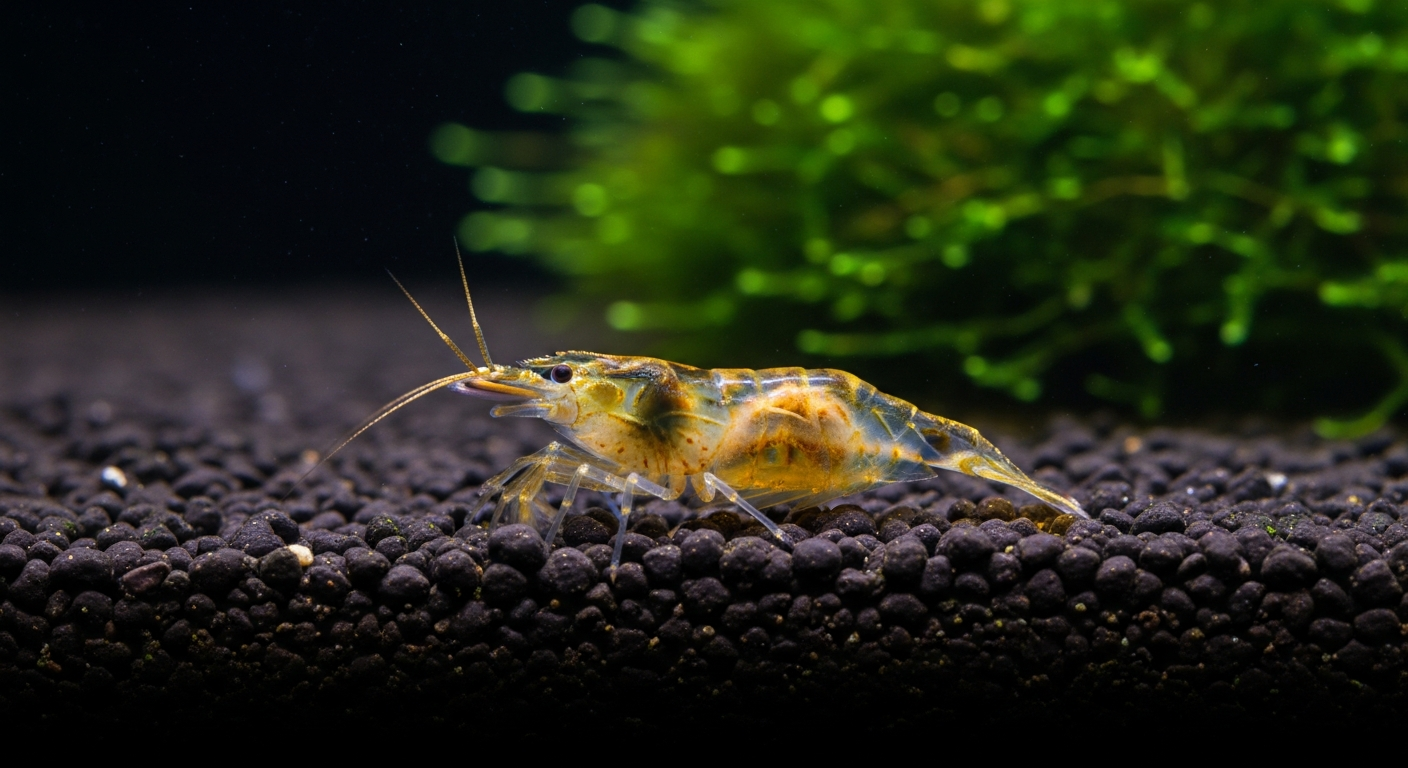
Shrimp Molting Problems: Causes and Fixes
Updated June 2026
You found a hollow shrimp shell in your tank, and now you are not sure if that is normal or if something is wrong. Molting is one of the most misunderstood events in a shrimp tank, and the difference between a healthy shed and a fatal one usually comes down to water chemistry you can fix today.
This guide covers the full picture: why shrimp molt, what a normal shed looks like, the four most common problems (including white ring of death), and a practical prevention protocol you can run this week.
Why Shrimp Molt and What Normal Looks Like
Shrimp, like all crustaceans, have an exoskeleton that does not grow with them. To get bigger, a shrimp must shed its entire outer shell, a process called ecdysis, and then expand its soft new body before the new shell hardens.
The whole cycle runs on hormones triggered by photoperiod and internal calcium signals. A healthy shrimp in stable water will molt every three to eight weeks, depending on age, diet, and whether it is actively breeding. Juveniles molt more frequently. A berried female may pause molting until she releases her eggs.
Normal behavior right before a molt: the shrimp becomes reclusive, stops eating, and may look slightly pale or “milky.” After the shed, the empty exoskeleton sits on the substrate and looks like a ghost shrimp. Leave it in the tank. Your shrimp will eat it to reclaim the calcium and minerals locked inside the shell.
What you should never see: a shrimp stuck partway out of its shell, a white ring visible just behind the head, or a shrimp dying within 24 hours of shedding. Those are the three distress signals worth understanding in detail.
The Four Main Shrimp Molting Problems at a Glance
| Symptom | Most Likely Cause | Fix |
|---|---|---|
| White ring of death (visible white band behind head) | Sudden parameter swing during the molt, especially a temperature or pH shock that causes the new and old exoskeleton to fuse at the break point | Stabilize all parameters before water changes; match replacement water temp exactly; avoid large water changes during a molt cycle |
| Failed molt (shrimp stuck, cannot exit shell) | Low GH, mineral deficiency (especially calcium and magnesium), or iodine shortage; the soft new shell cannot separate cleanly from the old one | Raise GH to species-appropriate level using a quality remineralizer; add a small piece of cuttlebone or mineral-rich food; do not intervene manually |
| Infrequent molting (shrimp not shedding despite growth) | Chronically low minerals, inconsistent photoperiod, stress from tankmates, or suboptimal temperature | Test and adjust GH, KH, and TDS; ensure a consistent 8 to 10 hour light cycle; verify temperature is within species range |
| Post-molt death (shrimp dies within hours of shedding) | The new exoskeleton cannot harden fast enough, usually because calcium and magnesium are too low or copper contamination is present | Increase mineral content in the water; test for copper (often from tap water or medications); feed high-calcium foods before expected molt |
White Ring of Death: What It Actually Is
The white ring of death is a thin white band that appears just behind the shrimp’s head, at the junction between the carapace and the abdomen. It looks like someone drew a chalk line around the shrimp’s neck.
What you are seeing is a fused molt. During a normal shed, the old exoskeleton splits cleanly at this junction so the shrimp can back out of its shell. When water parameters shift suddenly during the molt process, the chemical environment changes mid-shed. The new and old exoskeleton layers partially bond at that seam, and the shrimp cannot complete the exit.
The most common trigger is a water change done while the shrimp is actively molting, especially if the replacement water is a different temperature, pH, or hardness. Even a two-degree temperature difference or a 0.5 pH swing during this window can cause it.
Once the white ring appears, survival odds are low. There is no intervention that reliably saves a shrimp at this stage, and attempting to manually pull the old shell causes more harm than the ring itself. Prevention is the only reliable treatment.
Failed Molts and the GH Connection
A failed molt happens when a shrimp starts the process but cannot fully exit the old shell. You may find the shrimp curled and motionless with the old exoskeleton partially attached, or you may find it dead inside the shell.
The primary driver is low GH. General hardness measures dissolved calcium and magnesium ions, and both are physically required for the molting process. Calcium is the main structural component of the new exoskeleton. Without sufficient calcium, the new shell stays soft and sticky, making it nearly impossible for the shrimp to slide free cleanly.
For Neocaridina shrimp (cherry shrimp, blue dream, yellow neocaridina), the target GH range is 6 to 8 dGH. For Caridina species (crystal red, crystal black, Taiwan Bee), the range is tighter at 4 to 6 dGH. Running below those floors consistently is the fastest route to failed molts.
Remineralization is the fix. If you use RO or distilled water, you need to add a dedicated remineralizer before every water change. For Neocaridina, Seachem Equilibrium or similar GH-boosting products work well. For Caridina, species-specific remineralizers that target the right GH-to-KH ratio are the better choice, which is covered in more detail in the Caridina vs Neocaridina care comparison.
Iodine also plays a supporting role. Shrimp need trace iodine to produce the hormone ecdysone, which triggers the molt. A varied diet that includes algae wafers, spirulina, and dedicated shrimp foods helps cover this. Dedicated iodine supplements exist but are rarely necessary if your feeding rotation is solid.
How to Build a Tank That Prevents Molting Problems
Prevention is a parameter discipline problem, not a product problem. The shrimp tank with the fewest molting deaths is almost always the one with the most boring, stable water chemistry.
Start with your water change protocol. Never change more than 10 to 15% of the water volume at one time in a shrimp tank. Match the replacement water temperature to within one degree of the tank. Mix your remineralizer into the replacement water before it goes in, never add it directly to the tank. If you are using tap water, run it through a dechlorinator and let it sit or age for 24 hours before use, since chloramines and copper traces from older pipes are shrimp killers at any life stage.
Test your parameters monthly at minimum, weekly if you are running a new tank. The numbers that matter most for molting health:
- GH: 6 to 8 dGH for Neocaridina, 4 to 6 dGH for Caridina
- KH: 2 to 4 dKH for Neocaridina, 0 to 2 dKH for Caridina
- TDS: 150 to 250 ppm for Neocaridina, 100 to 150 ppm for Caridina
- Temperature: 68 to 76°F for most Neocaridina, 64 to 72°F for Caridina
- Copper: 0 ppm (any detectable copper is fatal)
- Ammonia / Nitrite: 0 ppm (spikes during the molt window are especially dangerous)
Emergency Post-Molt Protocol
If you find a shrimp that just molted but is laying on its side or moving erratically, act on water chemistry first, not the shrimp directly. Do not net or handle it; the new shell is still soft and physical stress can kill it within minutes. Check GH immediately with a test kit. If GH is below the target floor, prepare a small amount of remineralized water (within 0.5 degrees of tank temp) and do a slow drip addition of no more than 5% of tank volume over 20 to 30 minutes. Dim the lights, reduce flow, and leave the tank alone for 12 hours. Most post-molt deaths happen from handling, not from the parameter issue itself.
Diet’s Role in Molting Health
Water chemistry is the foundation, but diet is what covers the gaps. Shrimp that molt frequently and successfully are typically eating a varied rotation, not just one food type.
Calcium-rich foods matter here: blanched kale and spinach, cuttlebone wedges left in the tank, and dedicated shrimp foods that include spirulina and mineral supplements. The best practice is to feed a base of high-quality shrimp pellets or granules, rotating in leaf litter (Indian almond leaves, mulberry leaves), blanched vegetables, and occasional protein sources like baby brine shrimp or micro-worms for breeding colonies.
One pattern worth knowing: overfeeding does more molting damage than underfeeding. A tank with excess organic waste produces ammonia spikes and bacterial blooms that stress shrimp at exactly the wrong moment, right when they are soft-shelled and vulnerable. Feed small amounts, remove uneaten food within a few hours, and keep the substrate clean.
Copper: The Silent Molt Killer
Copper deserves its own section because it wrecks molting in ways that look like mineral deficiency but do not respond to remineralization.
Copper disrupts the enzymatic process that allows the new exoskeleton to form correctly. Even at 0.01 to 0.02 ppm, concentrations too low to cause obvious distress in fish, copper causes chronic molting failure and post-molt death in shrimp. The common sources: certain tap water systems (especially in older buildings with copper pipes), some fertilizers marketed for planted tanks, and virtually all medications labeled “safe for invertebrates” that contain any copper salt.
Test for copper if your molting problems persist after correcting GH and water change protocol. If you find any, run activated carbon, do a large water change using RO water, and switch to a copper-free fertilizer going forward. There is no quick fix if copper has been accumulating in substrate or hardscape for months, and that sometimes means a full tank reset.
Frequently Asked Questions
Why did my shrimp die right after molting?
Post-molt death usually means the new exoskeleton could not harden fast enough. The most common causes are low GH (especially low calcium), copper contamination, or a sudden parameter shift during the vulnerable soft-shell period. Check GH first, then test for copper. If both test fine, review whether a water change happened in the 24 to 48 hours before the molt.
Is white ring of death always fatal?
In most cases, yes. The white ring of death occurs when the old and new exoskeleton fuse at the molting seam, trapping the shrimp inside. A shrimp that cannot complete the molt will die from exhaustion or from being unable to breathe efficiently. Manual intervention almost always causes fatal injury because the shell is bonded to living tissue. Prevention through stable parameters is the only reliable answer.
How often should healthy shrimp molt?
Juvenile shrimp molt roughly every one to two weeks as they grow rapidly. Adult Neocaridina and Caridina shrimp typically molt every three to eight weeks in well-maintained tanks. If your shrimp are not molting at all over several months, low GH, chronic stress, or an inconsistent light cycle are the first things to check.
Marcus Chen
Aquarist & Founder, TanninLab
Marcus has been keeping planted tanks for 14 years. He tests every product recommendation in his own tanks and publishes the raw data.
Last updated: June 2026