Caridina vs Neocaridina: Which Shrimp Is Right for You
Updated June 2026
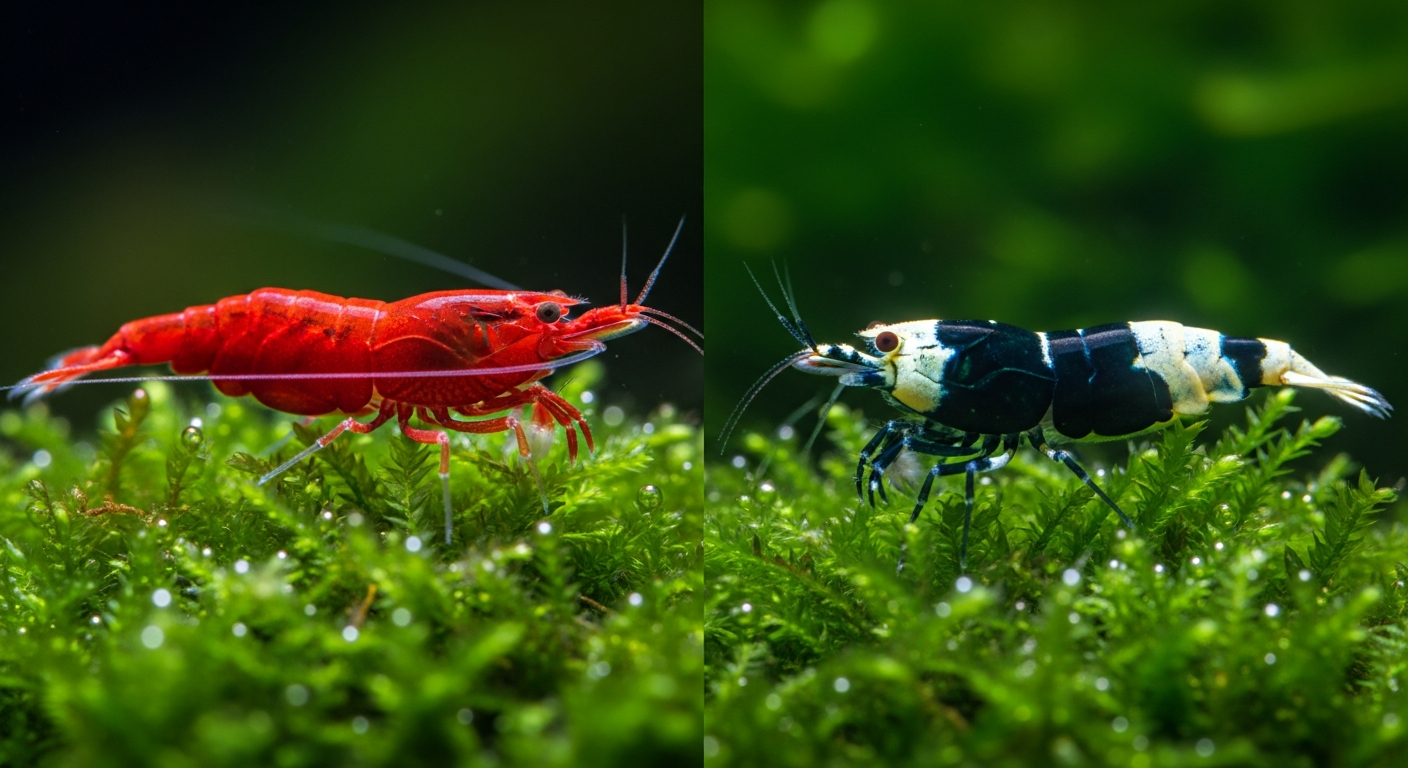
Caridina and Neocaridina look similar in a store photo. They are both dwarf freshwater shrimp, both bred in dozens of color morphs, and both sold under names that rarely match their genus on the label. The gap in care requirements, though, is large enough to matter the day you set up your tank.
This comparison covers everything you need to make the right call: water chemistry targets, substrate, difficulty, whether they can coexist, cost, and which situations genuinely favor Caridina.
What Neocaridina Shrimp Actually Are
Neocaridina davidi is the species behind virtually every “beginner shrimp” sold in the hobby. Red cherry shrimp, yellow shrimp, blue dream, blue velvet, orange pumpkin, carbon rili, and painted fire red are all color selectively bred from the same wild-type ancestor. Their natural habitat in Taiwan included a wide variety of water conditions, and that adaptability carried through into captive stock.
They breed prolifically. A healthy colony in a 10-gallon tank will grow faster than most fishkeepers expect, and that reproductive success makes them forgiving to keep: even if parameters drift or a molt goes wrong, the group recovers.
Neocaridina tolerate pH from roughly 6.8 to 7.8 and GH from 6 to 12 dGH. Many municipal tap water sources fall inside that window, which is why they are so accessible. You do not need a remineralizer or an RO system to get started.
What Caridina Shrimp Actually Are
Caridina cantonensis is the species behind crystal red shrimp, crystal black shrimp, Taiwan bee varieties (red wine, blue bolt, king kong, panda), and a handful of related morphs. A separate group, the Caridina cf. babaulti and tiger caridina variants, have somewhat looser requirements, but the kept crystal and bee bloodlines are what most people mean when they say “Caridina.”
These shrimp come from soft, acidic streams in southern China, and their water chemistry needs reflect that origin precisely. They require pH between 5.8 and 6.8, GH of 4 to 6 dGH, KH of 0 to 1 dKH, and TDS in the 90 to 130 ppm range. That narrow window is the part new keepers underestimate.
Caridina also need an active, buffering substrate, because the KH target is essentially zero and tap water nearly always has carbonate hardness that must be chemically absorbed by the substrate. When the substrate exhausts, the pH climbs, and the shrimp suffer before any visible sign appears in the water.
Head-to-Head Parameter Comparison
| Parameter | Caridina (crystal/bee) | Neocaridina (cherry/dream) |
|---|---|---|
| pH | 5.8 to 6.8 | 6.8 to 7.8 |
| GH (dGH) | 4 to 6 | 6 to 12 |
| KH (dKH) | 0 to 1 | 2 to 8 |
| TDS (ppm) | 90 to 130 | 150 to 250 |
| Temperature | 68 to 74°F (20 to 23°C) | 65 to 78°F (18 to 25°C) |
| Substrate type | Active buffering substrate required | Inert substrate works fine |
| Water source | RO + remineralization required | Treated tap water (in many regions) |
| Difficulty | Intermediate to advanced | Beginner-friendly |
| Starter cost (per shrimp) | $5 to $20+ (grade-dependent) | $2 to $6 |
Why Substrate Is the Biggest Practical Gap
For Neocaridina, substrate is mostly an aesthetic choice. Plain black sand, natural gravel, or aquasoil all work. The shrimp do not depend on the substrate to hold their water chemistry in range.
For Caridina, substrate is chemistry infrastructure. Active soils like ADA Aqua Soil Amazonia, Brightwell Aquatics FlorinVolcanit, and similar buffering substrates absorb carbonate hardness from the water column, which is what keeps KH near zero and pH in the acidic range. These substrates have a functional lifespan, typically 12 to 18 months before their buffering capacity depletes. After that, pH creeps up unless you refresh or replace the substrate entirely, which means breaking down the tank.
That substrate clock is something many Caridina keepers do not fully anticipate before their first purchase. Building in that reset cost, plus the ongoing RO water cost, is part of honest budgeting for a Caridina setup.
A quality sponge filter matters for both genera, but especially for Caridina, where any ammonia spike from disturbing substrate during cleaning can be lethal at low pH, since ammonia toxicity increases as pH drops.
Difficulty and Error Tolerance
Neocaridina are unusually forgiving. A temporary spike in temperature, a missed water change, a slightly high TDS from tap fluctuation, and they will handle it. Losses happen, but the breeding rate keeps the colony stable in tanks that are not perfectly dialed in.
Caridina behave very differently. pH above 7.0 causes chronic stress, and sustained exposure leads to failed molts, white ring of death, and death before the visual signs become obvious. A GH that drifts above 8 or 9 dGH from an accidental top-off with tap instead of RO will cause losses. The margin is narrow.
This is not an argument against Caridina. Experienced keepers who enjoy precise water management find them deeply satisfying. But the shrimp themselves will not hide trouble from you, and getting the chemistry wrong carries a real financial cost given their price per individual.
Check the guidance in our Neocaridina care guide before setting up your first colony, especially the section on pH buffering and GH targets, which applies here as the baseline you are comparing Caridina against.
Can Caridina and Neocaridina Live Together?
No. The parameter conflict makes cohabitation impossible without compromising one or both genera. The pH range that keeps Caridina healthy (5.8 to 6.8) is chronically stressful for Neocaridina. The harder, higher-KH water that Neocaridina prefer will interfere with the active substrate’s buffering and push pH too high for Caridina.
There is also the interbreeding question. Caridina cantonensis and Neocaridina davidi cannot hybridize because they are different genera. However, color morphs within each genus can crossbreed. If you keep multiple Neocaridina color variants together, you will eventually get dull brownish offspring, since the wild-type coloration is genetically dominant. The same applies to Caridina morphs mixed without intentional breeding selection.
The practical rule: each genus gets its own dedicated tank with its own parameters. There is no stable middle parameter set that works for both.
Which Shrimp for Beginners
Neocaridina. The advice here is not hedged: if you are new to shrimp keeping, start with Neocaridina. Set up a mature tank, confirm your parameters are stable for four to six weeks, and then add six to ten cherry shrimp or blue dreams. Breed them, watch them molt, and learn what a healthy shrimp colony looks like.
That experience base is what makes Caridina keeping successful later. Knowing what a clean molt looks like, understanding how TDS shifts with evaporation, and recognizing early stress signs all carry over. Jumping to crystal red or Taiwan bee shrimp as a first shrimp is possible, but the learning curve runs directly through your livestock budget.
If you already have experience with Neocaridina and want to move up, Caridina is a genuinely different hobby within the hobby. The tank build is specific, the water management is ongoing, and the aesthetic payoff, especially with high-grade Taiwan bee morphs, is hard to match in the shrimp world. The aquascaping for beginners guide is worth reading before either build, since plant and hardscape choices interact directly with pH stability in both genus setups.
Cost: Setup and Ongoing
A Neocaridina starter tank for 10 gallons costs roughly $80 to $150 in equipment and livestock, assuming you already have a tank. You need inert substrate, a sponge filter, a basic heater, and a group of shrimp. Ongoing cost is minimal: dechlorinator, occasional food, and water for changes.
A Caridina setup for the same tank size runs considerably higher. An RO/DI unit for water production costs $50 to $150 for a basic unit. Caridina-specific remineralizer (products like Salty Shrimp GH+) adds cost per water change. Active substrate for a 10-gallon runs $25 to $50 and must be replaced every year or so. Starter livestock at $5 to $20 per shrimp means a group of 10 runs $50 to $200 depending on grade. Expect $200 to $400 to set up a proper Caridina system before buying a single shrimp.
Higher-grade Caridina morphs (show-quality Taiwan bees, top-grade king kong panda) can run $50 to $150 per individual from reputable breeders. The cost ceiling is not a typo.
Verdict by Goal
If your goal is a thriving, low-maintenance shrimp colony that breeds readily and adds color to a planted tank, Neocaridina wins on every practical dimension. They are cheaper, easier, more forgiving, and produce visible results fast.
If your goal is a species-focused, precision-managed shrimp tank where the animals themselves are the centerpiece, and you enjoy the chemistry management as part of the hobby, Caridina rewards that commitment. High-grade crystal and bee morphs are genuinely beautiful in a way no Neocaridina color variant quite matches.
Most people underestimate Caridina difficulty and overestimate Neocaridina limitations. Red cherry shrimp in a well-planted blackwater setup look excellent. You do not need Caridina to build an impressive shrimp tank.
Frequently Asked Questions
- Can caridina and neocaridina live together in the same tank?
- No. Their pH, GH, and KH requirements conflict directly. Caridina need soft acidic water (pH 5.8 to 6.8, KH near zero) while Neocaridina need harder, neutral to slightly alkaline water (pH 6.8 to 7.8, KH 2 to 8 dKH). There is no stable middle parameter that works for both genera. They belong in separate dedicated tanks.
- What is the difference between crystal shrimp and cherry shrimp?
- Crystal red and crystal black shrimp are Caridina cantonensis. Cherry shrimp and their color variants (blue dream, blue velvet, yellow shrimp) are Neocaridina davidi. They are different genera with significantly different water chemistry requirements, substrate needs, difficulty levels, and price points. They are not interchangeable despite being sold near each other in fish stores.
- Are caridina shrimp harder to keep than neocaridina?
- Yes, meaningfully so. Caridina require RO water, a caridina-specific remineralizer, an active buffering substrate that must be replaced every 12 to 18 months, and water parameters held within a narrow window. Neocaridina tolerate treated tap water in most regions and handle parameter variation without major losses. Caridina are rated intermediate to advanced, while Neocaridina are genuinely beginner-accessible.
Marcus Chen
Aquarist & Founder, TanninLab
Marcus has been keeping planted tanks for 14 years. He tests every product recommendation in his own tanks and publishes the raw data.
Last updated: June 2026