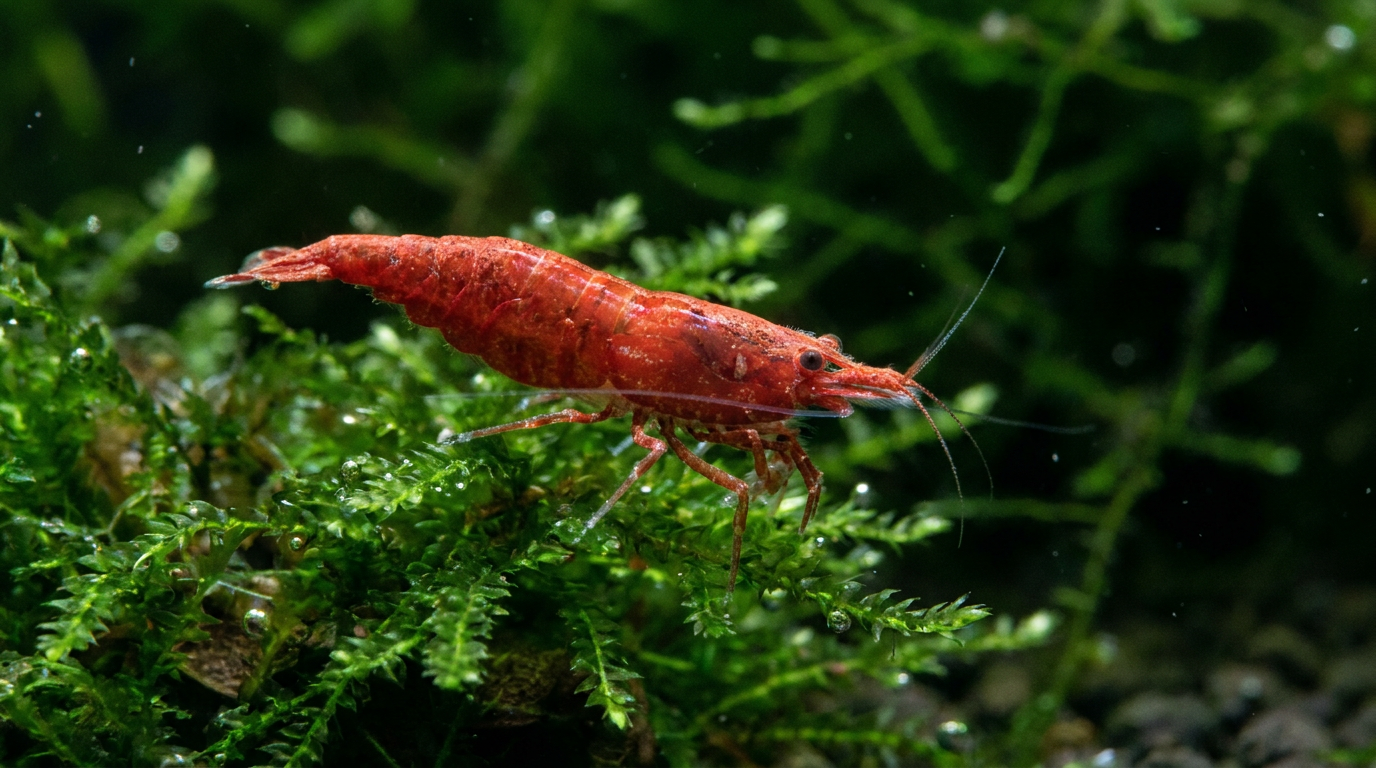
Neocaridina Molt Failure: The White Ring of Death Explained
Updated August 2026
The white ring of death is a failed molt, not an infection. Your Neocaridina shrimp split its old shell at the neck, could not push free, and the white band you can see is the gap between the old carapace and the body stuck inside it.
Once the ring is visible, that individual shrimp is usually lost. What you can still change is the water that caused it, because a colony that rings one shrimp tends to ring more within a couple of weeks.
What is happening under the shell
Shrimp grow by shedding. Before a molt they pull minerals out of the old carapace, build a soft new one underneath, then take on water to crack the seam behind the head and reverse out backwards.
The molt fails at that last step. Either the shrimp is too weak to generate the pressure, or the new shell has already stiffened too much for it to slide out, and the animal ends up wedged in its own armour.
GH is the number to check first
General hardness supplies the calcium and magnesium a shell is built from. Most Neocaridina keepers hold GH in the 6 to 8 degree range with a low KH, which is the same window the neocaridina shrimp care parameters are built around.
Sit below that and shells stay thin and weak. Sit well above it and the new shell hardens faster than the shrimp can escape it. If you have never measured your water, read up on GH and KH before you dose a single remineraliser.
Why water changes trigger it
A shrimp mid molt has no shell to buffer it. Swap out half the tank with water that is colder, softer, or harder than what it was sitting in, and every shrimp in the colony has to adjust at the worst possible moment.
Small and frequent beats large and occasional. That single habit change is also the fix for most cases of shrimp dying after water changes.
How to stop the next one
- Test GH with a proper kit and record it weekly instead of guessing from a strip.
- Remineralise RO or soft tap water to a fixed target so every change lands on the same number.
- Keep changes at 10 to 15 percent, matched for temperature, and drip new water in slowly.
- Feed a food with calcium in it and leave a mineral supplement or cuttlebone in the tank.
- Check your tap water and any plant treatment for copper, which shrimp tolerate very poorly.
Do not scoop out a ringed shrimp and try to help it molt. Handling stresses it further and the shell will not release, so leave it be and put your effort into the parameters.
Colonies that molt cleanly are boring in the best way. Stable hardness, gentle changes, steady temperature, and the ring stops showing up.
Marcus Chen
Aquarist & Founder, TanninLab
Marcus has been keeping planted tanks for 14 years. He tests every product recommendation in his own tanks and publishes the raw data.
Last updated: August 2026