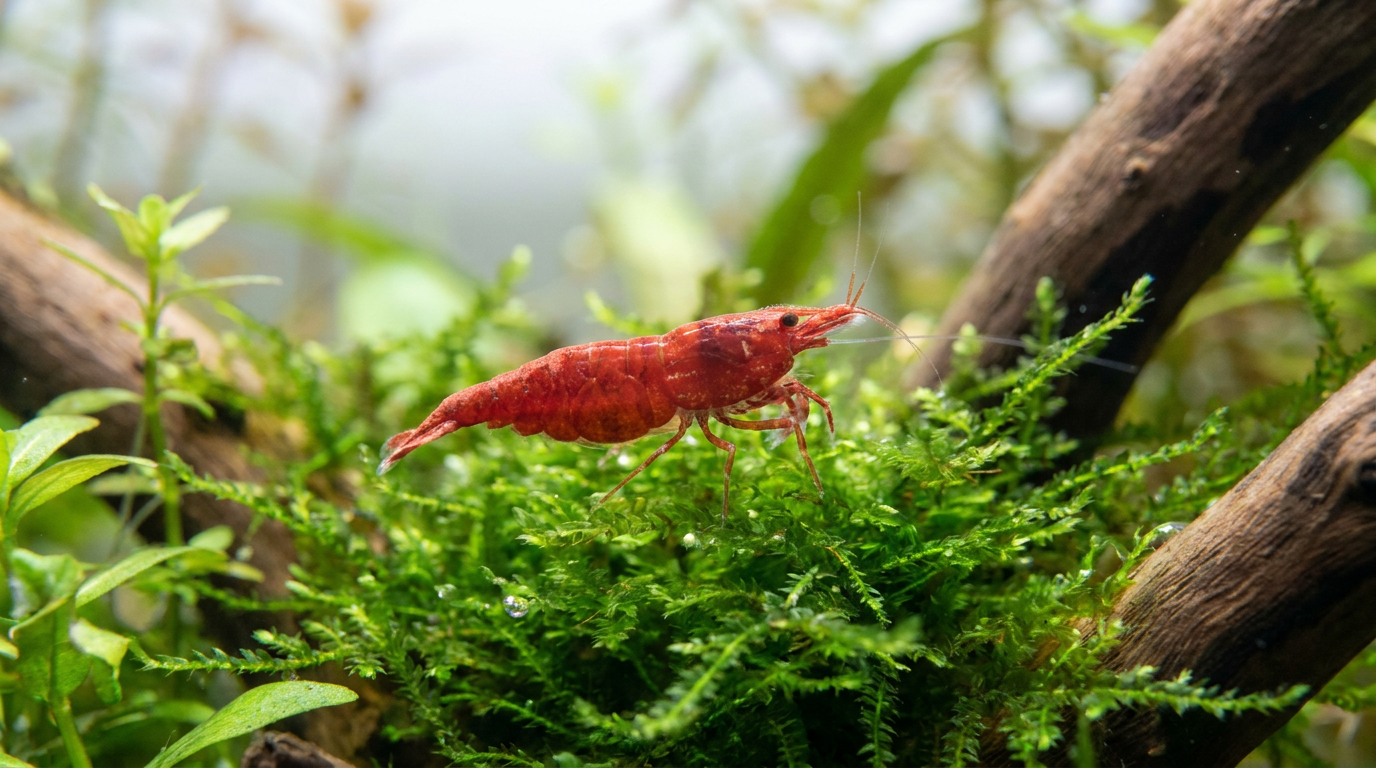
Shrimp Dying After a Water Change: Causes, Fixes and a Planner
Updated November 2026
Shrimp usually die after a water change because the new water differs from the tank in TDS, temperature, chlorine or chloramine, or copper. The ShrimpKeepers care sheet says to match TDS within 20 ppm and temperature within 2 F, always dose a conditioner, and keep changes to 10 to 15 percent a week.
- Match TDS within20 ppm of the tank
- Match temperature within2 F (1 C)
- Weekly change10 to 15 percent, never over 25 to 30 at once
- ChloramineDoes not evaporate, needs a conditioner
TanninLab earns a commission on qualifying Amazon purchases made through these links, at no extra cost to you.


Water-change planner for a shrimp tank
Enter your tank, the size of the change and the readings from your meter. The planner returns the change in liters and gallons, checks it against the care sheet limits, and flags a drip when the water does not match.
Symptom, cause and fix
This table lines up what you see with the usual cause and the fix. Each row names the page it comes from.
| What you see | Likely cause | Fix | Source |
|---|---|---|---|
| Darting, hitting the glass right after the change | TDS gap between new water and tank water | Match TDS within 20 ppm and drip the water in | ShrimpKeepers care sheet |
| Hiding, lethargic, not grazing | Temperature gap | Put a thermometer in the bucket and match within 2 F (1 C) | ShrimpKeepers care sheet |
| Gasping near the surface | Chlorine, chloramine or low oxygen | Dose a conditioner every time and add aeration | ShrimpKeepers care sheet; Aquarium Science chlorine page |
| Deaths 1 to 48 hours after the change, fish fine | Shrimp react to parameter swings that fish shrug off | Stop further changes for 24 to 48 hours, test, add an airstone | ShrimpKeepers care sheet |
| Dropped eggs or failed molts | A TDS or temperature shock triggers a premature molt | Avoid changes near the end of gestation, or keep them small and slow | ShrimpKeepers care sheet |
| Losses days after a medication or fertilizer dose | Copper | Read the ingredients, dose to label only, treat fish in a hospital tank | Peqaboo invertebrate copper guide |
| Deaths only after tap water changes | Copper from pipes or the water supply | Test the source water for copper | ShrimpKeepers care sheet |
| A change of 50 percent or more | Disturbance and parameter shift even when water is matched | Keep each change under 25 to 30 percent | ShrimpKeepers care sheet |
Sources read on 1 November 2026: the ShrimpKeepers care sheet on shrimp dying after a water change, the Aquarium Science chlorine and chloramine page, the Seachem Prime product page and the Peqaboo guide to copper and invertebrates. A care sheet is one site rule of thumb, not a measurement.
Match the new water before it goes in
Test the tank and the new water for TDS, pH and temperature before the bucket goes near the tank. ShrimpKeepers says a gap of even 30 to 50 ppm TDS can be stressful, and larger swings can be fatal.
The same page says to prepare the water a day ahead: add the conditioner, let it reach room temperature and remineralize it if it started as RO water. If your tap runs hard or soft, our guide to GH and KH explains which numbers to hold steady.
Dechlorinate every drop
Aquarium Science says roughly 98 percent of US municipal supplies carry chlorine or chloramine, and both are poisonous to fish above 0.05 ppm. Shrimp are more sensitive still, per ShrimpKeepers.
Letting water stand clears chlorine but not chloramine. Dose the conditioner against the volume of new water, not the tank, and check which one your supplier uses.
Rule out copper and metals
Peqaboo says invertebrates sit on a different sensitivity scale from fish, and that copper turns up in fish medications and in plant fertilizers that list copper as a micronutrient. It also says copper binds to substrate, rock, wood and silicone and releases slowly.
If deaths follow a medication or a new fertilizer, treat copper as a prime suspect. Seachem says Prime detoxifies heavy metals in tap water at typical concentrations, which is not the same as a medication overdose. Our neocaridina shrimp care guide covers the stable water these shrimp need.
What to do right after a bad change
ShrimpKeepers says not to do another change straight away, because the urge to fix it often makes things worse. Test ammonia, nitrite, pH, TDS and temperature, and write the numbers down.
Add an airstone for extra oxygen, add fresh activated carbon if you suspect a toxin, then wait 24 to 48 hours. If losses were significant, it advises waiting one to two weeks before the next change and then going much smaller, 5 to 10 percent.
A safe change routine
Change 10 to 15 percent a week, or 5 percent twice a week, the same way each time. Smaller, frequent changes keep parameters flat, and the same page calls a boring, predictable routine the safest one.
Failed molts after a change usually point to a hardness swing. Our notes on shrimp molting problems cover how to steady it, and the sourced limits above are the ones to hold.
Video: diagnosing why shrimp are dying
This 5-minute video works through a die-off in order: how many shrimp died, how old the tank is, a water test, what changed in the last few days and failed molts. The keeper names a large water change, a temperature swing and copper in a medication or fertilizer.
How we sourced these figures
The limits come from the ShrimpKeepers care sheet, Aquarium Science, the Seachem Prime page and the Peqaboo copper guide, plus the Amazon listings behind the cards, all read on 1 November 2026.
The planner applies those limits to your numbers and adds nothing of its own. We did not test any water in a shrimp tank.
Frequently asked questions
How much water should you change in a shrimp tank?
The ShrimpKeepers care sheet puts the weekly maximum at 10 to 15 percent, and says many keepers prefer 5 to 10 percent twice a week. It also says never to exceed 25 to 30 percent at once, even in an emergency, because the swing can be worse than the original problem.
Can a water change cause a shrimp molt?
Yes. ShrimpKeepers says a water change can trigger a molt, usually through a TDS or temperature shock. A berried female that molts loses her eggs, so avoid changes near the end of gestation, around 25 to 30 days, or keep them extra small and slow.
How long after a water change do stressed shrimp die?
ShrimpKeepers lists deaths 1 to 48 hours after a change as the severe pattern, pointing to the new water. Peqaboo says copper from a fertilizer dose is different: losses can come days later, among shrimp that were molting.
Does letting tap water sit overnight make it safe for shrimp?
Only for chlorine. ShrimpKeepers says chlorine dissipates in 24 to 48 hours but chloramine does not, because it is chlorine bonded to ammonia. Aquarium Science says nearly all US municipal water carries one or the other, so use a conditioner and ask your water company which it is.
Do I need to drip a water change into a shrimp tank?
Dripping is ideal, per ShrimpKeepers, but not strictly needed if TDS is within 20 ppm and temperature within 2 F of the tank. In that case pour slowly over 10 to 15 minutes. If the water does not match well, drip it in.