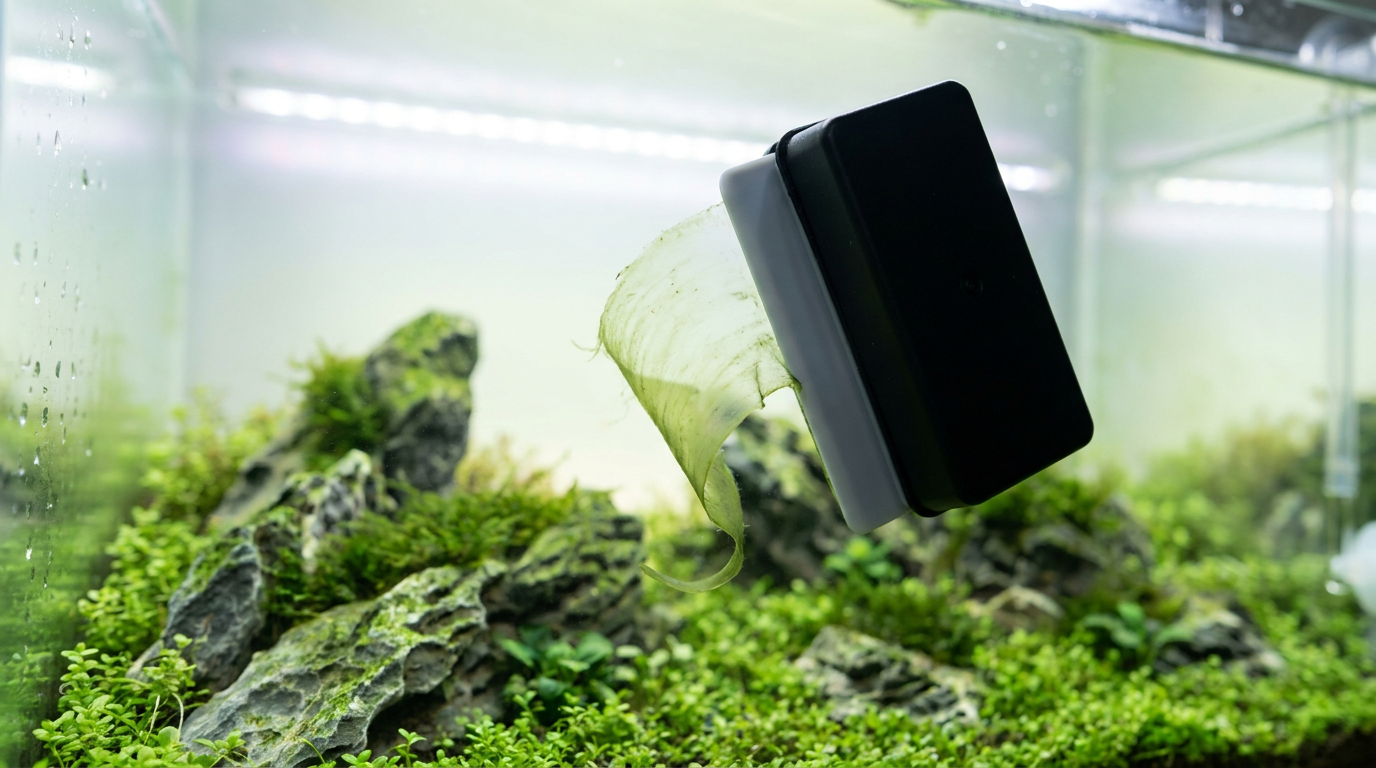
Aquarium Algae Scraper: Glass, Acrylic, and Hardscape-Safe Options
Updated October 2026
Match the aquarium algae scraper to the panel, not the algae. A stainless blade is the fastest cleaner on glass and the quickest way to ruin an acrylic tank, so the material of your front pane decides the tool before anything else does.
Two rules cover almost every tank. Glass takes steel. Anything softer than steel, which means acrylic, rock and wood, takes plastic or a brush.
Glass tanks: steel blades and magnets
On glass of normal thickness, a magnet cleaner with a stainless scraper edge does the whole front pane in one pass. The Flipper Float Standard ships with a stainless steel blade for glass and is rated by the manufacturer for panels up to 1/2 inch (12 mm). The Mag-Float Medium glass model is rated for tanks up to 125 gallons and glass up to 3/8 inch, with its scraper blade sold separately.
A grain of sand trapped between the pad and the pane scratches glass far more often than the blade does. Lift the magnet clear before you cross the substrate line, and rinse the pad every time it drops. The best aquascaping tools guide covers the rest of the maintenance set.
Video: BRSfresh
Acrylic tanks: plastic only
Acrylic is softer than steel, softer than sand, and in cheap tanks softer than the plastic blade. Continuum describes its cyan AquaBlade-P blade as a self-lubricating plastic softer than acrylic, then warns on the same page that the soft edge picks up grit if you push it into the substrate and that some imported acrylic scratches anyway. Test in a low corner first.
The Flipper Standard includes an ABS plastic blade alongside the steel one; fit the plastic one and mark the box so nobody swaps them back. The Mag-Float acrylic Medium (item 00130) carries the same 125 gallon and 3/8 inch rating as the glass version with an acrylic-safe pad. The Flipper Platinum hand scraper takes an old credit card as its blade, which is as soft as a scraper gets.
Hardscape: brush, never scrape
Seiryu, dragon stone and ohko chip under a steel edge, and a chipped face exposes fresh carbonate that can push pH and hardness back up. Scrub rock with a stiff toothbrush or a nylon brush during the water change, with the level lowered so you can see the surface.
Confirm the rock itself was a safe pick first: the hardscape materials guide lists which stones leach and which stay inert. On wood a brush is enough, since a blade gouges soft spiderwood. Green spot and diatoms on stone usually point to too much light reaching the hardscape, so shorten the photoperiod as well.
Algae scraper comparison by tank material
| Tool | Blade or pad | Manufacturer rating | Acrylic | Source |
|---|---|---|---|---|
| Flipper Float Standard | Stainless steel blade for glass, ABS plastic blade for acrylic, both included | Glass or acrylic up to 1/2 in (12 mm); 5 x 2.5 x 1.7 in body | Yes, with the ABS blade fitted | flippercleaner.com product page |
| Flipper Platinum hand scraper, 10 in | Any plastic card (credit card, gift card) in a slot | Handheld, no thickness rating; fiberglass handle | Yes, stated for glass and acrylic | flippercleaner.com product page |
| Mag-Float Glass Medium | Scrubber pad; Mag Scrape blade sold separately | Tanks up to 125 gal, glass up to 3/8 in | No, glass version | magfloat.com |
| Mag-Float Acrylic Medium (item 00130) | Acrylic-safe scrubber pad | Tanks up to 125 gal, surface up to 3/8 in | Yes, also usable on glass | magfloat.com |
| Continuum AquaBlade M | 316 stainless steel blade | Short handheld, or long handle in 15, 25 or 35 in | No, glass only | continuumaquatics.com |
| Continuum AquaBlade P | Cyan self-lubricating plastic, softer than acrylic | Same handle options; maker warns the soft blade picks up grit | Yes, test a corner first | continuumaquatics.com |
Technique that saves the pane
Scrape top to bottom, lift the tool out, then start again at the top. Dragging back up pushes the loosened algae and grit along the pane. Clean the glass before the water change so the siphon removes what you knocked loose.
Stop the blade a finger width above the substrate. If you have just finished your first layout, the aquascaping for beginners walkthrough shows where the substrate line sits so you know where to stop. Replace steel blades when they start to drag; the Flipper manufacturer suggests every three to six months.
Questions readers ask
Can I use a razor blade on an acrylic aquarium?
No. Any metal blade scratches acrylic. Use a plastic blade or a card scraper, and test in a low corner first, because some imported acrylic is soft enough to scratch even under plastic.
Why does my magnet cleaner scratch the glass?
Trapped grit. Sand gets between the pad and the glass when the magnet drops to the substrate or when you clean below the sand line. Lift it off before the substrate and rinse the pad whenever it falls.
How do I clean algae off seiryu stone without damaging it?
Scrub it with a stiff toothbrush during a water change with the level lowered. Keep steel blades off the rock; they chip the soft stone and expose fresh carbonate that raises hardness.