Best Aquarium Filters by Tank Size and Flow
Updated November 2026
Most fish die from poor water quality, not disease. And most poor water quality traces back to a filter that was either the wrong type for the tank or too small for the bioload. Getting filtration right from the start is the single highest-leverage decision you make in the hobby.
This guide covers how each filter type works, how to size one correctly, what planted tanks and shrimp colonies need specifically, and how to maintain media so your cycle never crashes.
Tannin Lab earns a commission on qualifying purchases through the Amazon links on this page, at no extra cost to you. Picks are chosen on suitability for the tank size, not on commission.


Tannin Lab earns a commission on qualifying purchases through the Amazon links on this page, at no extra cost to you. Picks are chosen on performance and suitability, not on commission.
Best fish tank filters by tank size
Sponge filters suit tanks under 20 gallons, a hang-on-back covers 10 to 55 gallons, and a canister takes over from 40 gallons up.
The table lists the four filters in the grid with the flow and tank range printed on each Amazon listing. Those are the sellers’ figures, not ours, and real flow drops once media loads.
| Filter | Type | Flow on the listing | Tank range on the listing |
|---|---|---|---|
| Pawfly Bio Sponge Filter | Air-driven sponge | Not listed | Up to 50 gallons |
| AquaClear 30 Power Filter | Hang-on-back | 150 GPH | 10 to 30 gallons |
| Fluval 107 Performance Canister | Canister | 550 L/h (about 145 GPH) | Up to 30 gallons |
| Tetra Whisper Internal Filter | Internal | 170 to 200 GPH | 20 to 40 gallons |
Flow and tank range are the figures printed on each Amazon listing, read October 2026. The maker sites block automated checks, so no list prices are shown; the buttons show today’s price on Amazon.
Use the sizer below to turn your tank volume into a rated GPH before you compare boxes.
Defaults are typical values, edit with your numbers. Formula: rated GPH = gallons x turnover / (1 – loss), where the 25 percent loss sits inside the 20 to 30 percent drop this guide cites for loaded media.
Volume matters more than the label on the glass, so check it first with the aquarium volume calculator.
For small tanks, the sponge filter explainer covers seeding and rinsing. Past 40 gallons, read when a canister filter is actually needed.
The Three Stages of Aquarium Filtration
Every effective aquarium filter handles at least one of three processes, and the best ones address all three in sequence.
Mechanical filtration removes suspended particles physically: uneaten food, fish waste, plant debris. Coarse foam, filter floss, and sponge pads do this work. Without it, organic matter breaks down directly in the water column and drives ammonia spikes.
Biological filtration is the process that actually keeps fish alive. Beneficial bacteria colonize porous media surfaces, converting toxic ammonia first into nitrite, then into relatively harmless nitrate. Ceramic rings, bio-balls, lava rock, and specialized media like Seachem Matrix or Biohome are the most common substrates. This stage takes 4 to 8 weeks to fully establish in a new tank, which is why the nitrogen cycle matters so much before adding fish.
Chemical filtration uses activated carbon, zeolite, or phosphate-removing resins to pull dissolved compounds out of the water. Activated carbon is the most common: it adsorbs medications, tannins, odors, and some heavy metals. It exhausts in 2 to 4 weeks and must be replaced, not rinsed. For blackwater setups or tannin-forward tanks, skip carbon entirely since it strips the tannins you are deliberately adding.
Prices move, and stock does too. Each of these opens the product page on Amazon in a new tab.

Filter Types Compared: Sponge, HOB, Internal, Canister
Each filter design makes different tradeoffs between flow, media volume, maintenance access, and price. Here is how they map to real tank scenarios.
| Filter Type | Best Tank Size | Typical GPH | Filtration Stages | Top Pros | Main Cons | Maintenance |
|---|---|---|---|---|---|---|
| Sponge | Under 20 gallons | 10 to 80 | Mechanical + Biological | Safe for shrimplets and fry; cheapest to run; easy to seed | No chemical stage; needs air pump | Rinse sponge in tank water every 3 to 4 weeks |
| HOB (hang-on-back) | 10 to 55 gallons | 100 to 400 | Mechanical + Biological + Chemical | Easy access; good surface agitation; versatile media slots | Exposed to evaporation; can be loud | Rinse foam monthly; replace carbon every 4 weeks |
| Internal | Under 30 gallons | 50 to 200 | Mechanical + Biological | Compact; fully submersible; quiet | Takes up tank space; limited media volume | Disassemble and rinse every 2 to 3 weeks |
| Canister | 40 gallons and up | 200 to 700+ | Mechanical + Biological + Chemical | High media capacity; silent; fully customizable media stacking | Higher cost; more complex setup; must prime | Full clean every 2 to 3 months; rinse trays in tank water |
How to Size Your Filter Correctly
The standard sizing rule in the hobby is a turnover rate of 4 to 6 times your tank volume per hour. A 40-gallon tank needs a filter rated for 160 to 240 GPH at minimum.
Sizing Rule
Target GPH = tank volume x 4 (minimum) to x 6 (ideal). For heavily stocked tanks or cichlids, push toward 8x to 10x turnover. For shrimp-only tanks, stay at the 4x low end to avoid blowing shrimplets around. Filter manufacturer ratings are measured under ideal lab conditions with clean media; real-world flow is often 20 to 30% lower, so buy one size up when in doubt.
Manufacturer GPH ratings are also measured with clean, empty chambers. Once you add bio media, foam layers, and a few months of colonized bacteria, flow drops noticeably. This is one reason experienced hobbyists size up rather than buying the minimum-rated unit.
Tank shape matters too. A tall, narrow 30-gallon column tank is harder to circulate evenly than a wide, shallow 30-gallon. For tall tanks, consider adding a powerhead or wavemaker to push water toward corners that an HOB outlet cannot reach.
Best Filter by Tank Size: Nano to 75+ Gallons
Tank size is the fastest way to narrow your filter choice before you even think about livestock or plants.
Nano tanks under 5 gallons (pico tanks, desktop cubes): A dual-sponge filter driven by a small air pump is almost always the right call. Flow is gentle enough for betta fins and shrimp antennae. You can also seed the second sponge in a main tank and move it to a quarantine or breeding setup when needed. Internal filters designed for nano tanks work too, but they occupy more interior real estate.
10-gallon tanks: The classic aquarium footprint. A sponge filter handles it well for shrimp-only or heavily planted setups. If you are keeping fish, an HOB rated for 40 to 80 GPH is a cleaner solution since it handles three filtration stages and keeps the inside of the tank uncluttered.
20-gallon tanks: This is the sweet spot where a quality HOB earns its keep. Look for units with oversized media chambers so you can add ceramic bio media instead of relying solely on the included carbon cartridge. Many experienced hobbyists swap the proprietary cartridge out entirely and fill the chamber with loose bio rings and a cut piece of coarse foam.
40 to 55-gallon tanks: You can use a large HOB here, but a canister starts to make more sense. The media volume advantage is significant at this size, particularly if you are keeping messy fish like goldfish, cichlids, or larger community groups. A canister rated at 300 to 400 GPH gives you room to load biological media without sacrificing mechanical pre-filtration.
75-gallon tanks and larger: Canister is almost always the correct answer. Some aquarists run two HOBs in tandem on a 75 for redundancy and media variety, which works fine but adds surface clutter. A single quality canister rated at 400 to 600 GPH, loaded with coarse foam, bio rings, and fine polishing pads in sequence, handles the bioload without the noise or evaporation that open HOB designs introduce.
Planted Tanks and Shrimp: What Changes
Live plants and invertebrates have filtration needs that differ meaningfully from a standard fish community tank, and ignoring those differences leads to preventable losses.
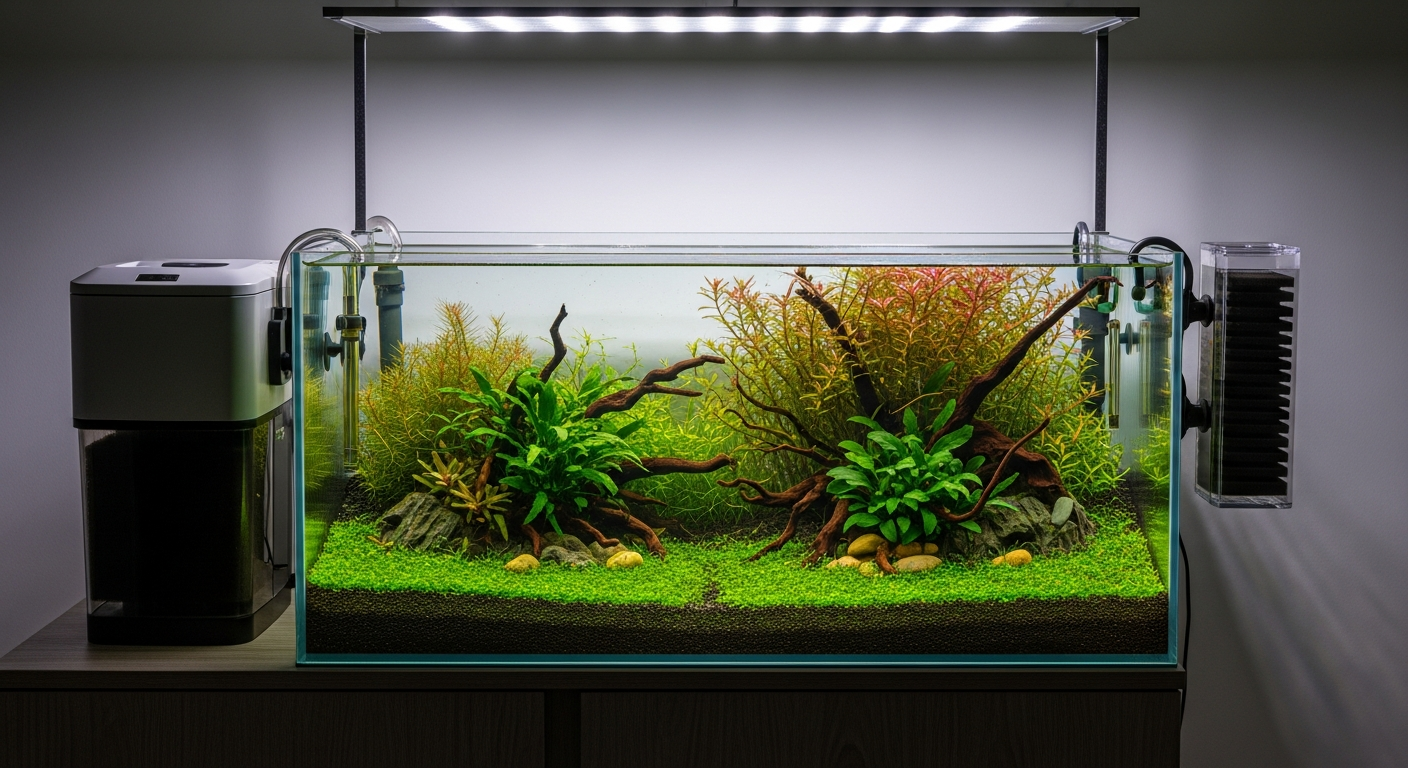
For planted tanks, surface agitation is a double-edged issue. Adequate surface movement supports gas exchange and oxygen saturation, but excessive agitation drives off CO2 before plants can absorb it. This matters most in injected CO2 setups, where you are paying for gas that leaves the water within seconds of reaching an agitated surface. HOBs with adjustable outflow angles help; spray bars that direct flow horizontally rather than breaking the surface are the preferred solution on canister setups.
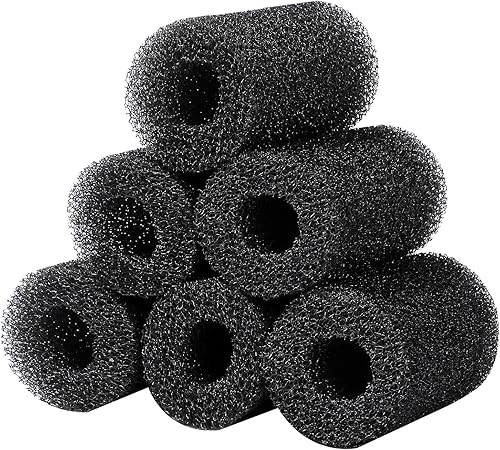
For shrimp tanks, the intake is the critical detail. Standard HOB and canister intakes generate enough suction to trap and kill shrimplets. Cover intakes with a pre-filter sponge. It does double duty: protecting the shrimp and adding extra bio surface area. A dedicated sponge filter for shrimp avoids the intake problem entirely and suits Neocaridina and Caridina colonies extremely well.
Shrimp are also sensitive to sudden flow changes and oxygen drops, which makes a sponge filter’s consistent, gentle output valuable. The air-driven flow does not fluctuate the way a powerhead can when media clogs slightly between maintenance sessions.
Betta tanks present a specific flow challenge. Bettas struggle against strong currents and can develop stress-related fin clamping and increased fin rot susceptibility. A gentle sponge filter or a baffled HOB (a small piece of filter floss or sponge zip-tied to the outflow) keeps flow within a range the fish can navigate comfortably. You can read the full breakdown in the guide to best betta filters, but the short answer is: less flow, more bio media.
Filter Media: What Goes Where and When to Replace It
The order you stack media inside a filter matters as much as the media type itself. Water should hit the coarsest mechanical stage first, then biological, then chemical last. Reversing this order forces clean water through dirty foam before biology can work properly, and it also cakes fine media with particles that belong upstream.
A well-loaded canister runs coarse sponge or floss at the intake, ceramic rings or bio media in the middle tray, and activated carbon or polishing pads in the final output tray. This sequence extends media life and keeps the biological colony stable between maintenance cycles.
Never replace all bio media at once. The nitrogen cycle lives in that media. Swapping everything in one session crashes the cycle and forces a new 4 to 8 week colonization period. When media genuinely needs replacing, swap half, wait three weeks, then swap the remainder.
Rinse bio media exclusively in tank water or dechlorinated water. Tap water contains chlorine and chloramine that kill nitrifying bacteria on contact. A quick rinse in a bucket of tank water during a partial water change is all it takes to clear debris without touching the bacterial colony.
Activated carbon, on the other hand, must be replaced, not rinsed. It adsorbs compounds until saturated, typically in 2 to 4 weeks, and rinsing it does nothing to restore adsorption capacity. If you are running a blackwater or tannin-forward setup, skip carbon entirely. It will pull out the tannins and humic acids you are deliberately maintaining. For those setups, run extra bio media in the chemical stage slot instead. This pairs well with the broader planted tank and blackwater lighting setup approach where water chemistry is tuned rather than stripped.
Canister vs HOB: Which One Wins for Your Setup
This debate comes up constantly on forums, and the honest answer is that both are excellent tools that excel in different contexts. Neither is universally superior.
Choose a canister if you want maximum media volume, a sealed system that does not contribute to evaporation, and near-silent operation. Canisters also allow you to run long spray bar returns or position the outflow anywhere in the tank, which gives precise control over circulation patterns. The tradeoff is a higher upfront cost and a more involved maintenance session when you do open it.
Choose an HOB if you want easy access to media, a simpler setup for tanks under 55 gallons, and the ability to quickly inspect and swap filtration without disconnecting hoses or priming siphons. HOBs also tend to be more forgiving for beginners because you can see the flow rate and access media without tools.
Many serious hobbyists run both: a canister as the primary biological powerhouse and a sponge filter or second HOB for mechanical pre-filtration or as a seeded backup for quarantine. This redundancy matters because losing your only filter to a power outage or impeller failure while you are traveling can wipe out a tank. Having two independent filter systems means the loss of one is an inconvenience, not a disaster.
Heater placement is worth noting here too. In canister setups, an inline heater fitted to the return line keeps glass-mounted heaters out of the display tank completely. If you are pairing filters and heaters, the aquarium heater guide covers the inline option and wattage math in detail.

Frequently Asked Questions
- How many GPH does my aquarium filter need?
- Target 4 to 6 times your tank volume per hour as a baseline. A 20-gallon tank needs a filter rated for at least 80 GPH, ideally 120 GPH. For heavily stocked tanks or messy fish, push to 8x to 10x turnover. Remember that manufacturer GPH ratings are measured with clean, empty media chambers; real-world flow is typically 20 to 30% lower once media is loaded and colonized.
- Can I use a sponge filter as my only filter?
- Yes, for tanks under 20 gallons with light to moderate stocking. Sponge filters handle mechanical and biological filtration well and are the safest option for shrimp colonies and fry. They do not provide chemical filtration, which is rarely essential anyway unless you are running medications or managing high-tannin water. For larger tanks or heavy bioloads, pair a sponge pre-filter with a HOB or canister for complete coverage.
- Should I run carbon in my planted or blackwater aquarium filter?
- No. Activated carbon in a planted or blackwater tank actively works against you. It removes humic acids, tannins, and some chelated iron and trace elements that your plants and blackwater livestock depend on. Skip carbon and use that media slot for additional bio media or a phosphate-removing resin if you have algae pressure. Only run carbon after treating with medications and needing to strip residues from the water.