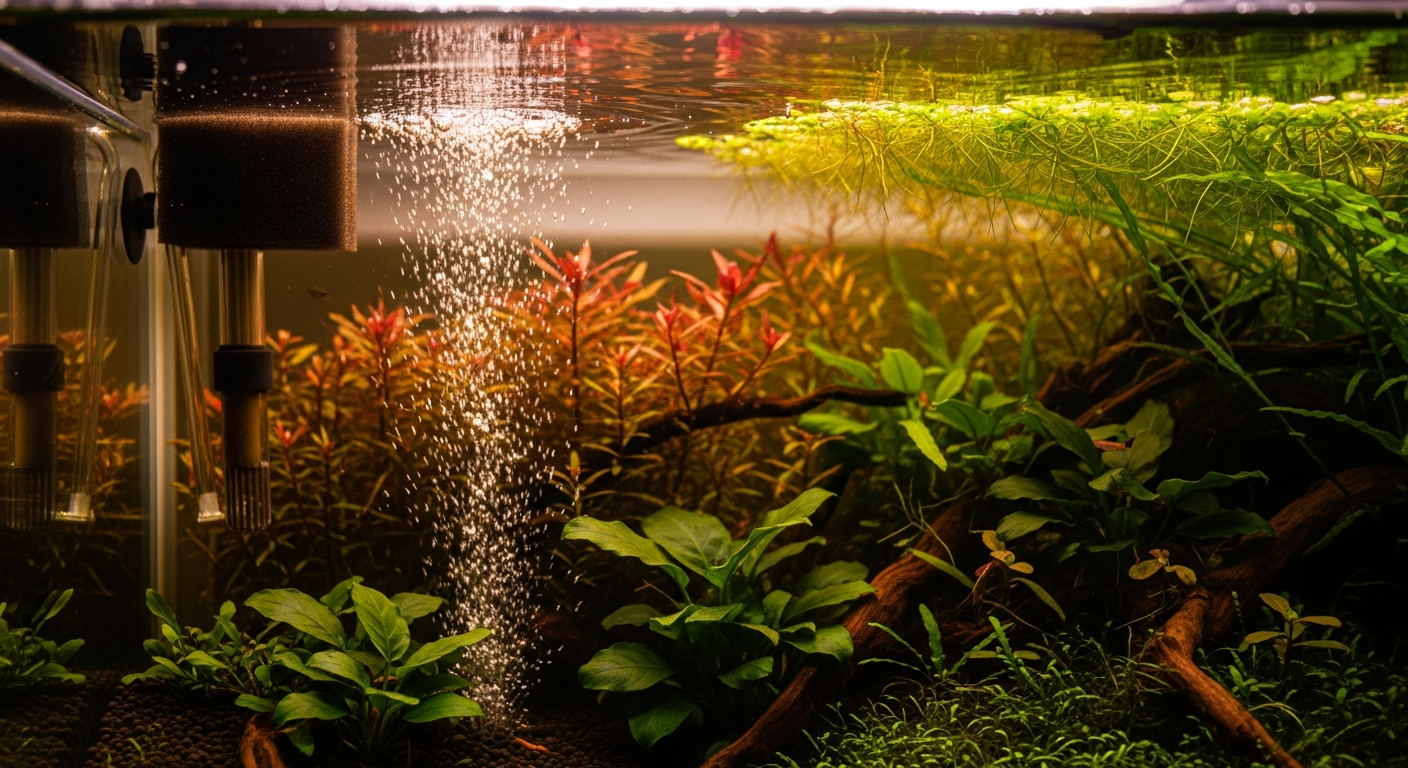
Best Betta Filters (Gentle Flow)
Updated October 2026
Bettas are sold in tiny cups, so people assume they want still water. They don’t. What they want is clean water with very little current. The distinction matters, because a filter that moves too much water can stress a betta into lethargy, fin damage, and chronic illness over weeks you might not even notice.
This guide breaks down every filter type worth considering for a betta tank, explains what to look for when you’re choosing, and shows you how to dial back flow when a filter runs a little too strong for your setup. If you’re starting from scratch, pair this with the betta tank setup guide for a full picture of what the tank needs before any fish goes in.
Why Bettas Need Gentle Flow
Betta splendens evolved in the shallow rice paddies and slow-moving canals of Southeast Asia. Water there moves, but barely. Their long, flowing fins are built for display, not for swimming against current.
When flow is too strong, bettas spend energy fighting to hold position rather than exploring and eating. You’ll see them pressed against the glass, hiding near the bottom, or clamping their fins. Persistent current stress also lowers immune function, making them more susceptible to fin rot and ich.
A common rule of thumb is to keep turnover at 3 to 5 times the tank volume per hour, which is already conservative by most aquarium standards. A 5-gallon tank needs a filter rated around 15 to 25 GPH, not the 100+ GPH filters marketed for “small tanks.”
Seriously Fish, the species reference, says strong water movement should be avoided for Betta splendens and calls an air-powered sponge filter set to turn the water over gently adequate.
For a 41 litre tank, about 11 US gallons, it suggests a filter rated at 80 to 125 litres per hour, which is roughly 21 to 33 GPH.
TanninLab earns a commission on qualifying purchases through the Amazon links on this page, at no extra cost to you. Picks are chosen on performance and suitability, not on commission.
Do Bettas Actually Need a Filter?
Yes. The cups bettas come in at pet stores are temporary holding vessels, not environments, and no betta should live in unfiltered water long-term. Even in a small tank, fish waste produces ammonia within hours. Ammonia at any measurable level is toxic.
A filter does two jobs: it processes ammonia and nitrite through beneficial bacteria (biological filtration), and it moves oxygenated water through the tank. Without it, you’re doing large water changes every day to compensate, and you’re still not providing stable parameters. The minimum tank size guide covers why tank volume is directly tied to how quickly water quality degrades.
Can a Betta Live Without a Filter?
A betta breathes surface air, so people assume an unfiltered tank is fine. Surface air covers oxygen. Ammonia is the problem a filter solves, because the bacteria living in it convert the waste.
A few keepers run heavily planted tanks with no filter at all, and the two gallon video further down shows one.
It works when plants absorb most of the ammonia, the betta is the only animal, feeding stays light, and you test the water often. Miss one of those and ammonia climbs between water changes.
For everyone else, the answer to “do betta fish need a filter” is yes.
A filter spaces out your water changes, and our betta water change schedule covers the routine. The betta tank cycling guide explains what the bacteria are doing while the tank matures.
Filter Types Compared
Not all filters are built the same, and “low flow” doesn’t mean anything on a spec sheet unless you know what GPH the pump actually outputs at your head height. A working comparison of the four types most commonly used in betta tanks:
| Filter Type | Typical Flow | Best Tank Size | Noise Level | Pros | Cons |
|---|---|---|---|---|---|
| Sponge filter | Very low (air-driven, ~5 to 15 GPH equivalent) | 2.5 to 20 gal | Slight bubble gurgle; air pump is the noise source | Zero intake risk, cheapest to run, excellent bio media, easy to clean | Needs air pump + tubing; minimal mechanical filtration; visible in tank |
| Hang-on-back (HOB) | Low-high, often adjustable (50 to 200 GPH range; use lowest setting) | 10 to 20 gal | Quiet hum; louder if water level drops | Good mechanical + bio filtration; easy media access; keeps water clear | Output can create strong surface current; needs baffle for bettas; intake requires sponge pre-filter |
| Internal/submersible | Low-medium, usually adjustable (50 to 150 GPH) | 5 to 15 gal | Very quiet (submerged motor muffles sound) | Fully submerged means no noise from waterfall; directional output easy to point at glass | Takes up space inside tank; bio media capacity limited; harder to access for cleaning |
| Nano/corner filter | Very low (15 to 40 GPH typical) | 2.5 to 5 gal | Near-silent | Compact, unobtrusive, gentle by design | Small media volume means less bio capacity; needs frequent cleaning; limited brands |
Sponge Filters: The Betta Default
If you ask any experienced betta keeper what filter they’d put in a 5-gallon, most will say sponge filter without hesitating. The biology is simple: the porous foam hosts colonies of Nitrosomonas and Nitrobacter bacteria, and the gentle pull of air-driven water through the sponge processes ammonia without creating any meaningful surface current.
There’s no intake tube, which eliminates one of the most common betta injuries. Long fins can get drawn against a standard intake with enough suction to tear them. With a sponge filter, the worst that happens is a fin briefly touching foam.
The one real tradeoff is aesthetics. Sponge filters are utilitarian. If you’re building a planted display tank, you may prefer a more discreet option. For breeders, fish rooms, and grow-out tanks, sponge filters are nearly universal.
Sponge Filter for Betta: What Size to Buy
Match the sponge to the tank. The small bio sponge from hygger comes in two sizes, and the listing suggests the small one for 2 to 5 gallons and the large one for 6 to 20 gallons.
The AQUANEAT double bio sponge is listed for tanks up to 20 gallons and comes in a pack of four.
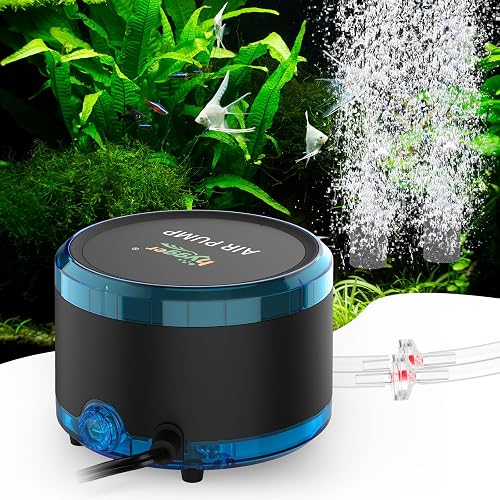
Both run on an air pump and airline bought separately, and the pump has to be strong enough.
The hygger listing specifies a pump of at least 2 W for its sponge, which the 4 W dual outlet pump below clears with room to spare.
Vacuum-sealed sponges arrive flat. The AQUANEAT listing says to soak them in warm water for 8 to 10 hours so they regain their shape, and some take up to 24, so do it before you fill the tank.
A small inline air valve lets you throttle the flow further, and the check valve in the steps below keeps water from running back into the pump. The drawbacks are the ones you already know: the sponge is visible, and the pump adds a gurgle.
For sponge density and rinse schedules, read what a filter sponge actually does. Shrimp-focused models are covered in sponge filters for shrimp tanks, and pump choice in air pumps for sponge filters and betta tanks.
The hygger small bio sponge is the nano pick for a betta tank of 2 to 5 gallons.

The AQUANEAT double sponge suits a larger tank or a second spare, and comes four to a pack.

Either sponge needs an air pump with enough power behind it, and this one has it.
Hang-on-Back Filters for Larger Betta Tanks
For tanks in the 10 to 20 gallon range, a hang-on-back filter with an adjustable flow dial and a pre-filter sponge over the intake is a practical choice. You get better mechanical filtration, more media space, and a cleaner-looking setup.
The key is buying a model with a genuine flow adjustment, not just a flow restrictor that increases back-pressure and wears the pump faster. You want to redirect or diffuse the output, not choke it. Most experienced keepers run the pump at its lowest setting and add a baffle at the outflow to spread the current across the surface rather than driving it down into the water column.
If you’re also researching heating options for the same tank, the best betta heaters guide walks through wattage-to-tank-size matching alongside the flow considerations that affect temperature consistency.
AquaClear 20 as a Baffled Betta Filter
The Fluval AquaClear 20 is a hang-on-back listed for 5 to 20 US gallons, with a flow control lever. Fluval’s manual says that at the minimum setting up to 50 percent of the water is recirculated through the filter for slower, more thorough filtration.
Treat minimum as a starting point and add a baffle, because the filter is built for tanks far larger than a betta needs.
Fluval’s manual says the water should sit no more than 5/8 inch (16 mm) below the bottom of the output for the AC20 to work properly, and a bigger drop makes the waterfall louder. It is too big for a 2.5 gallon.

Internal and Nano Filters
Submersible internal filters are popular for tanks where you want silence above everything else. Because the motor is fully submerged, the sound of moving water is contained. Pointed at a side wall or the back glass, the output diffuses before it reaches the betta’s primary swimming zone.
Nano corner filters work well in the 2.5 to 5 gallon range and are often the quietest option available. They’re not heavy-duty mechanical filters, but for a single betta in a planted tank with live plants handling part of the nitrogen load, they’re sufficient. Clean the sponge every two weeks rather than every four, and they hold up fine.
Matching Filter to Tank Size
The right filter depends heavily on tank volume. Running a 200 GPH filter in a 5-gallon tank isn’t just overkill, it’s actively harmful. Use the 3 to 5 times turnover guideline as your ceiling, not your target.
For a 2.5-gallon: a single small sponge filter on a low-output air pump, or a nano corner filter. For 5 to 15 gallons: a sponge filter sized to the tank (a dual sponge works), or an internal filter at its minimum setting. For 10 to 20 gallons: a baffled HOB with adjustable flow handles the bioload well, especially if you ever decide to add tank mates. The best betta tanks guide covers size recommendations and which setups come with filtration already sized appropriately.
The table below is arithmetic from the 3 to 5 times rule, with the Seriously Fish figure for an 11 gallon tank as a cross-check. Read it as a ceiling, and remember a rated GPH falls as media clogs.
| Tank size | Flow ceiling (GPH) | Flow ceiling (litres per hour) |
|---|---|---|
| 2.5 gallon | 7.5 to 12.5 | 28 to 47 |
| 5 gallon | 15 to 25 | 57 to 95 |
| 10 gallon | 30 to 50 | 114 to 189 |
| 11 gallon (41 L), Seriously Fish suggestion | 21 to 33 | 80 to 125 |
Quiet Betta Filters: Where the Noise Comes From
A quiet filter and a low-flow filter are usually the same filter. Noise comes from three places, and each has its own fix.
With a sponge filter, the air pump is the main source. Setting it on a folded towel or foam pad stops the case rattling against a shelf, and our air pump guide ranks the quietest models.
The gurgle at the lift tube is bubbles breaking at the surface, and turning the air valve down quiets it while giving the betta the gentler flow it wants.
With a hang-on-back, the waterfall is the noise. It gets louder as evaporation lowers the water, so top the tank off. Fluval’s limit for the AC20 is a level no more than 5/8 inch below the output.
Internal filters hide the motor underwater, so the sound that remains is the outflow splashing. Point it at the glass, and keep the water above the outlet.
How to Reduce Filter Flow
Three ways to cut flow without killing your pump
Baffle method: Cover the HOB output with foam or a cut bottle. The step list below has the full method.
Pre-filter sponge on intake: Slide a sponge sleeve over the intake tube. It slows intake velocity, protects fins, and adds bonus biological media. Replace or rinse in old tank water every two to four weeks.
Redirect output: For internal filters, angle the output toward the back glass or a corner. The current dissipates against the glass rather than pushing directly through the swimming area.
How to Baffle a Betta Filter, Step by Step
- Turn the flow control to its minimum. On the AquaClear 20 that recirculates up to 50 percent of the water, per Fluval’s manual.
- Rinse your baffle material in tank water, never with soap. A piece of coarse foam works, as does a clean plastic bottle cut into a cup with a few holes.
- Fit it so the stream hits foam or plastic first and spills across the surface instead of dropping into the water column. A rubber band holds it.
- Sprinkle crushed flake at the far end of the tank. If it drifts slowly, the flow is right. If it races toward the filter, add another layer.
- Watch the betta for a day. Resting in open water and exploring means the baffle works. Hovering near the bottom or clamped fins mean it needs more.
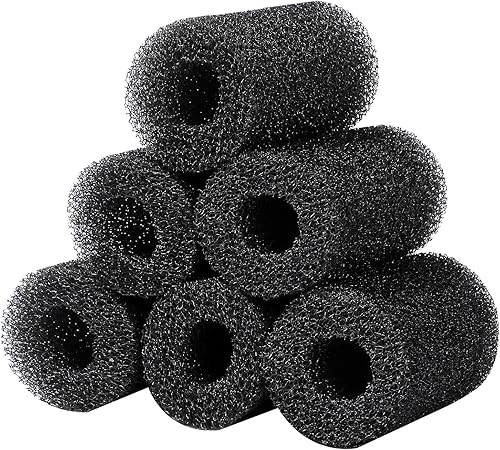
On the intake side, a foam sleeve slows the pull and keeps long fins out of the tube. The AQUANEAT pre-filter sponge fits a 0.8 to 1 inch intake, so measure before you order.
Cycling Your Filter Before Adding Your Betta
A new filter has no beneficial bacteria. Running a filter for a week in a tank without cycling it means nothing. The nitrogen cycle takes three to six weeks to establish, and skipping it exposes your betta to ammonia spikes that cause gill damage and chronic stress even when the water looks clear.
Use a liquid test kit, not strips, to track ammonia, nitrite, and nitrate throughout the cycle. Once ammonia and nitrite both read zero and you’re seeing nitrate accumulate, the tank is cycled. At that point the filter is the most important piece of equipment in the tank. Protect the media: never rinse it under tap water, and never replace all of it at once.
The how to cycle a betta tank guide has the day-by-day testing routine, and it applies to a new sponge filter as much as to a hang-on-back.
Frequently Asked Questions
Is a sponge filter enough for a betta tank?
Yes, for tanks up to about 20 gallons, once you match the sponge to the tank, a sponge filter running off a quality air pump provides enough biological and mechanical filtration for a single betta. They’re the first choice for most experienced betta keepers precisely because the flow is so gentle.
What GPH filter should I get for a betta?
Target 3 to 5 times your tank volume per hour at the absolute maximum. For a 5-gallon tank, that means a filter rated 15 to 25 GPH is ideal. Many filters marketed for “5-gallon tanks” run at 75 to 100 GPH, which is far too strong. Always check the actual GPH rating, not just the tank size listed on the box.
Can a betta tank have too little filtration?
Yes. Under-filtering is a real problem. Too little biological media means ammonia builds between water changes, and ammonia toxicity is one of the most common causes of slow betta decline. The goal is gentle flow, not zero filtration. Even a small sponge filter running continuously is far better than no filter at all.
Do betta fish need a filter?
Yes, in almost every setup, because only filter bacteria convert ammonia. The exception is a heavily planted, lightly fed tank with frequent testing.
What is the best filter for a betta fish?
An air-driven sponge filter for almost any betta tank up to about 20 gallons, because the flow is gentle and nothing can pull a fin in. For 10 to 20 gallons, a hang-on-back such as the AquaClear 20 on its minimum setting with a baffle on the outflow is the alternative when you want more mechanical filtration.
How do you baffle a betta filter?
Cover the outflow with foam or a cut bottle so the stream spreads across the surface.
What size sponge filter does a betta need?
The small size suits 2 to 5 gallons and the large size 6 to 20 gallons, with an air pump rated at least 2 W.
Are betta filters noisy?
The pump or the waterfall makes the noise. Put the air pump on foam, turn the air valve down, and keep a hang-on-back topped off so the water level stays near the output.