Best Aquarium Thermometers: Accuracy Tested
Updated August 2026
A digital thermometer with a stainless steel probe gives you the most reliable picture of what your fish are actually sitting in. Glass alcohol thermometers come second. Stick-on LCD strips come last, because they read the glass and the room as much as the water.
Most freshwater tanks need stability more than precision. A reading half a degree off matters far less than one that drifts while your tank holds steady.
What the accuracy rating on the box means
Manufacturer figures for digital probe thermometers usually sit at plus or minus 1F, or 0.5C. Lab-style glass thermometers are often rated the same. Stick-on strips rarely publish a figure at all, which tells you something.
That rating is a factory claim about the model, not your specific unit. Budget probes drift as the sensor ages and water creeps into the cable joint.
Tannin Lab earns a commission on qualifying purchases through the Amazon links on this page, at no extra cost to you. Picks are chosen on performance and suitability, not on commission.
Digital probe thermometers
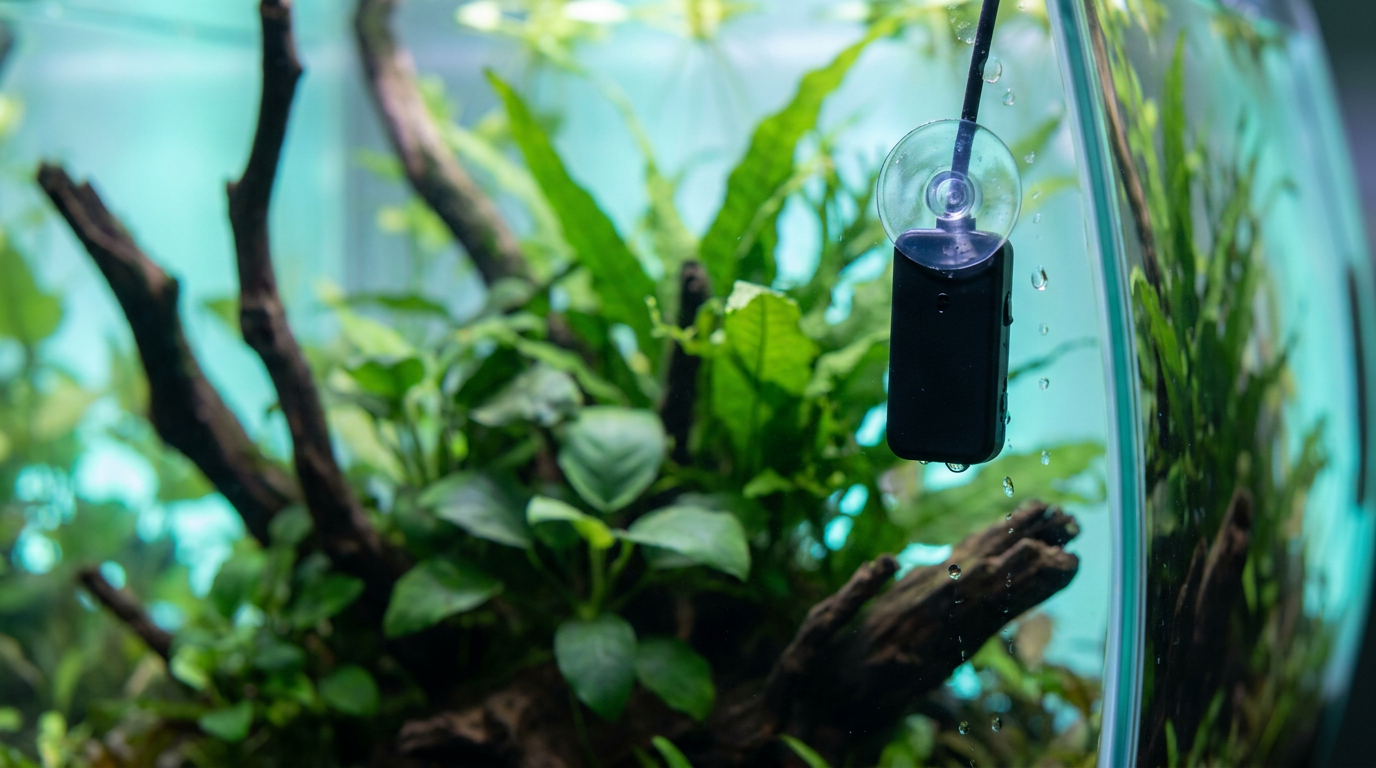
The probe sits in the water and the display sits outside on the glass. You get a fast readout, a min and max memory on better units, and no squinting at fine gradations from across the room.
Watch two failure modes. A dying battery often freezes the display on the last number instead of going blank, so a reassuringly stable tank can be stale data. And the suction cup gives up long before the sensor does, dropping the probe into warm substrate.
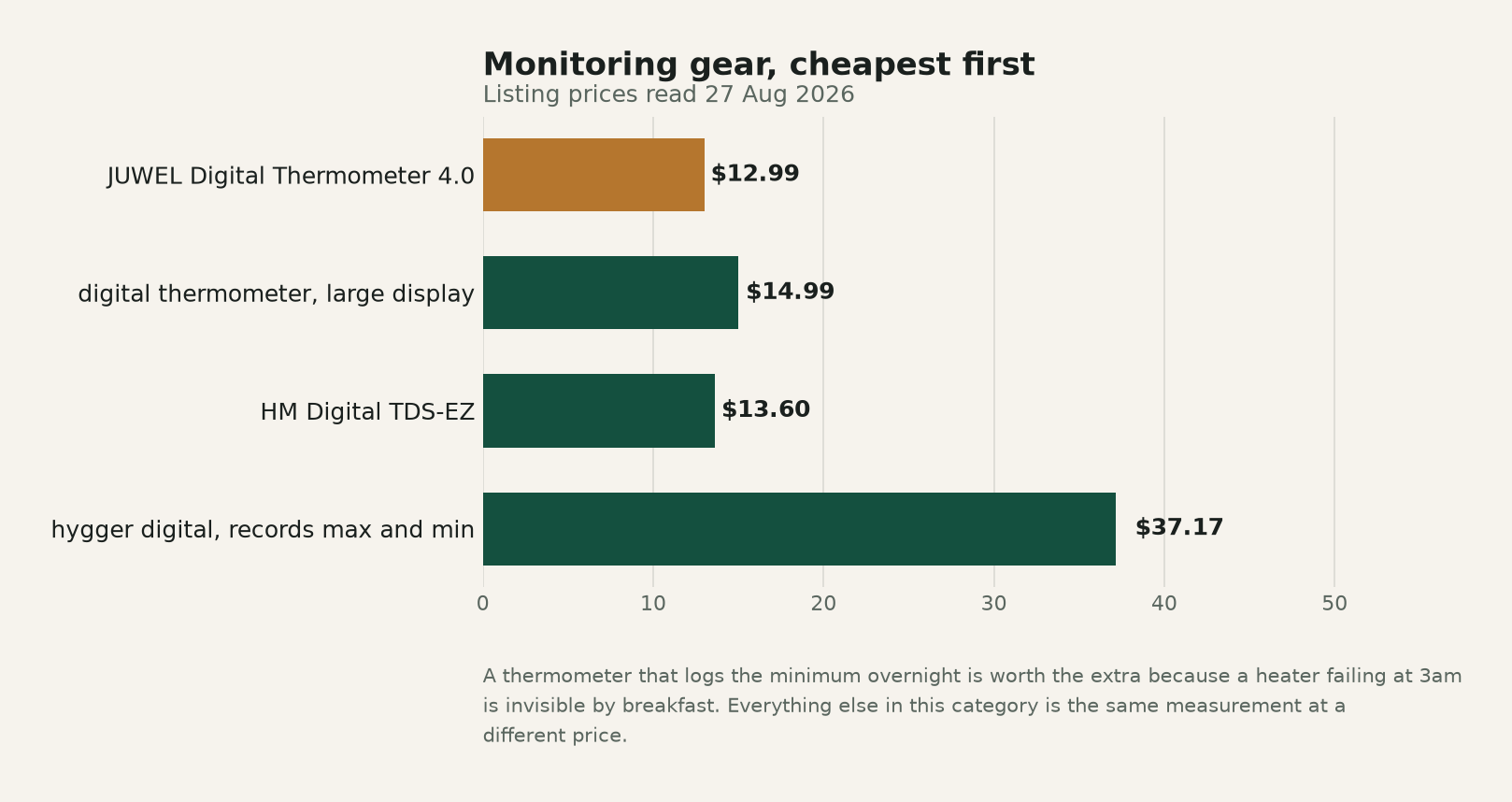
Street price runs from a few dollars for a basic LCD unit to around thirty for a titanium probe model with alarms. The pricier units buy you alerts, not better accuracy.
Glass thermometers still earn their place
An alcohol filled glass thermometer has no firmware and no battery to die. Hang one at the far end of the tank as a cross check against your digital unit and you will spot the moment one starts lying.
Readability is the tradeoff. Thin markings behind algae dusted glass are hard to read to the degree, which is the resolution you want when you are dialing in aquarium heaters on a fresh setup.
Prices move, and stock does too. Each of these opens the product page on Amazon in a new tab.
Skip the stick-on strips
LCD strips measure the outside of the glass. Room air, a nearby window, and heat from the light fixture pull that number away from true water temperature. Treat a strip as a rough sanity check, not a measurement.
Verify any thermometer with an ice bath
Fill a glass with crushed ice, top it with cold water, stir, and wait two minutes. A healthy thermometer reads 32F, or 0C, within its stated tolerance. More than two degrees off and the unit gets retired.
Run the check when the thermometer is new and again every six months. It costs nothing, and it is the only way to trust the number driving your heating decisions, which matters most for species with narrow comfort bands like those in this guide to temperature range by species.
Placement changes the number
Mount the probe at the opposite end of the tank from the heater, mid water, clear of the filter outflow. Park it beside a heating element and you are reading the heater. Tuck it in a dead corner and you are reading a cold spot.
Small tanks stratify more than most keepers expect, which is why undersized heaters for small betta tanks can read fine on the display while leaving a chilly bottom layer.
Marcus Chen
Aquarist & Founder, TanninLab
Marcus has been keeping planted tanks for 14 years. He tests every product recommendation in his own tanks and publishes the raw data.
Last updated: August 2026