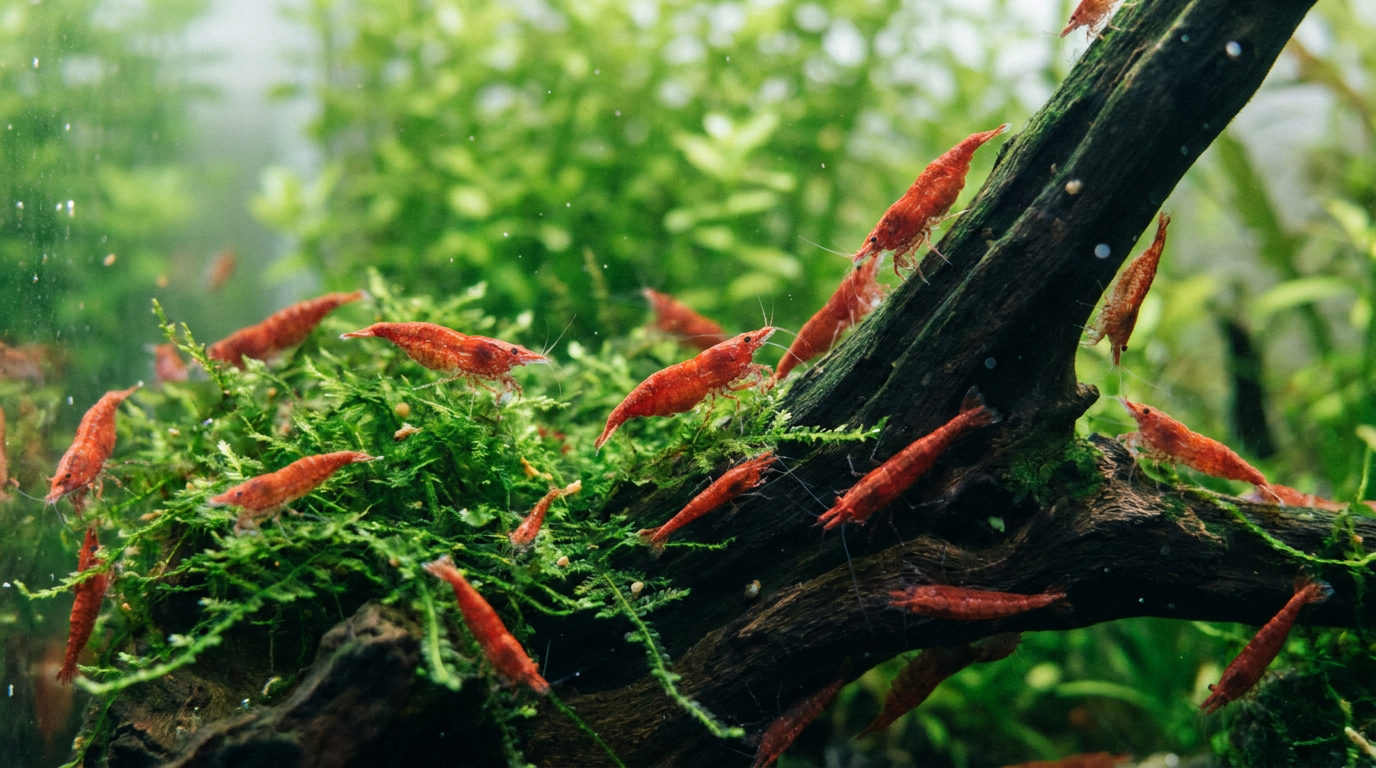
Cherry Shrimp: The Parameters That Actually Matter
Updated August 2026
Get general hardness right and cherry shrimp are close to bulletproof. GH 6 to 8 degrees, temperature between 20 and 24 C, pH 6.8 to 7.6, and absolutely no copper. Everything else on the usual care-sheet list is secondary.
Most colonies that fail do not fail from pH. They fail because the shrimp cannot build a new shell, or because a parameter moved too fast.
GH is the parameter people get wrong
General hardness measures calcium and magnesium, and a molting shrimp pulls both out of the water column to harden its new exoskeleton. Below about GH 4 there is not enough mineral available, so shrimp get stuck halfway out of the old shell and die.
Push too far the other way, past GH 12, and the shell hardens faster than the shrimp can shed it. Same outcome, opposite cause. If you are unsure where your water sits, read the difference between GH and KH before you start dosing anything.
RO water plus a remineraliser gives you the cleanest control. Straight tap water works too, as long as you have actually tested it rather than assumed.
Temperature: stability beats warmth
Cherry shrimp breed happily at room temperature in most homes. Warmer water around 25 to 26 C speeds up breeding and shortens their lifespan, which is a trade you should make on purpose rather than by accident.
What they will not forgive is a swing. A heater that overshoots by three degrees each cycle triggers molts at the wrong moment, and repeated molting problems show up as the white ring of death behind the head.
Copper is the silent killer
Copper is toxic to invertebrates at concentrations that fish shrug off. It arrives through old plumbing, plant fertilisers, and almost every fish medication containing copper sulphate.
Snail treatments are the classic mistake. Check the copper content of your tap water and your ferts before you blame anything else for a sudden wipeout.
Nitrogen and stocking
Ammonia and nitrite must read zero. Nitrate under 20 ppm is comfortable, and shrimp handle it better than most fish, but high nitrate correlates with the same neglect that causes other problems.
They also need biofilm. A mature tank with moss, driftwood and leaf litter feeds a colony almost passively, which is why bare quarantine tanks are a poor long-term home.
How to change water without killing them
Small and slow. Ten to fifteen percent weekly, matched for temperature and GH, drip-added if you can be bothered.
A 50 percent change with different water is the single most common cause of dead shrimp the next morning. The shrimp were fine in your old parameters and fine in your new ones. The jump between them is what killed them.
A working baseline
- GH 6 to 8 degrees, KH 2 to 5 degrees
- pH 6.8 to 7.6, stable rather than perfect
- Temperature 20 to 24 C
- Ammonia and nitrite at zero, nitrate under 20 ppm
- TDS roughly 150 to 250
- Zero copper from any source
Hit that range, leave the tank alone, and a starter group of ten will usually turn into a visible colony within four months.
Marcus Chen
Aquarist & Founder, TanninLab
Marcus has been keeping planted tanks for 14 years. He tests every product recommendation in his own tanks and publishes the raw data.
Last updated: August 2026