Best Aquarium Heaters
Updated August 2026
A heater is not optional. Most tropical fish and freshwater shrimp need stable temperatures between 72 and 82 degrees Fahrenheit, and your living room never stays that consistent year-round. A heater that drifts even 4 degrees in either direction can trigger stress, disease, and failed spawns.
This guide covers everything you need to choose the right heater: wattage math, heater types, safety features, placement, and the one accessory most beginners skip that will save you a tank.
Tannin Lab earns a commission on qualifying purchases through the Amazon links on this page, at no extra cost to you. Picks are chosen on performance and suitability, not on commission.
Why Temperature Stability Matters More Than the Number on the Dial
Fish are ectothermic. Their immune systems, metabolism, and breeding cycles run on water temperature. A heater that holds 78F one day and swings to 82F the next is more dangerous than one that runs consistently at 79F, even if 79F is not your target.
Temperature instability suppresses immunity first. You will see bacterial infections, fin rot, and ich spikes within days of a major swing, especially in tanks with neocaridina shrimp, which are sensitive to shifts above 2 to 3 degrees.
The cheapest heater that holds a stable temperature beats an expensive heater that drifts. Stability is the metric, not the price tag.
Prices move, and stock does too. Each of these opens the product page on Amazon in a new tab.
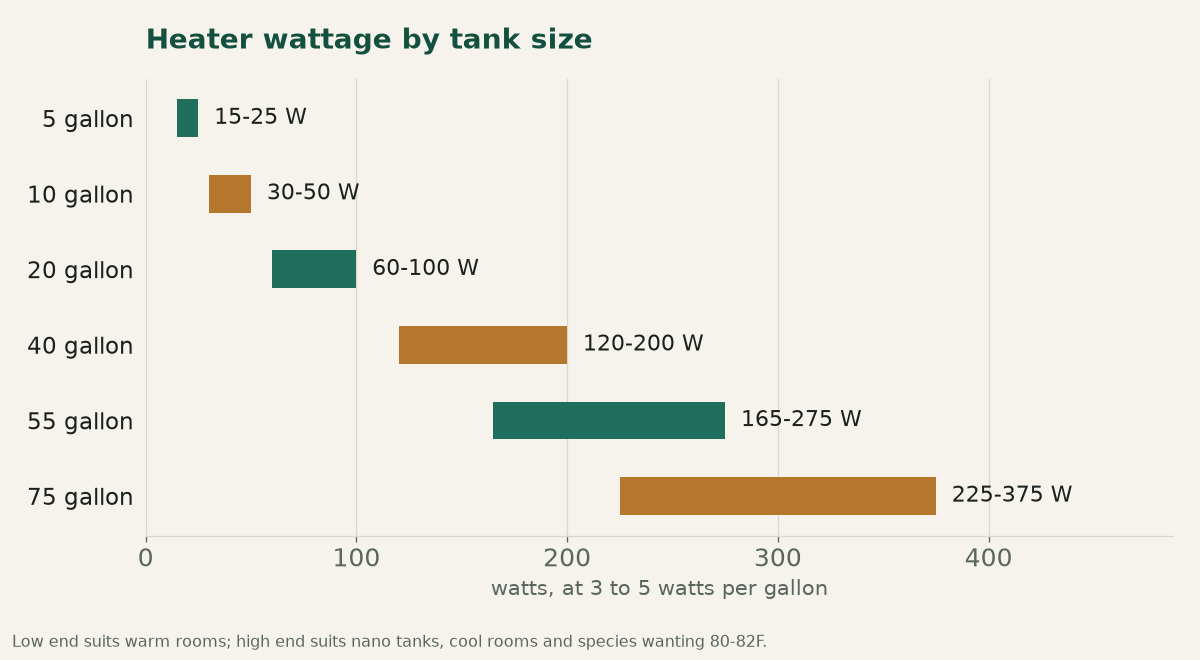
Round up rather than down. A heater running at 70 percent lasts longer than one running flat out, and on 55 gallons or more two smaller heaters mean a failure does not crash the whole tank.
Aquarium Heater Wattage by Tank Size
The standard formula is 3 to 5 watts per gallon. The low end works for tanks in warm rooms and species that prefer the mid-70s. The high end applies to nano tanks, cooler rooms, and species like discus or betta fish that want 80 to 82F.
| Tank Size | Wattage at 3W/gal | Wattage at 5W/gal | Recommended Heater Type |
|---|---|---|---|
| 5 gallon | 15W | 25W | Submersible preset or adjustable mini |
| 10 gallon | 30W | 50W | Submersible adjustable, 50W |
| 20 gallon | 60W | 100W | Submersible adjustable, 75-100W |
| 40 gallon | 120W | 200W | Submersible adjustable, 150-200W |
| 55 gallon | 165W | 275W | Submersible adjustable, 200-300W or dual 150W |
| 75 gallon | 225W | 375W | Dual submersible units or inline 300W+ |
On tanks 55 gallons and larger, two mid-watt heaters outperform one high-watt unit. If one heater fails, the second keeps the temperature from crashing while you replace it. Place the two heaters at opposite ends of the tank for even heat distribution.
Rounding up one size (for example, choosing a 100W heater for a 20-gallon tank) gives you headroom in winter without running the heater at maximum capacity, which extends its lifespan.
Aquarium Heater Types: Submersible, Inline, and Preset
Not all heaters work the same way, and the type you choose affects placement, maintenance, and long-term reliability.
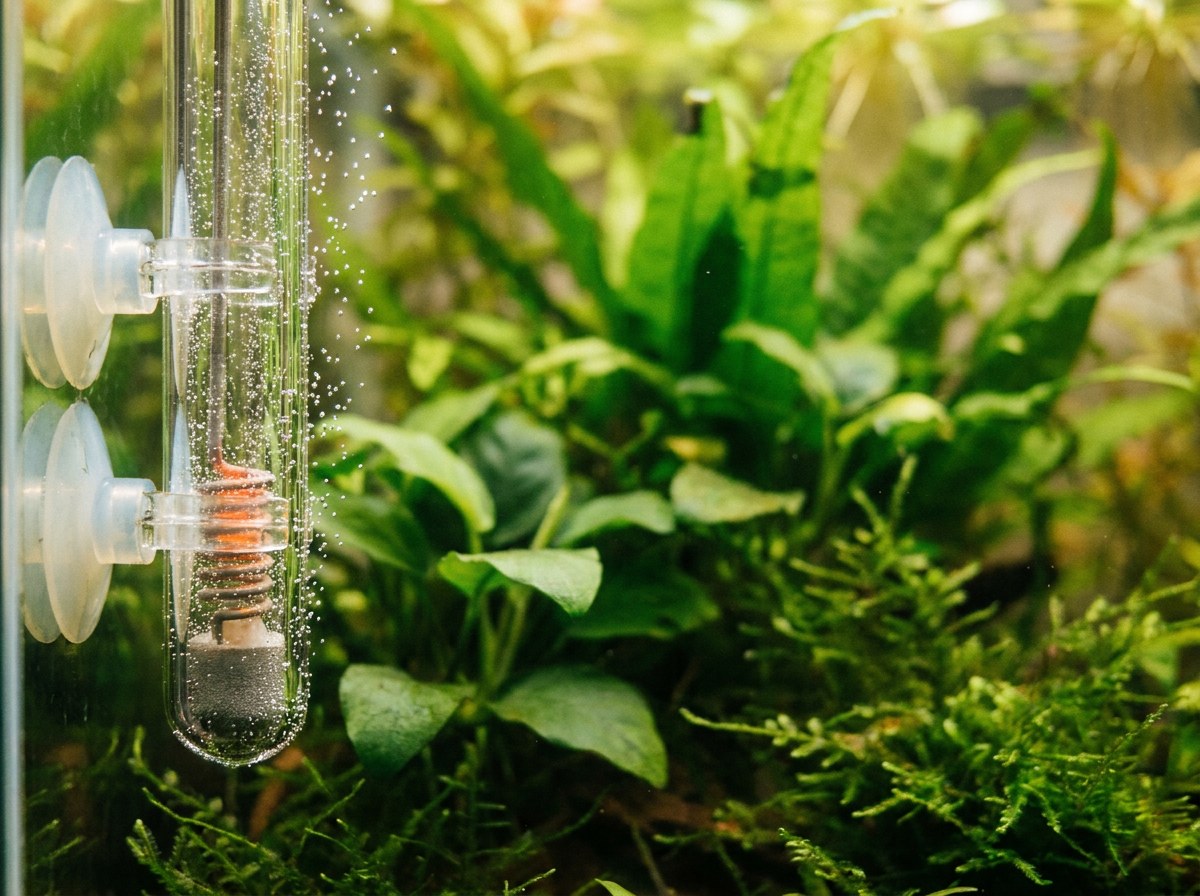
Submersible heaters are the most common. You attach them inside the tank, fully submerged, near a filter output so water circulates past the heating element. They work in tanks from 2.5 gallons up to 100+ gallons, are easy to replace, and come in both adjustable and preset versions. This is the right choice for most setups.
Inline heaters sit outside the tank on the return line of a canister filter. The water passes through the heater before re-entering the tank. You get no visible equipment inside the aquarium and very even heating across large tanks. The trade-off is that inline heaters require a canister filter, cost more, and are harder to access for maintenance. They are excellent for planted tank setups where aesthetics matter and you are already running a canister.
Preset heaters are fixed at a single temperature, usually 78F. They have no dial to adjust and no way to fine-tune for your specific species. They are small, inexpensive, and work for beginner betta tanks or community setups targeting 76 to 78F. If your target temperature falls outside what the preset offers, choose adjustable instead.
Adjustable vs Preset: Which One Do You Actually Need
A preset heater removes the risk of user error. There is no dial to accidentally crank too high. For a single betta in a 5-gallon tank with no plans to keep other species, a 25W preset is a completely reasonable choice.
An adjustable heater gives you control when you need it. Shrimp tanks often run cooler (68 to 74F for neocaridina). Discus tanks run hotter (82 to 86F). Breeding setups sometimes require a temperature bump to trigger spawning. If you keep anything other than a single-species community at a standard tropical temperature, get an adjustable unit.
The accuracy of the dial on most adjustable heaters is not trustworthy. Most are accurate to plus or minus 2 to 4 degrees. Set the dial, then measure with a calibrated thermometer, and adjust from there. The dial is a starting point, not a fact.
Safety Features: Auto Shutoff, Guards, and Thermal Cutoffs
A heater running dry will overheat within minutes and can crack the glass on a full tank. The two features that prevent this are an auto shutoff and a thermal cutoff circuit.
The auto shutoff (also called dry-run protection) detects when the heater is exposed to air and cuts power before the element overheats. This matters during water changes, when you partially drain the tank and forget the heater is still plugged in.
A thermal cutoff is a secondary protection that kills power if the internal temperature exceeds a safe threshold, even when fully submerged. It is a failsafe against stuck thermostats, which do fail on cheap heaters.
A heater guard is a plastic cage around the heating element. It prevents fish and shrimp from making direct contact with the glass tube. This is especially relevant for bettas, which sometimes rest against equipment, and for smaller betta heaters in tanks under 10 gallons.
Shatter-resistant housings are worth prioritizing if you keep larger fish that bump equipment. Standard glass heater tubes will crack on impact. Titanium and certain reinforced polymer housings handle that far better.
Use a Separate Thermometer. Always.
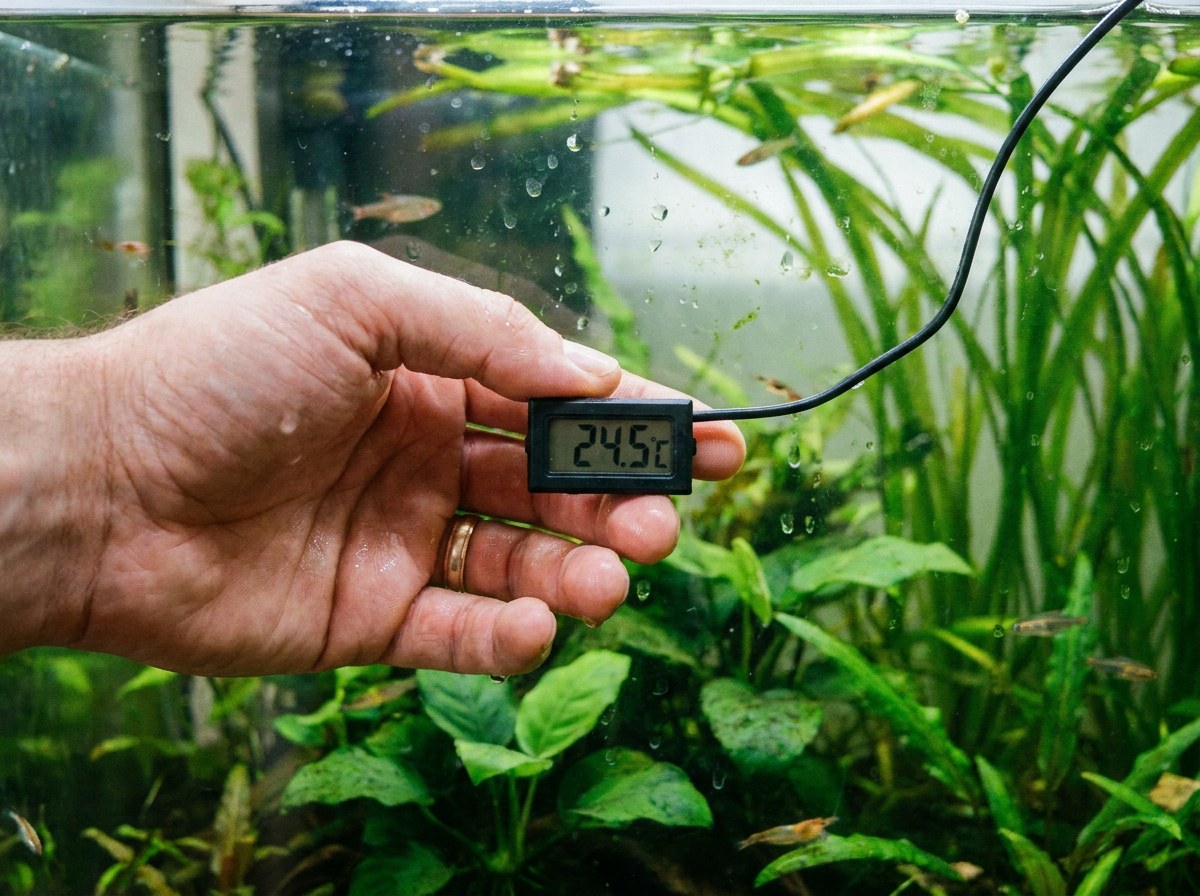
Do not trust the built-in dial. The thermostat inside most aquarium heaters drifts over time and is rarely calibrated accurately from the factory. A quality digital thermometer with a probe costs a few dollars and tells you the actual water temperature, not the approximate temperature the heater is targeting.
Place the thermometer probe on the opposite side of the tank from the heater. That way you are reading the ambient water temperature, not heat bleeding off the element directly.
Check it every day for the first week after setting up a new heater. Swings of more than 2 degrees over 24 hours mean the heater is not holding stable and needs to be replaced or paired with a controller.
A temperature controller is an inline device that plugs between your heater and the wall outlet. It reads a probe in the tank and cuts power to the heater when the target is reached, completely bypassing the heater’s built-in thermostat. This is the most reliable way to prevent overheating, particularly if you are running a cheap heater in a species-sensitive tank.
Heater Placement and Water Flow
Where you put the heater determines how evenly the tank heats. Heat rises and stays localized without circulation. A heater tucked in a dead zone heats that corner while the rest of the tank stays cooler.
Position the heater near the output of your filter. This forces heated water to mix with the full tank volume immediately. In a 20-gallon tank, near the filter output is usually enough. In a 55-gallon or larger tank, you may need a second heater or a circulation pump to eliminate cold spots.
Angle the heater slightly rather than placing it perfectly vertical. A 45-degree angle creates a mild convection current that helps distribute heat. Horizontal placement works but is harder to read and increases the chance of a cracked tube if the water level drops during evaporation.
Keep at least 2 to 3 inches of clearance around the element. Substrate against the heating glass creates a localized hot spot, and aquasoil packed against a heater will discolor and degrade faster.
Pairing Your Heater With the Right Filter
A heater working against an undersized filter is fighting a losing battle on heat distribution. If your filter turnover rate is too low, you will get temperature gradients across the tank, which is nearly as stressful to fish as an unstable overall temperature.
For tanks under 20 gallons with shrimp, a sponge filter paired with a small submersible heater is a reliable and budget-friendly combination. You can read more about filter options in the best aquarium filters guide for side-by-side comparisons by tank size.
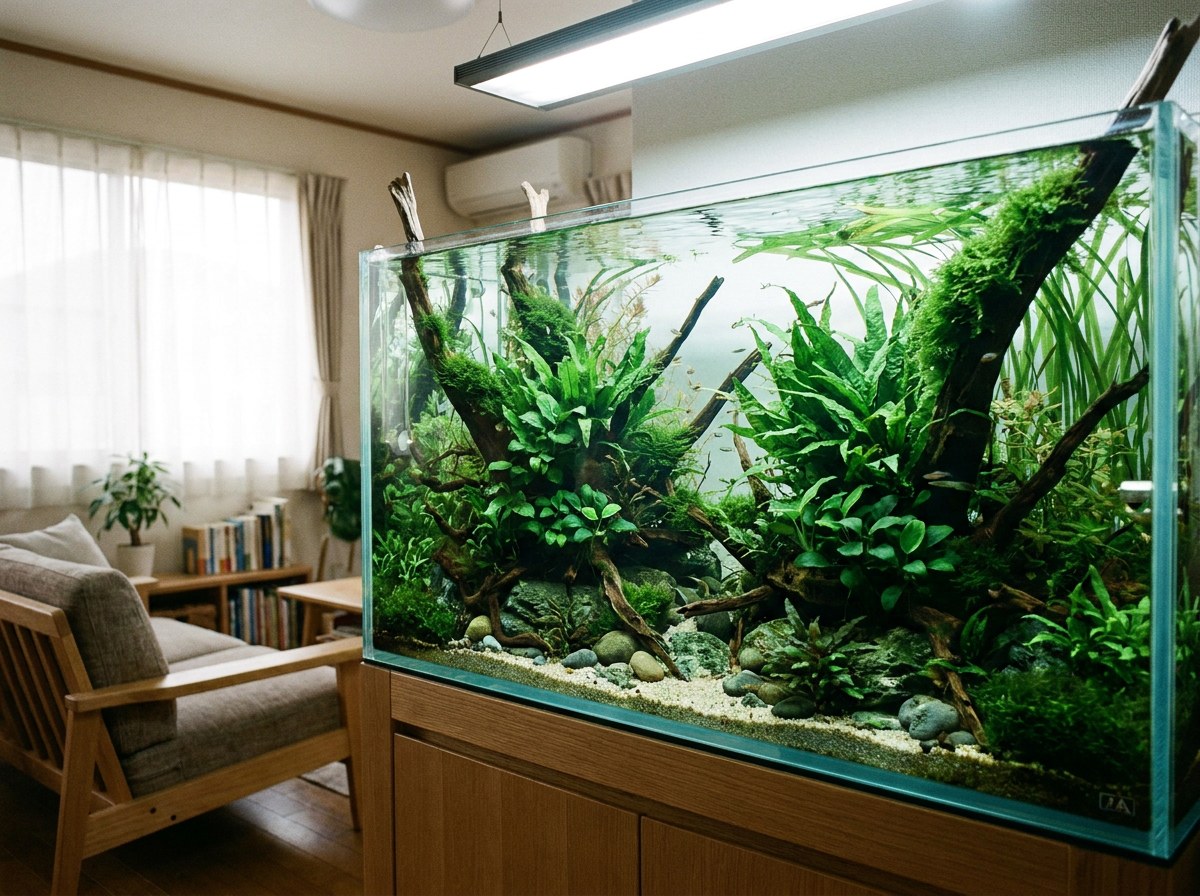
On planted tanks running CO2, an inline heater on a canister filter removes glass tubes from the interior entirely. This is a cleaner look and improves light penetration to the substrate.
Frequently Asked Questions
- How many watts per gallon does an aquarium heater need?
- The standard range is 3 to 5 watts per gallon. Use 3 watts per gallon for tanks in warm rooms or species that prefer lower temperatures. Use 5 watts per gallon for nano tanks, cooler rooms, and heat-loving species like discus or bettas targeting 80 to 82F.
- Can I run two heaters in one tank?
- Yes, and on tanks 55 gallons and larger it is recommended. Two heaters at half the total wattage provide redundancy (if one fails, the other keeps the temperature stable) and distribute heat more evenly across a large volume. Place them at opposite ends of the tank.
- Do preset heaters work for betta fish?
- A preset heater fixed at 78F is adequate for a betta tank if your room temperature does not drop below 65 to 68F in winter. If you keep the thermostat lower or experience seasonal cold snaps, an adjustable heater at 25 to 50W gives you control to push the temperature to 80 to 82F, which bettas prefer.
Marcus Chen
Aquarist & Founder, TanninLab
Marcus has been keeping planted tanks for 14 years. He tests every product recommendation in his own tanks and publishes the raw data.
Last updated: August 2026