Betta Fish Colors Explained: Which Type Should You Get?
Updated July 2026
Betta fish colors fall into a handful of core categories: solid, bicolor, marble, and metallic, each shaped by pigment genes layered on top of iridescent scales. Picking a color is really picking a look, since care needs are identical no matter what shade you choose. By the end of this guide you will know the main color and tail types, what drives price, and how to spot a healthy fish under any pattern.
What are the main betta color types?
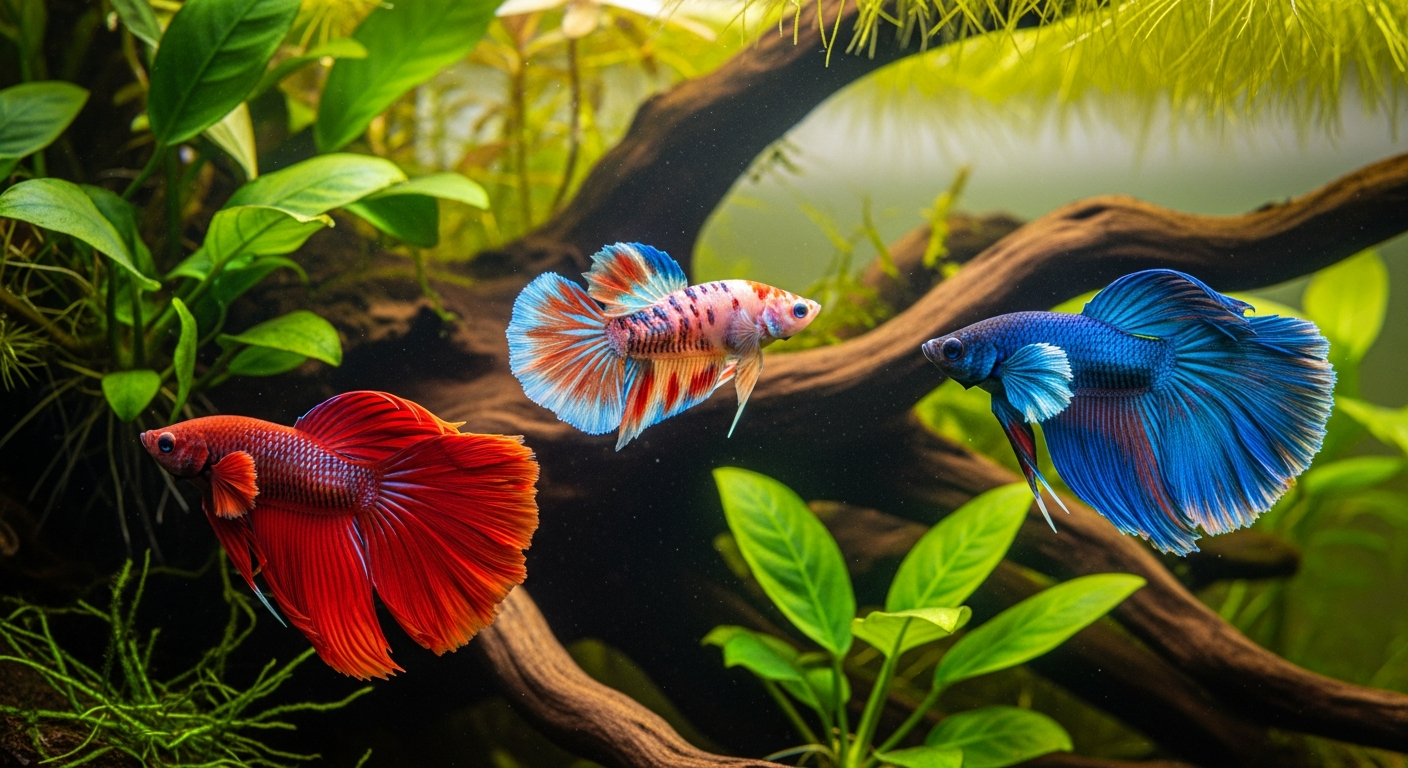
Solid colors are the baseline: deep red, royal blue, turquoise, black, and white (often called cellophane). These fish carry one dominant pigment across the whole body and fins with no patches or streaks.
Bicolor bettas split color between body and fins, like a black body with red fins. Marble bettas carry a gene that keeps shifting pigment throughout their life, so a fish you buy today may look different in six months.
Metallic types, including copper and mustard gas, get their shimmer from an iridescent layer over the base color. None of these variations change how the fish behaves or what it needs in a tank.
What tail types come in these colors?
Color patterns show up across every tail type, from the classic veiltail to the fuller halfmoon and crowntail with its spiky fin rays. A halfmoon betta in dragon scale (thick, metallic plating over the whole body) draws the most attention in stores because the color reads clearly under light.
Crowntails often look more muted since the fin rays break up solid color into a starburst effect. If display color matters most, halfmoon or delta tail shapes show off marbling and bicolor patterns best.
Why do some betta colors cost more?
Price tracks rarity and breeding difficulty, not durability or lifespan. A solid red veiltail might run five to ten dollars at a pet store, while a show-quality galaxy koi or black orchid from a specialty breeder can hit fifty dollars or more.
Marble and koi patterns cost more because breeders cannot fully control where the pigment lands, so a clean, symmetrical pattern is partly luck. Metallic and dragon scale types take longer to breed true, which also pushes the price up.
Does color affect health or temperament?
No single color makes a betta hardier, calmer, or more aggressive. Temperament comes down to the individual fish, not pigment. Pale or faded coloring on a fish that used to be vibrant is often an early stress or illness signal worth watching.
Whatever color you land on, the setup matters more than the pattern. Get the tank size right first, since cramped quarters dull color and shorten lifespan regardless of genetics.
How do you choose the right one for you?
Start with what you will look at every day. Solid colors are easier to track for health changes since fading or spotting stands out fast. Marbles and koi patterns are the pick if you want a fish that keeps surprising you as it ages.
Once you pick a color, focus on the tank setup and filtration, since those decisions affect how bright that color stays. If you are still shopping for equipment, our betta tank recommendations cover sizes that keep any color variety thriving.
Marcus Chen
Aquarist & Founder, TanninLab
Marcus has been keeping planted tanks for 14 years. He tests every product recommendation in his own tanks and publishes the raw data.
Last updated: July 2026