Why Is Your Betta Hiding All Day? 7 Real Causes
Updated July 2026
Your betta is hiding because something in the tank feels unsafe or uncomfortable, and the fix is usually one of seven things: new tank stress, wrong temperature, harsh lighting, aggressive tank mates, illness, poor water quality, or plain normal resting behavior. Hiding alone is not an emergency. You need to know which cause fits your setup so you are not guessing. Work through these seven and you will usually land on the answer within a day.
Is it just new tank stress?
A betta moved into a new tank recently often hides for days while it adjusts. This is normal and usually resolves once the fish maps out its territory.
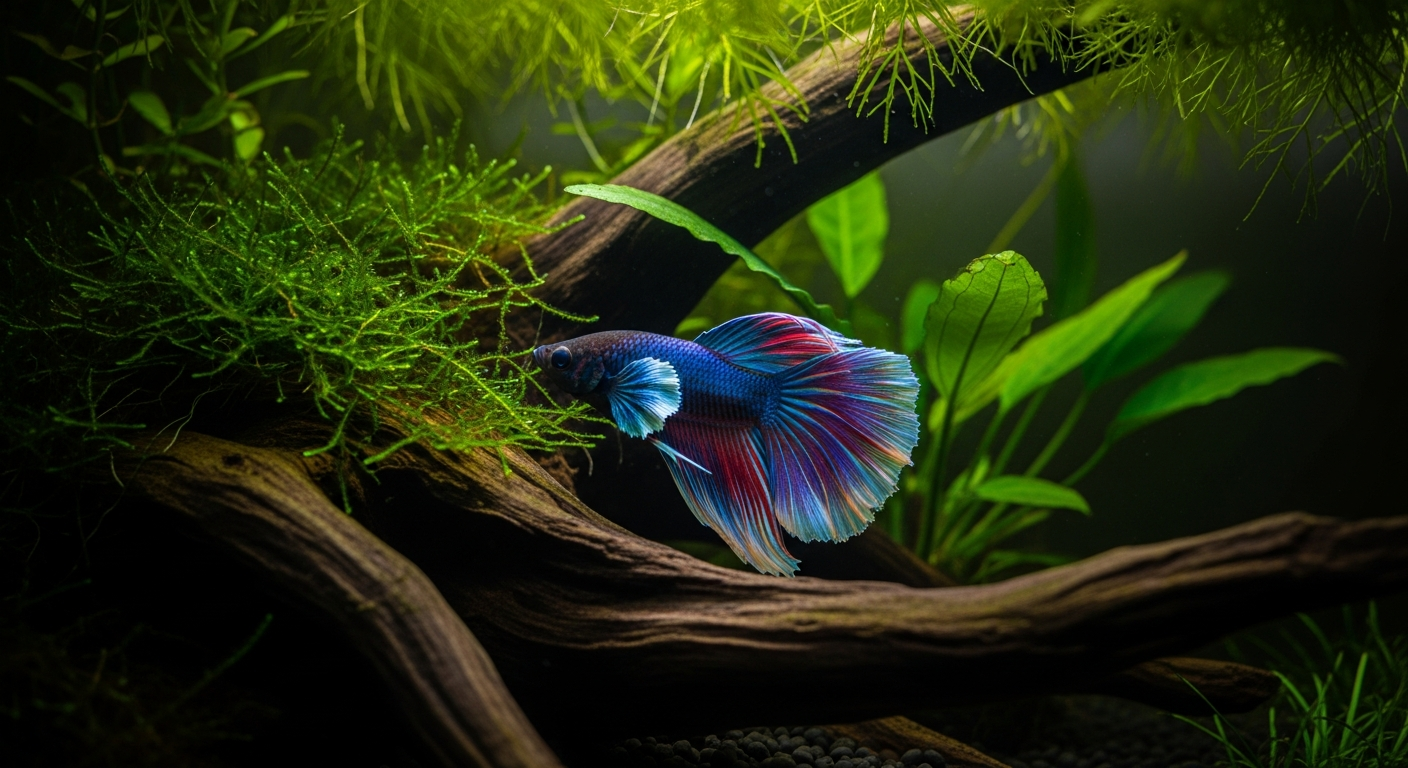
Give it time before changing anything else. Constant rearranging only extends the adjustment period. Check your tank setup for enough cover, since a bare tank makes stress worse.
Is the water temperature off?
Bettas need water between 76 and 80 degrees Fahrenheit. Below that range, they slow down and tuck into corners because cold water suppresses their metabolism and immune response.
Check your heater with a separate thermometer, not just the heater dial, since dials drift and lie. A fish in water under 74 degrees will hide far more than one kept in range.
Is the lighting too harsh?
Bright, uncovered tank lighting with no shaded areas can push a betta to hide constantly, especially with no floating plants or dim corners. Bettas come from slow-moving, shaded waters in the wild, not open, bright pools.
Add floating plants or lower your light setting. A tank with only one lighting zone gives the fish nowhere to retreat without fully hiding.
Are tank mates the problem?
Fin nippers like tiger barbs, or any fish faster and more aggressive than your betta, will drive it into hiding as a survival response. Even peaceful mates in too small a space create low-grade stress.
Review your stocking choices against our betta tank mates guide before assuming the fish is sick. Sometimes the fix is removing one fish, not medicating the betta.
Could it be illness?
Hiding paired with clamped fins, faded color, refusing food, or visible spots points to illness rather than stress. Fin rot often starts with a fish that hides more and stops flaring at its reflection.
If you notice ragged or shortening fins alongside the hiding, check our fin rot treatment guide right away, since early treatment works far better than waiting.
Is water quality dragging your betta down?
Ammonia or nitrite spikes irritate gills and skin, and a stressed fish hides to conserve energy. This is common in tanks under 5 gallons or ones that skip regular water changes.
Test your water rather than guessing. Undersized tanks swing on water chemistry fast, which is exactly why a properly cycled setup with at least 5 gallons keeps parameters far more stable.
Is this just normal betta behavior?
Bettas rest, and resting under a leaf or inside a cave for part of the day is normal. The distinction that matters is total withdrawal all day with no appetite versus a fish that still comes out to eat and explore.
If your betta still eats, flares, and swims around at points during the day, you are likely watching normal behavior, not a problem.
Marcus Chen
Aquarist & Founder, TanninLab
Marcus has been keeping planted tanks for 14 years. He tests every product recommendation in his own tanks and publishes the raw data.
Last updated: July 2026