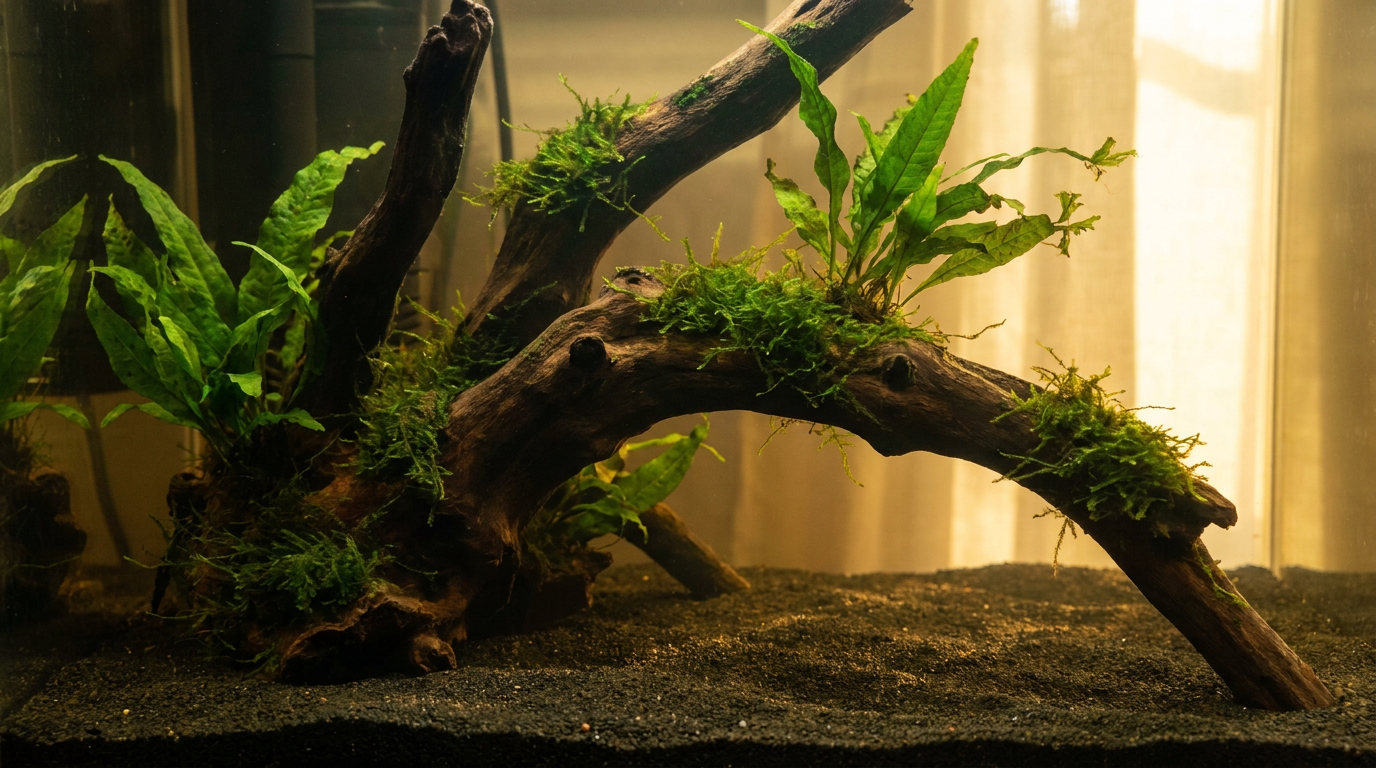
Aquarium Driftwood: Tannins, Boiling, and the Brown Water Question
Updated August 2026
The brown water your new driftwood produces is tannins leaching out of the wood, and it harms nothing. Keeping it or clearing it is an aesthetic call, not a fish health call.
Tannins are polyphenols stored in bark and heartwood. Once the piece is submerged they bleed into the column for weeks, tinting the water anywhere from weak tea to dark cola depending on the species and how much wood you used.
What boiling actually does
Boiling does two jobs at once. It strips a large share of the surface tannins fast, and it waterlogs the outer layers so the piece stops floating sooner.
An hour in a stockpot, with the water dumped and refilled once, removes most of the first colour surge. Pieces too big for a pot go in a tub or a bathtub of hot tap water instead, with a full change every day for one to three weeks.
Neither method ends the leaching. Mopani and Malaysian driftwood are dense and keep releasing colour for months, while spider wood and manzanita run lighter and fade faster. If the exact colour load matters to you, read the piece before you buy it in spider wood vs manzanita.
Why the wood floats
Dry wood is mostly air pockets. It sinks only when water has displaced that air, which takes days for porous stock and several weeks for dense hardwood.
Anchor it in the meantime. A slate base siliconed to the underside, a stainless bolt into the foot, or the piece wedged under hardscape all work, and none of them show once plants fill in.
If you want the tint
Plenty of keepers chase the stain rather than fight it. Tannic water suits bettas, Apistogramma, and most South American species that evolved in leaf litter, and it makes red plants and fish colour pop against the amber.
Wood alone rarely holds the colour long term, so people top it up with leaves and cones. The full method is in the blackwater aquarium setup guide, including how much litter a given volume needs.
If you want it clear
Chemical filtration pulls tannins out within a day or two. Activated carbon works and needs replacing monthly, while Seachem Purigen lasts longer and can be regenerated with bleach.
Larger, more frequent water changes do the same job slower and cheaper. Expect the wood to stop staining noticeably after a few months either way, which is covered in more depth in driftwood tannins.
Watch the pH, not the colour
Tannins push pH down, but only in soft water with little carbonate hardness. If your KH sits above roughly 4 degrees, the buffer absorbs the acidity and your pH barely moves.
Test rather than assume. A tank that swings has low KH, and that is the variable to fix, not the wood.
Marcus Chen
Aquarist & Founder, TanninLab
Marcus has been keeping planted tanks for 14 years. He tests every product recommendation in his own tanks and publishes the raw data.
Last updated: August 2026