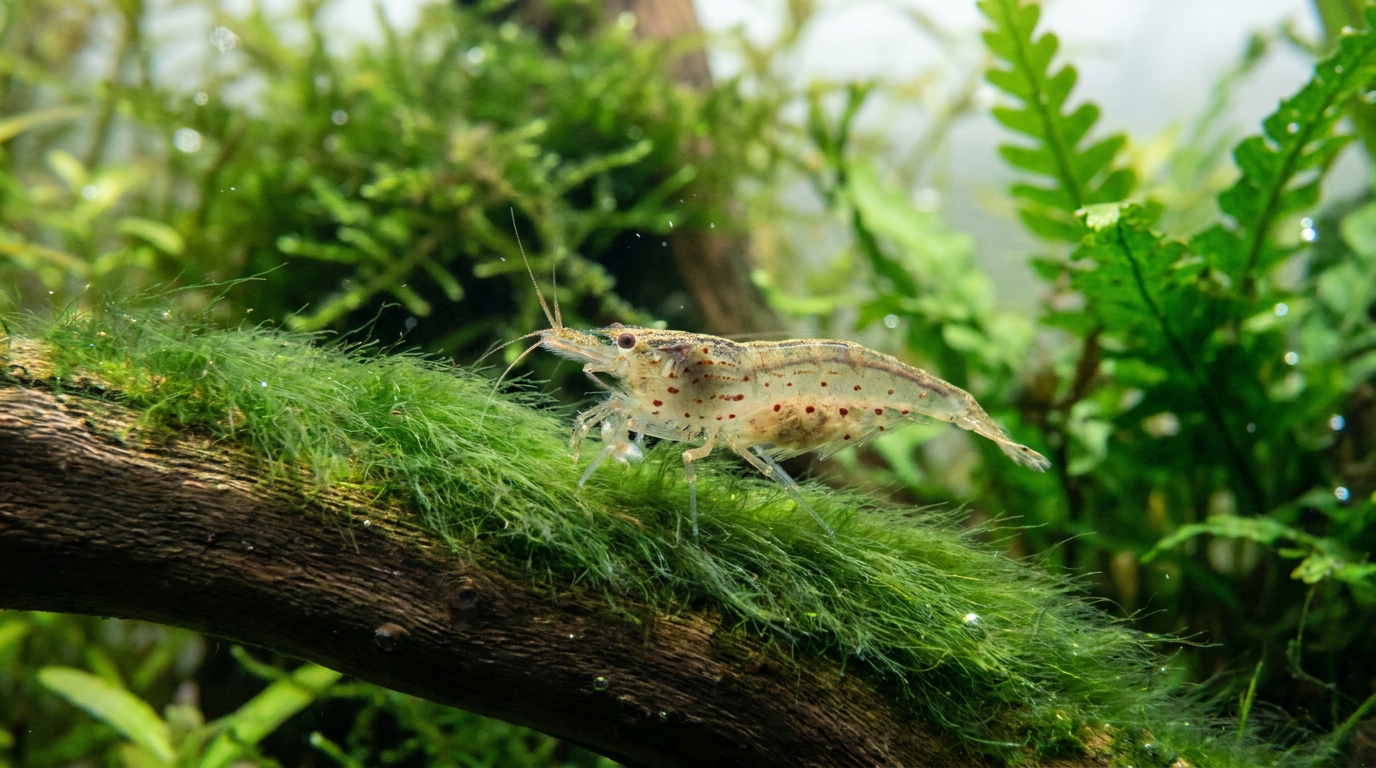
Amano Shrimp: Algae Crew That Will Not Breed in Freshwater
Updated October 2026
Amano shrimp will not build a colony in your freshwater tank. Females berry up and release larvae on schedule, but those larvae are planktonic zoeae that need brackish water to develop. In fresh water they die within days, every time.
That is not a husbandry failure. Caridina multidentata evolved to drift downstream into estuaries as larvae, then walk back upriver as juveniles. Your tank has no estuary.
What happens when your female berries
She carries a few hundred tiny eggs under her swimmerets for roughly four to five weeks, fanning them constantly. Then she releases the larvae, usually at night and usually near the outflow.
The larvae look like drifting specks, not shrimp. Filters and fish take most of them in the first hours, and the rest fail to develop without salinity. If you want a species that skips the larval stage entirely and drops fully formed miniatures, read the neocaridina shrimp care parameters instead.
Raising the larvae is a separate project
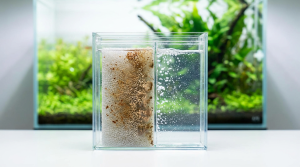
It can be done, and hobbyists do it, but the setup has nothing to do with your display tank. You need a dedicated saltwater container at roughly 30 to 35 ppt, a live phytoplankton culture as food, and light discipline about water quality for several weeks.
Once the larvae metamorphose into recognisable postlarval shrimp, they have to be acclimated slowly back to fresh water or they die at the transition. Most people who try this lose the entire batch on the first two or three attempts.
The honest advice: treat Amanos as a purchased crew, not a self-renewing one. Buy the number you need and expect to top up every couple of years.
What you get in exchange
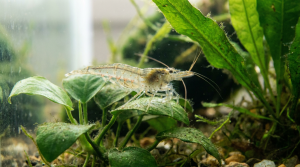
Appetite. An adult Amano is roughly twice the size of a neocaridina and eats hair algae and string algae faster than anything else that fits in a planted tank.
They ignore black beard algae in most tanks, so match the animal to the problem before you buy. Work out which algae type you actually have first, because a crew of Amanos does nothing for BBA or cyanobacteria.
They are also bold enough to steal food from slower tank mates, which is worth knowing before you add them to a betta tank or a shrimp tank with small neocaridina.
Stocking and lifespan
One Amano per two to three gallons handles a normal algae load in a planted tank. Go heavier only if you are clearing an established outbreak, then expect them to look hungry once the algae is gone and supplement accordingly.
Lifespan runs two to three years in stable water, longer in cooler tanks. Since replacements come from a shop rather than your own colony, factor that into the running cost before you commit. The full husbandry detail sits in the Amano shrimp care guide.
Water-wise they are forgiving: pH 6.5 to 7.5, temperature 20 to 26 C, GH 4 to 8, and no copper. Stability matters more than hitting an exact number.