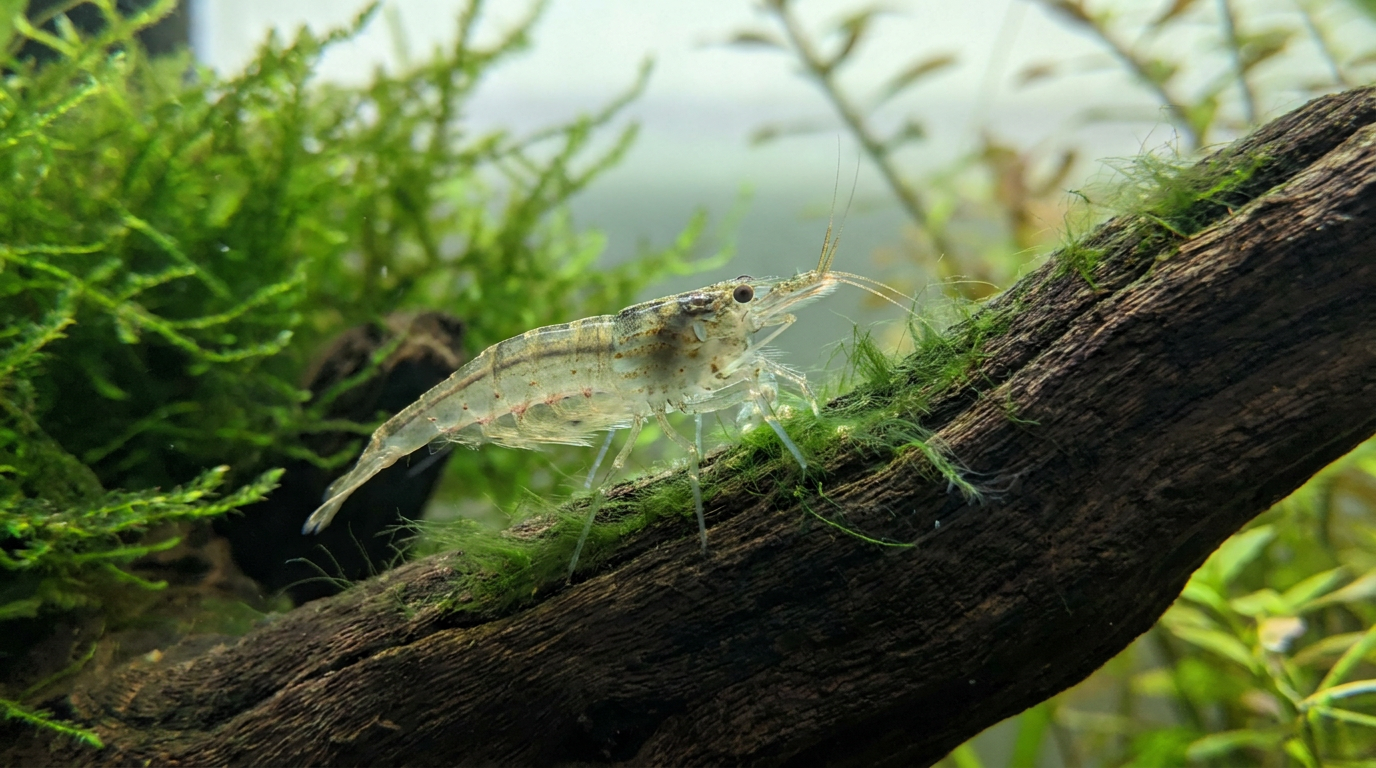
Amano Shrimp Care: The Algae-Eating Workhorse of Planted Tanks
Updated July 2026
Amano shrimp are the hardest-working algae eaters in the hobby, and they are forgiving to keep if you get three things right: stable water, enough food once the algae runs low, and a secure lid. Give them a cycled tank around 68 to 78 degrees Fahrenheit with steady parameters and they last for years.
Tank and water parameters
Amano shrimp (Caridina multidentata) want a fully cycled, mature tank of at least 10 gallons. They tolerate a wide range, roughly pH 6.5 to 7.8 and moderate hardness, which makes them easier than most dwarf shrimp.
Stability matters more than hitting an exact number. Copper is the real killer, so treat tap water with a conditioner and avoid copper-based medications. Amano shrimp are true Caridina, and if you are deciding between them and colorful dwarf shrimp, our caridina vs neocaridina comparison lays out the tradeoffs.
Feeding once the algae is gone
Amano shrimp graze soft algae, biofilm, and leftover food all day. The catch is that a clean, established tank eventually runs low on natural grazing, and hungry Amanos will pick at your plants or slowly waste away.
Supplement two or three times a week with a sinking wafer or blanched vegetables. A quality shrimp food keeps them fed without fouling the water. They will still clean up algae, just do not expect them to live on it alone.
They do not eat every kind of algae. For the ones they ignore, like black beard, match the fix to the species using our guide to the types of aquarium algae.
Behavior, lids, and tank mates
Amano shrimp are peaceful and safe with almost any community fish too small to eat them. They are also escape artists, so a tight lid is non-negotiable, especially in the first week.
They will not breed in freshwater, since their larvae need brackish water to develop, so your colony stays the size you buy. If you want shrimp that multiply, the smaller neocaridina shrimp are the better route.
Marcus Chen
Aquarist & Founder, TanninLab
Marcus has been keeping planted tanks for 14 years. He tests every product recommendation in his own tanks and publishes the raw data.
Last updated: July 2026