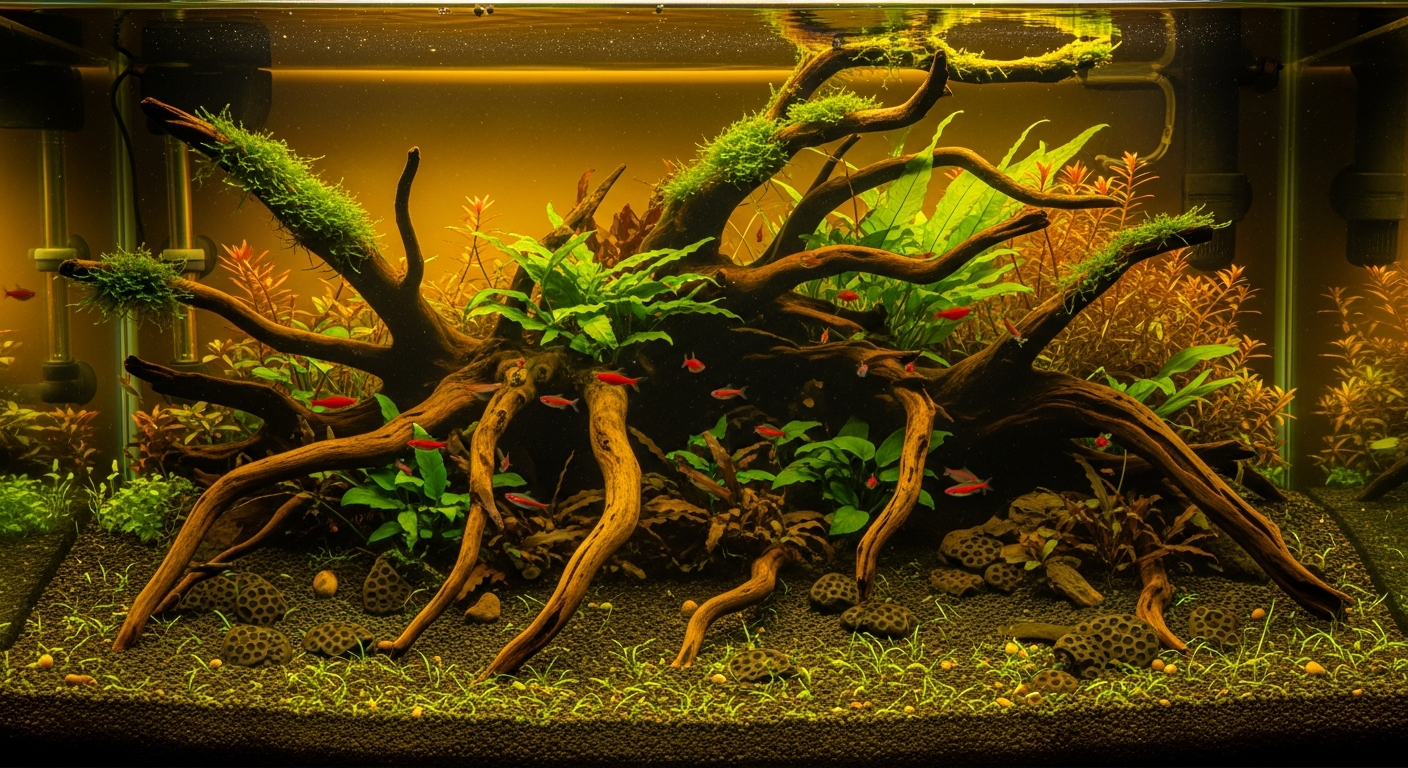
Blackwater Aquarium Setup: The Natural Method
Updated June 2026
Blackwater tanks look intimidating on paper, but the chemistry is simpler than most reef or planted setups. Once you understand what tannins actually do to water, and which fish genuinely need that environment, the build process clicks into place fast.
What Blackwater Actually Is
Blackwater is not dirty water. The amber-to-dark-brown color comes from humic and fulvic acids released as organic matter breaks down, exactly the same process that stains rivers like the Rio Negro in Brazil and the peat streams of Borneo.
These acids are the engine behind everything people chase in a blackwater setup: soft pH, antimicrobial protection, reduced osmotic stress for fish. The color is a side effect of the chemistry, not the goal itself.
The defining parameters are low pH (typically 5.5 to 6.8), very low general hardness (GH 0 to 4 dGH), near-zero carbonate hardness (KH 0 to 2 dKH), and conductivity under 100 microsiemens. Nutrients like nitrates can still exist; blackwater is not the same as no-waste water.
Why Tannins Matter for Fish Health
Tannins serve a documented biological function beyond aesthetics. Humic substances in blackwater bind to pathogens and heavy metals, reducing their bioavailability to fish. The low pH also suppresses many bacteria and fungal spores that thrive in neutral or alkaline conditions.
Fish kept in their native water chemistry show measurably lower baseline cortisol. For species like apistogramma and wild-type bettas, the color deepens, aggression between tank mates often decreases, and spawning triggers more reliably than in hard, neutral water.
The antibacterial effect is real enough that many breeders use catappa leaves as a first-line treatment for fin rot and bacterial infections, without additional medication. That said, tannins are not a substitute for proper husbandry or quarantine procedures.
Fish and Shrimp That Belong in Blackwater
The short answer: most soft-water Amazonian and Southeast Asian fish thrive here. The longer answer requires you to actually check wild collection sites, because “tropical fish” covers species from radically different chemistries.
| Species | pH Range | GH (dGH) | Notes |
|---|---|---|---|
| Betta splendens (wild type) | 5.5 to 7.0 | 0 to 4 | Responds strongly to tannin; color enhancement visible within weeks |
| Apistogramma spp. | 5.0 to 6.5 | 0 to 3 | Spawning rarely triggers above pH 6.8 in soft-water species |
| Chili Rasbora (Boraras brigittae) | 4.0 to 7.0 | 0 to 4 | Peat-stream native; colors most intense in acidic tannin water |
| Ember Tetra (Hyphessobrycon amandae) | 5.5 to 7.0 | 1 to 5 | Hardy; good choice for first blackwater build |
| Chocolate Gourami (Sphaerichthys osphromenoides) | 4.0 to 6.5 | 0 to 2 | Extremely soft-water dependent; hard to keep outside blackwater |
| Caridina shrimp | 5.8 to 6.8 | 3 to 6 | Need RO remineralization; not as low-TDS as fish but compatible |
| Neocaridina shrimp | 6.5 to 7.5 | 6 to 10 | Prefer harder water; not ideal for true blackwater below pH 6.5 |
Avoid goldfish, African cichlids, livebearers, and most Central American cichlids. They come from alkaline, mineral-rich water and will not tolerate the low pH and low conductivity of a proper blackwater tank.
If you are building a betta fish tank setup, blackwater is the single biggest quality-of-life upgrade you can make for the fish. The improvement in color and activity level is visible within two to three weeks of adding tannin sources.
Step-by-Step Setup
Substrate
Fine dark sand is the practical choice: it reflects the natural environment, does not buffer pH upward, and shows off the amber water color. Avoid crushed coral, aragonite, or any calcium-carbonate-based substrate. These will constantly fight your pH down, consuming your buffering capacity and making the tank impossible to stabilize below pH 7.
Aquasoil (like ADA Amazonia or equivalents) actively lowers pH and releases ammonium during cycling, which speeds tannin chemistry establishment. Worth considering for planted blackwater builds, though it requires a longer and more managed cycle.
Hardscape and Driftwood
Driftwood is not optional. It is the primary tannin source in most blackwater tanks, releasing humic acids over months to years as it slowly breaks down. The best choices for tannin output are spider wood (also called manzanita), Mopani wood, and Malaysian driftwood.
Pre-soak all driftwood for 48 to 72 hours minimum before adding it to the tank. This removes the initial heavy tannin dump that would otherwise color the water dark brown within hours of filling. The driftwood will still release tannins for months after, but at a manageable rate. You can read more about choosing the right wood in our driftwood tannins guide.
Smooth river stones can add visual depth, but check that they do not contain calcium. Vinegar test: pour a small amount of white vinegar on the rock. If it fizzes, the rock contains carbonate minerals that will raise your KH and fight your pH target.
Botanicals and Leaf Litter
This is where most setups either succeed or stay mediocre. Leaf litter provides the soft tannin profile, microorganism habitat, and surface area for biofilm that small fish and shrimp graze on constantly.
Catappa leaves (Indian almond leaves) are the backbone of most blackwater setups. Add two to four leaves per 10 gallons as a starting point. They break down over four to six weeks, releasing tannins throughout. Replace as they decompose. The full case for using them is covered in our catappa leaves guide.
Alder cones are underused and worth adding. They release tannins more slowly than catappa, have a mild antimicrobial effect, and are particularly useful for shrimp tanks. For a comparison of both, see our piece on alder cones vs catappa.
Other useful botanicals: magnolia leaves, guava leaves, oak leaves (dried, no pesticides), and various seed pods from reputable aquatic botanical suppliers. Start conservatively: three to four leaf types maximum in a new tank. Adding too many botanical sources at once makes it hard to track what is affecting your chemistry.
Botanical Dosing Starter Framework
- Catappa leaves: 2 to 4 per 10 gallons, replace every 4 to 6 weeks
- Alder cones: 4 to 8 per 10 gallons, replace every 6 to 8 weeks
- Seed pods: 2 to 4 pieces per 10 gallons depending on size, leave until they disintegrate
- Driftwood: 1 to 2 pieces sized to tank, ongoing for 6 to 18 months of tannin release
- First week: add botanicals before fish; let the system establish baseline chemistry
- Weekly monitoring: test pH and TDS after each new botanical addition; adjust quantities based on where parameters settle, not visual color alone
Water Preparation
Tap water almost never works for a true blackwater setup unless your local supply happens to be extremely soft. The carbonate hardness in most municipal water will buffer pH above 7.0 and neutralize your tannin investment entirely.
Start with RO (reverse osmosis) water or distilled water, then remineralize to the target TDS using a dedicated soft-water mineral blend. Products designed for Southeast Asian or South American biotopes are widely available from aquatic retailers. Target GH 1 to 3 dGH and conductivity 50 to 80 microsiemens for most soft-water species. Let your botanicals and driftwood drive the pH down naturally from there.
Cycling
The nitrogen cycle in blackwater takes the same form as in any freshwater tank: ammonia from fish waste converts to nitrite via Nitrosomonas bacteria, then to nitrate via Nitrobacter. What changes in low-pH blackwater is the rate. Below pH 6.0, nitrification slows measurably because the bacteria are less active at very low pH.
For this reason, cycle your blackwater tank at a slightly higher pH (6.5 to 7.0), then lower pH gradually after the cycle is complete. Use a liquid ammonia source rather than fish-in cycling. The process takes three to six weeks in most setups.
Managing pH and Tannin Levels
pH will drift lower over time as botanicals break down and tannins accumulate. Regular partial water changes with your prepared RO/mineral mix are the primary control mechanism. A 20 to 25% weekly change is standard for most blackwater tanks.
If pH drops below your target range, check your KH first. KH below 1 dKH means you have almost no buffering capacity, and pH can swing rapidly with even small additions of tannin material. Adding a tiny amount of baking soda to the water change water can restore minimal buffering without wrecking your soft-water chemistry, though this requires careful dosing and testing.
Tannin color intensity is largely a visual choice. Some keepers prefer deeply stained water; others prefer light amber. The color does not directly correlate to pH or humic acid concentration in a linear way. Use a reliable pH meter (not strips) for actual chemistry readings. Color is aesthetic; numbers are chemistry.
Filtration and Flow
Low to moderate flow is the rule. Many blackwater fish come from slow-moving rivers and flooded forests with minimal current. A sponge filter or a canister filter with a spray bar pointed at the glass works well. Avoid powerheads or strong surface agitation; it stresses soft-water species and accelerates tannin off-gassing.
Skip activated carbon in your filter media entirely. Carbon removes tannins aggressively and will strip your water clear within 24 hours, undoing weeks of botanical build-up. Use sponge, ceramic rings, and bio-media instead.
Common Mistakes Worth Avoiding
Skipping the vinegar test on rocks and decor is probably the most common. A single chunk of limestone-rich stone can buffer a 20-gallon tank and hold pH at 7.4 regardless of how many catappa leaves you add.
Adding fish before the botanicals have had time to establish is a close second. Give the tank two to three weeks with driftwood and leaves before introducing inhabitants. The biofilm and microfauna that develop on decomposing botanicals are genuinely part of the feeding ecosystem for small fish and shrimp fry.
Overdosing botanicals in the first week to get color fast can spike dissolved organics and crash oxygen levels. Add botanical material gradually. The tank will color up on its own timeline.
Finally, measuring chemistry with test strips instead of a calibrated liquid test kit or pH meter. Strips at low pH ranges (5.5 to 6.5) have notoriously poor resolution. A glass pH electrode calibrated with fresh buffer solution gives you actual data.
What to Look for When Buying Botanicals and Driftwood
For botanicals, buy from suppliers who specialize in aquatic products. The main concerns are pesticide contamination and improper drying. Leaves and cones collected from unknown sources may contain agricultural chemicals that are toxic to invertebrates at very low concentrations. Reputable aquatic botanical vendors heat-treat and dry their products before sale.
Driftwood sold at aquarium shops is usually safe. Wood from garden centers or outdoor sources is a risk: it may carry parasites, mold, or chemical treatments. When in doubt, boil or bake the wood before using it.
Selection criteria for driftwood: dense, waterlogged pieces release tannins slowly and sink without soaking. Lighter, more porous wood releases tannins faster and may float for weeks. Both have their place; choose based on how quickly you want color established.
For Amazon affiliate purchases, search specifically for “Indian almond leaves aquarium,” “aquatic alder cones,” and “blackwater botanicals aquarium” to find products designed for this use case rather than generic herbal or craft supplies.
Frequently Asked Questions
How long does it take for a blackwater tank to cycle and stabilize?
The nitrogen cycle typically completes in three to six weeks. Full chemical stabilization, where pH, GH, and tannin color reach a steady state, takes another two to four weeks after that. Budget eight to ten weeks before the tank is truly dialed in.
Will the tannin color ever go away on its own?
Yes, if you stop adding botanicals and do large water changes. Tannins are not permanent; they dilute and oxidize over time. If you want to maintain the color, you need to replace decomposing leaves and continue adding fresh botanical material consistently.
Can you have live plants in a blackwater tank?
Yes. Many plants thrive in soft, acidic water. Good choices include Eleocharis (hairgrass), Microsorum pteropus (Java fern), Bolbitis heudelotii (African water fern), and floating plants like Salvinia or Ceratopteris. Avoid plants that require high mineral content, like Vallisneria, which melts in soft acidic conditions.
Marcus Chen
Aquarist & Founder, TanninLab
Marcus has been keeping planted tanks for 14 years. He tests every product recommendation in his own tanks and publishes the raw data.
Last updated: June 2026