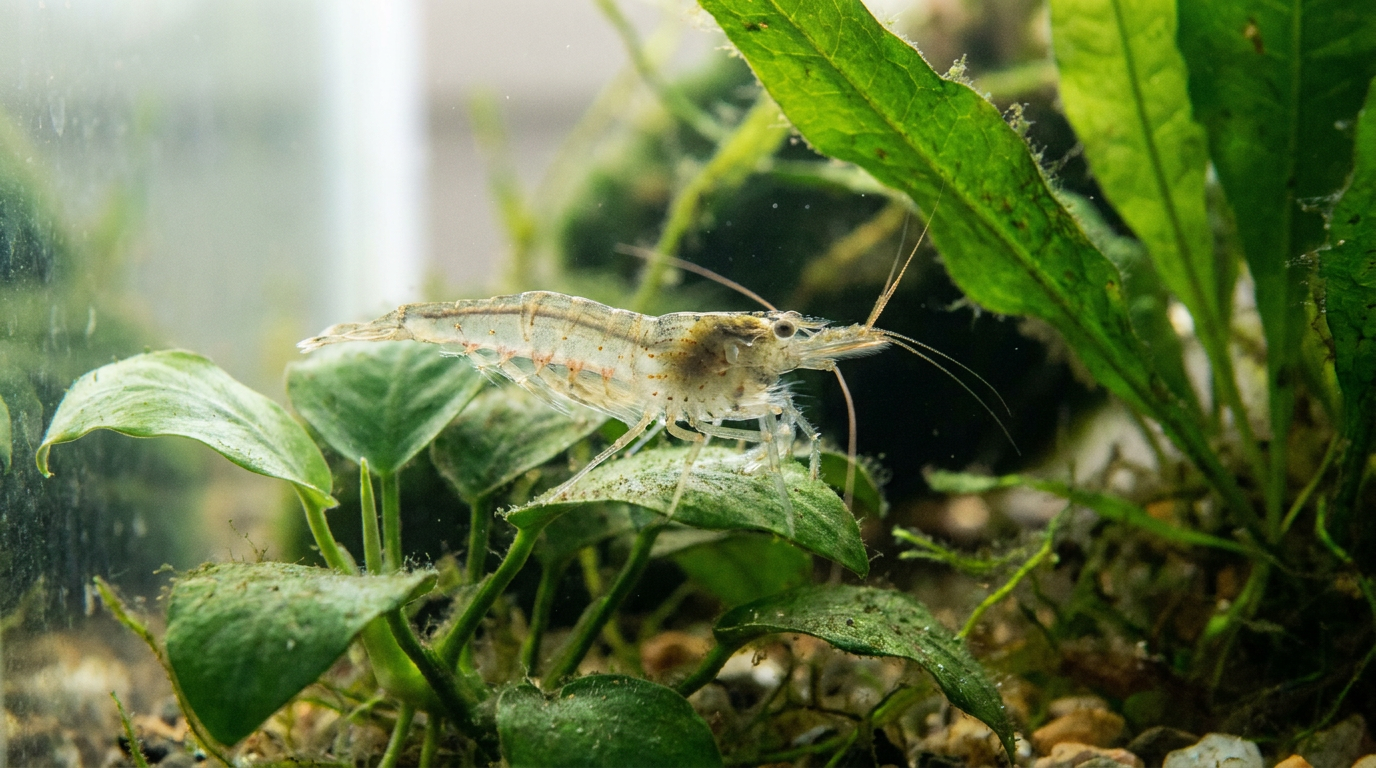
Ghost shrimp care: the algae crew everyone underrates
Updated September 2026
Ghost shrimp thrive in a mature, planted tank with stable water between 65 and 82°F, a pH of 7.0 to 8.0, and a few weeks of established biofilm to graze on. Skip the algae wafers for the first month and let the glass build a film first.
Ghost shrimp (Palaemonetes paludosus) get treated as an afterthought, usually sold as live feeder stock for bettas or cichlids. That undersells them. Given a real setup, they clean glass, eat detritus, and outlive most people’s expectations.
Tank setup that actually keeps them alive
A 5-gallon tank works for a small group, though 10 gallons gives more stability. Sponge filters are safer than power filters, since ghost shrimp are small enough to get pulled into an uncovered intake.
Water changes matter more than filtration here. Ghost shrimp are sensitive to ammonia spikes, so cycle the tank fully before adding them, the same baseline covered in cherry shrimp water parameters.
Video: The Nerdy Fish Girl
Feeding and tankmates
Ghost shrimp eat biofilm, leftover food, and dead plant matter first. Supplement with blanched vegetables or a sinking wafer once or twice a week, not daily.
Stick to peaceful tankmates: small tetras, corydoras, and snails coexist fine. Avoid anything large enough to see a shrimp as a snack, which is what most people originally bought ghost shrimp for in the first place. Stocking density follows the same logic laid out in how many shrimp per gallon: roughly one shrimp per gallon in a lightly stocked community tank, fewer if fish are already carrying the bioload.
Ghost shrimp vs cherry shrimp: what actually differs
The table below lines up the parameters side by side. Short version: ghost shrimp are hardier and cheaper, cherry shrimp are easier to breed on purpose.
| Parameter | Ghost Shrimp | Cherry Shrimp |
|---|---|---|
| Temperature | 65-82°F (18-28°C) | 65-84°F (18-29°C) |
| pH | 7.0-8.0 | 6.5-8.0 |
| GH | 3-15 dGH | 4-8 dGH |
| KH | 3-10 dKH | 0-4 dKH |
| Typical lifespan | About 1 year | 1-2 years |
| Breeding difficulty | Hard, larvae need brackish water | Easy, direct development |
If you’re choosing between the two for a first shrimp tank, the full ghost shrimp vs cherry shrimp comparison goes deeper into color, visibility, and breeding economics.
Breeding: the part everyone gets wrong
Ghost shrimp breed constantly in a stable tank. Females carry eggs every few weeks, but almost none of the larvae survive in freshwater. The larvae hatch as free-swimming zoea that need brackish water to complete development, unlike cherry shrimp, which hatch as fully formed miniature adults.
If you want a self-sustaining colony, you need a separate brackish rearing setup. Most home aquariums never see it happen, and that’s normal, not a sign your tank is doing anything wrong.
Marcus Chen
Aquarist & Founder, TanninLab
Marcus has been keeping planted tanks for 14 years. He tests every product recommendation in his own tanks and publishes the raw data.
Last updated: September 2026