How to Quarantine New Fish and Plants Before Adding Them to Your Tank
Updated July 2026
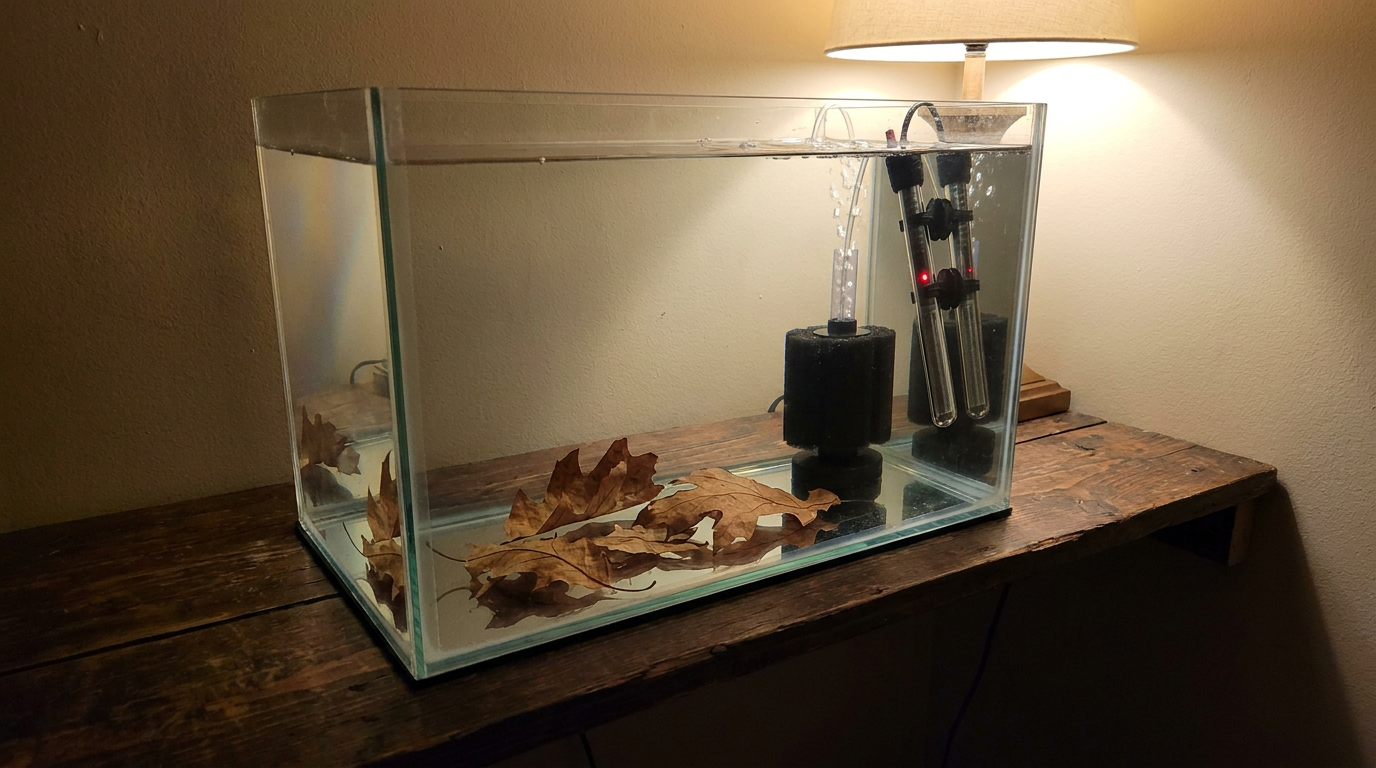
Quarantine new fish for four weeks and new plants for at least one week before either touches your display tank. A bare 5 to 10 gallon container with a heater, a cycled sponge filter, and a dim light covers everything you need.
Most tank wipeouts trace back to one skipped quarantine. Ich, velvet, columnaris, and internal parasites all arrive on stock that looked fine in the shop, because shop lighting and shop stress hide early symptoms well.
What a quarantine tank actually needs
- A bare bottom container, 5 to 10 gallons, glass or food-safe plastic
- An adjustable heater set to the species range
- A sponge filter, ideally one that has been sitting in your main tank for weeks
- A lid, because stressed fish jump
- Cover: a ceramic tube, a few dried leaves, or a fake plant
Skip substrate. A bare bottom shows you uneaten food and waste immediately, and it makes medication dosing predictable since there is nothing absorbing the dose.
Park the sponge filter in your display tank ahead of time so the bacteria are established when you need it. If you have never brought a small tank online, the sequence is the same one in how to cycle a betta tank.
The four week fish protocol
Week one is observation only. Feed lightly, keep the light low, and test ammonia daily since a small volume swings fast.
Weeks two and three are when symptoms usually surface. Watch for clamped fins, flashing against surfaces, white spots, stringy white waste, and rapid gill movement. Treat what you actually see rather than dosing on schedule.
Week four should be uneventful. If you have treated for anything, count four clean weeks from the end of treatment, not from arrival. Fin damage that appears during this window is usually water quality rather than infection, and fin rot treatment explains how to tell the difference.
Plants carry different risks
Plants do not bring fish disease, but they do bring snails, hydra, planaria, dragonfly larvae, and pesticide residue from nursery growers.
Three options, in order of aggression. Isolate the plants in a lit container of dechlorinated water for two to three weeks and pick off whatever hatches. Soak them in an alum solution for a day and rinse. Or run a bleach dip at one part bleach to nineteen parts water for 90 seconds, then rinse in heavily dechlorinated water.
Avoid copper based plant dips if the plants are headed for a shrimp tank. Copper stays in the leaves, and the reason that matters is spelled out in copper and shrimp.
Signs to act on immediately
- Salt-grain white spots on fins or body
- Gasping at the surface with clear water and a running filter
- Grey or gold dust film across the skin
- Sunken belly despite eating
Keep a dedicated net, siphon, and bucket for the quarantine box. Shared equipment moves pathogens between tanks faster than the fish ever would.
Marcus Chen
Aquarist & Founder, TanninLab
Marcus has been keeping planted tanks for 14 years. He tests every product recommendation in his own tanks and publishes the raw data.
Last updated: July 2026