Berried Shrimp: The Best Thing You Can Do Is Almost Nothing
Updated October 2026
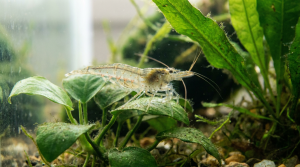
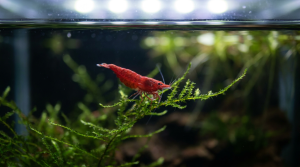
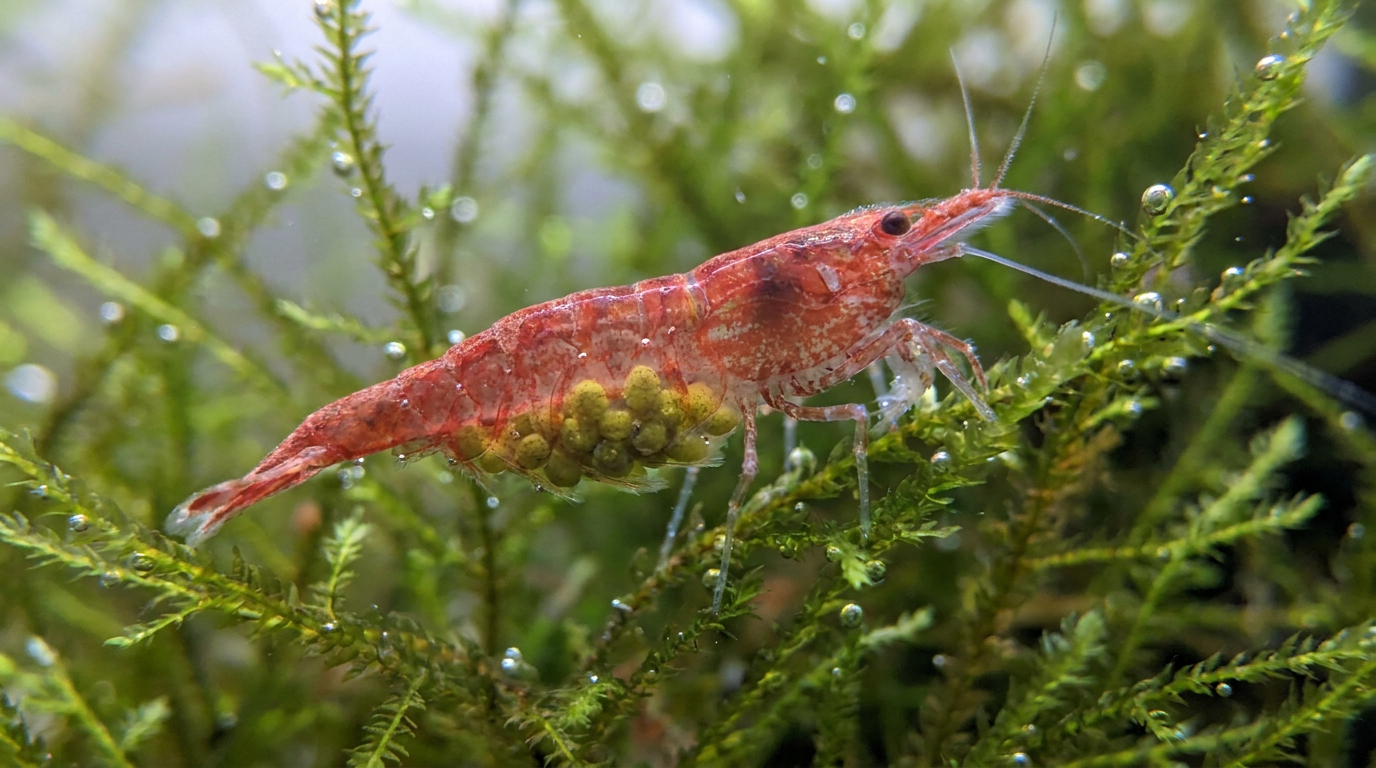
A berried shrimp is simply a female carrying fertilized eggs under her tail, and the best thing you can do is almost nothing. Keep her water stable, keep feeding normally, and let the eggs develop on their own.
The term comes from the clustered eggs, which look like a tiny bunch of berries tucked beneath her swimmerets.
Tannin Lab earns a commission on qualifying purchases through the Amazon links on this page, at no extra cost to you.


What to do when a shrimp gets berried
Leave her in the main tank. Moving a berried female stresses her, and stress is the top reason a shrimp drops her eggs before they hatch.
Hold your parameters steady. Avoid large water changes, and match temperature and hardness closely when you top off, since swings trigger dropped eggs.
Feed the colony as usual. A berried female eats a little more, so a quality diet supports both her and the developing eggs. Our guide to the best shrimp food covers what to prioritize.
How long until the eggs hatch
Expect roughly three to four weeks from berrying to hatch, depending on temperature. Warmer tanks in the mid-70s Fahrenheit tend toward the shorter end.
The eggs change over that time, often shifting color and developing tiny eyes you can spot with a light. When she releases them, the babies are miniature copies of the adults and start grazing immediately.
Hatch time tracks water temperature closely. This table shows group means from the one study we found that measured it.
| Temperature | Days to hatch | Notes |
|---|---|---|
| 75 F (24 C) | About 21 (mean 20.8) | Slowest of the three temperatures studied. |
| 82 F (28 C) | About 15 (mean 14.6) | Middle setting in the study. |
| 90 F (32 C) | About 12 (mean 12.4) | Top of the studied range, shown for reference. |
| Below 75 F | Not studied | Expect longer than 21 days; the study did not test cooler water. |
Source: Tropea, Stumpf and López Greco, PLoS ONE 2015, Table 1, on red cherry shrimp (Neocaridina heteropoda heteropoda). Read it on PubMed Central. Means vary by brood and we did not test this ourselves.
Formula: days to hatch is interpolated between the study means of 20.8 days at 75 F, 14.6 at 82 F and 12.4 at 90 F (Tropea et al., PLoS ONE 2015, red cherry shrimp). The window adds 3 days either side as our allowance for brood-to-brood variation, which is an assumption and not a figure from the study.
This is the same cycle that drives a productive colony, which we walk through in our full shrimp breeding guide.
Protecting the babies
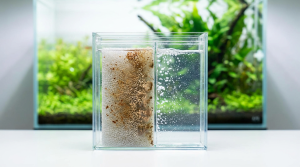
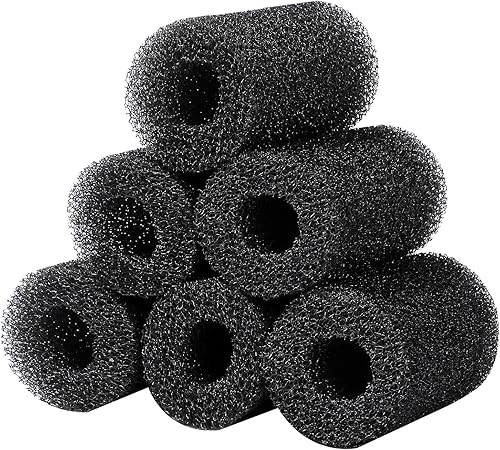
Baby shrimp are tiny and vulnerable. A sponge filter is essential so they are not sucked into an intake, and dense moss or leaf litter gives them cover while they graze biofilm.
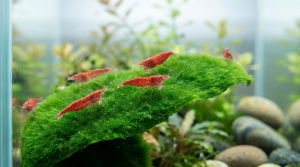
Most tank mates will pick off shrimplets, so a species-only tank gives the highest survival. If you keep neocaridina shrimp, they breed readily once the colony is settled and parameters hold steady.