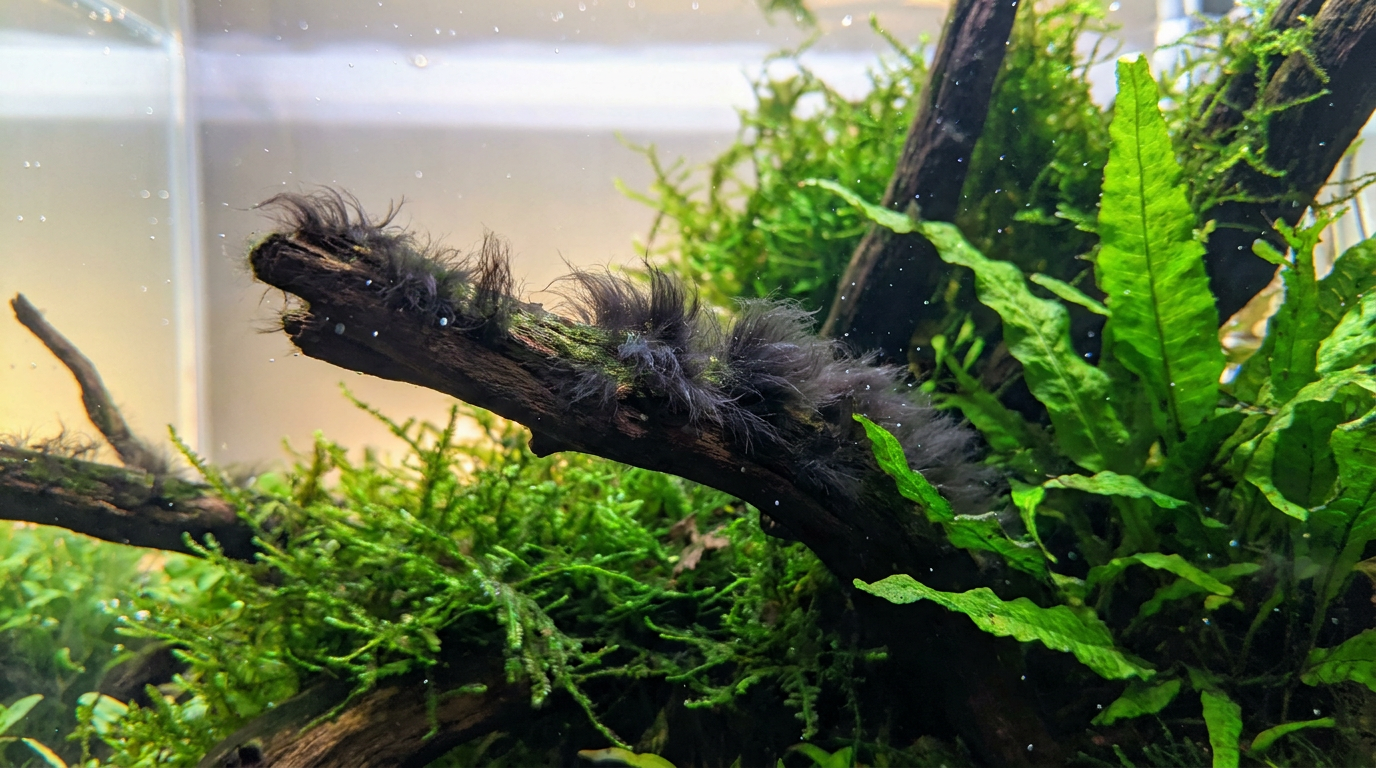
Black Beard Algae: Why It Won’t Go Away and What Finally Works
Updated July 2026
Black beard algae will not go away on its own because it feeds on unstable CO2 and thrives in high-flow, high-light spots. The fix that actually works is stabilizing CO2, spot-treating with liquid carbon or hydrogen peroxide, and letting cleanup crews finish the job.
Why black beard algae keeps coming back
BBA is a red algae that grips hard to slow-growing surfaces: driftwood, rock, filter intakes, and the leaves of plants like anubias that sit in strong current.
The root trigger is almost always fluctuating CO2, not excess nutrients. If your CO2 swings during the day or your flow is uneven, BBA gets the opening it needs.
Correctly identifying it matters, since treatment differs by type. Our guide on identifying aquarium algae helps you rule out lookalikes before you commit.
What actually clears it
Start with CO2. A stable, sufficient level through the photoperiod removes the trigger, which is why a reliable CO2 kit does more than any single spot treatment.
Spot-treat affected hardscape and hardy leaves with liquid carbon or a diluted 3 percent hydrogen peroxide, applied with the pump off so it sits on the algae. The tufts turn red or gray within a day or two, a sign they are dying.
Then bring in Amano shrimp and Siamese algae eaters. They graze the softened, dying algae and keep new growth from taking hold.
Keeping it gone
Trim and remove the worst-covered leaves rather than fighting to save them. New growth comes in clean once conditions are right.
Keep flow even so no dead spots or blast zones form, dose ferts consistently, and hold your CO2 steady. BBA rarely returns in a tank that stays stable week to week.
Marcus Chen
Aquarist & Founder, TanninLab
Marcus has been keeping planted tanks for 14 years. He tests every product recommendation in his own tanks and publishes the raw data.
Last updated: July 2026