Anubias Care Guide: Light, Attachment, and Common Mistakes
Updated July 2026
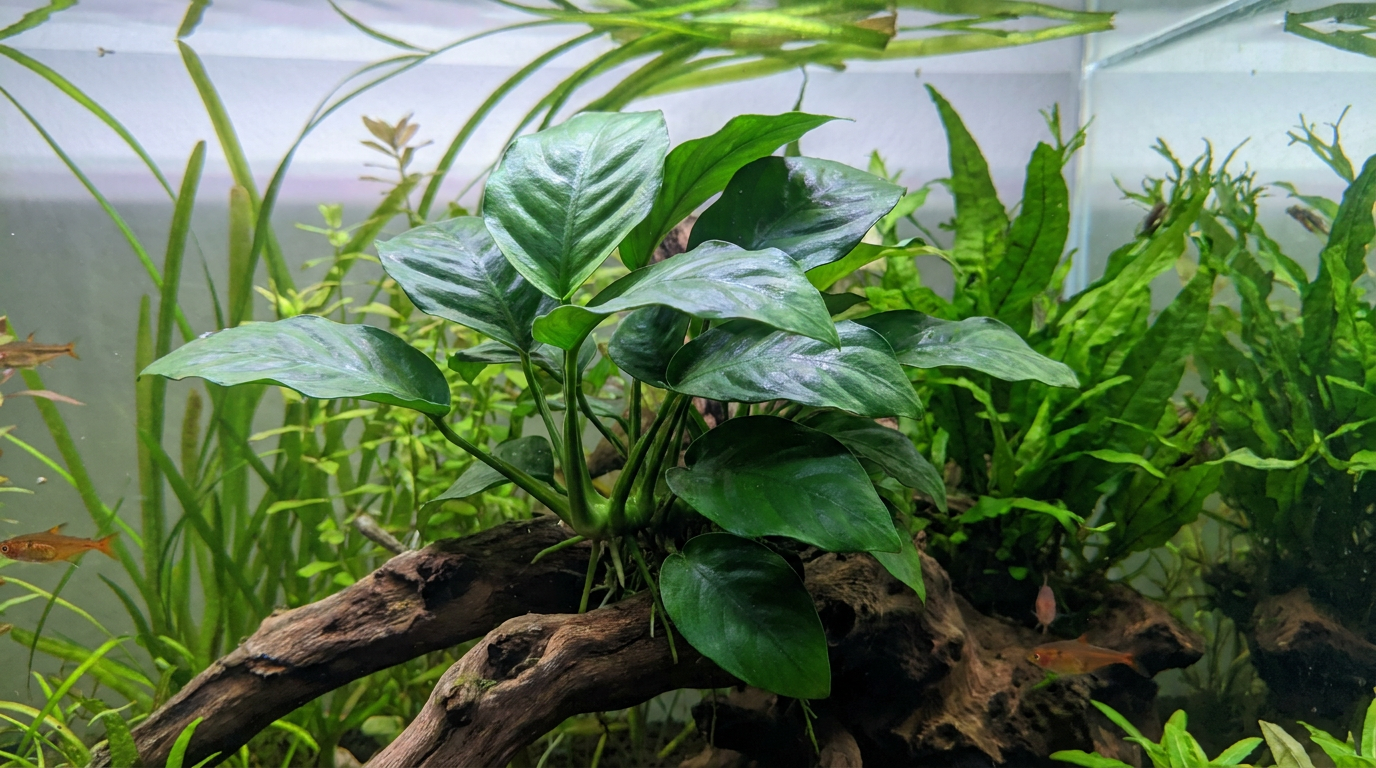
Anubias is one of the easiest aquarium plants you can keep. It thrives in low light, needs no CO2, and grows attached to rocks or driftwood rather than planted in substrate. The single rule that matters most is this: never bury the rhizome.
The rhizome is the thick horizontal stem that roots and leaves grow from. Bury it and it rots. Keep it exposed and Anubias will slowly spread for years.
Light and placement
Anubias prefers low to moderate light. Under bright light without CO2, its slow-growing leaves become magnets for algae. Shaded spots, or placement under taller plants, actually keep it cleaner.
Because it tolerates dim conditions, it pairs well with beginner setups. Our planted tank setup guide shows where low-light species like this fit best.
How to attach it
Tie or glue the rhizome to hardscape using cotton thread or a small dab of cyanoacrylate gel. Roots grip the surface within a few weeks, and you can remove the thread once they take hold.
This attach, do not bury approach is the same one used for java fern care, another rhizome plant that hates being planted in gravel.
Common mistakes
The biggest killers are burying the rhizome, blasting it with light, and expecting fast growth. Anubias adds only a leaf or two a month, so patience is part of the deal.
Melting leaves after you first add it are usually normal adjustment, not death. Trim damaged leaves at the base and wait. New growth is a good sign, and the plant works in nearly any layout, including a beginner aquascaping build.
Water and feeding
Anubias is undemanding on parameters and does fine in typical tropical ranges. A liquid fertilizer helps, since it feeds through leaves and roots, but heavy dosing is not required for healthy plants.
Marcus Chen
Aquarist & Founder, TanninLab
Marcus has been keeping planted tanks for 14 years. He tests every product recommendation in his own tanks and publishes the raw data.
Last updated: July 2026