What Size Tank Does a Betta Need?
Updated June 2026
The “betta in a vase” idea has caused more fish deaths than almost any other piece of pet-keeping folklore. Bettas are sold in tiny cups because that is how shops transport them, not because that is how they should live. Understanding what a betta actually needs from its water column changes how you shop, how you maintain the tank, and how long your fish survives.
This guide covers every tank size from a 2.5-gallon nano cube to a 20-gallon long, explains why volume is a biological necessity rather than a preference, and gives you the gear implications for each size class so you can make the right call before you buy anything.
Why Tank Size Is a Biological Argument, Not an Aesthetic One
Small volumes of water are chemically unstable. Ammonia from fish waste, uneaten food, and decaying plant matter accumulates faster than your filter’s beneficial bacteria can process it in anything under five gallons. In a one-gallon bowl, a single missed water change can push ammonia to lethal levels within 24 hours.
Temperature is the other half of the equation. Bettas need water between 76°F and 82°F. A heater sized for a 2.5-gallon tank creates uneven heating zones, and ambient room temperature shifts cause dramatic swings in tiny volumes. Cold water suppresses immune function; bettas kept chronically cool are far more vulnerable to velvet, fin rot, and ich.
Larger volumes buffer both problems. A 10-gallon tank with a good cycled filter and a quality heater holds stable parameters between water changes in a way a small tank physically cannot.
The Cup and Vase Myth, Explained
Wild betta splendens live in shallow rice paddies, irrigation ditches, and floodplain pools across Thailand and surrounding regions. During dry seasons, water levels drop dramatically and bettas may be confined to very small puddles, but this is a survival state, not a thriving one. The labyrinth organ, which lets bettas breathe atmospheric air, evolved specifically to survive those conditions, not to make life in a fishbowl comfortable.
The pet industry markets small containers on the back of this misunderstanding. A betta can survive in a cup for a few days during transit. Survival and health are different outcomes. Bettas kept in bowls under three gallons show compressed dorsal fins, color fading, and reduced lifespans compared to the four-to-seven-year range a healthy specimen can reach in a properly sized tank.
Minimum vs. Recommended: Where the Lines Actually Fall
The aquarium hobby consensus, backed by aquatic biology research from institutions studying ornamental fish welfare, places the functional minimum at five gallons. Below five gallons, maintaining nitrogen cycle stability requires such frequent water changes that most hobbyists cannot keep up, resulting in chronic poor water quality.
Five gallons is where the minimum line sits. Ten gallons is where bettas actually thrive. If you have the space, a 10-gallon setup costs only marginally more to establish and gives you a dramatically wider margin for error on feeding, water changes, and plant maintenance.
Water Volume and Ammonia: The Core Relationship
A single betta in a 2.5-gallon tank with no plants can reach 0.5 ppm ammonia within 48 hours of a water change. In a 10-gallon planted tank with an established filter, the same fish may not hit detectable ammonia levels for seven to ten days. That gap explains most of the difference in betta longevity between small and large tanks. Dilution is not the only factor, but it buys the biological filter the time it needs to do its job.
Tank Size Comparison: Suitability, Stability, and Maintenance Load
| Tank Size | Suitability | Water Stability | Maintenance Frequency |
|---|---|---|---|
| 2.5 gallon | Not recommended. Below the functional minimum for safe long-term keeping. | Poor. Parameters shift rapidly; ammonia spikes are common without daily monitoring. | 25-30% water change every 2-3 days minimum to prevent toxicity. |
| 5 gallon | Acceptable minimum. Works well with a cycled filter, heater, and light planting. | Moderate. A cycled tank holds reasonable parameters; still sensitive to overfeeding. | Weekly 25-30% water change. Consistent but manageable. |
| 10 gallon | Recommended. Provides genuine swim space, stable parameters, and decoration room. | Good. Established beneficial bacteria colony handles normal bioload with ease. | Weekly 20-25% water change. Forgiving of minor schedule slips. |
| 20 gallon+ | Excellent for experienced keepers or community setups with compatible tankmates. | Very good. Large water volume resists temperature and chemistry fluctuations. | Bi-weekly 20-25% water change often sufficient in well-planted tanks. |
Swim Space and Enrichment: The Behavioral Case
Bettas are intelligent fish by the standards of ornamental aquarium species. They investigate their environment, recognize their owners, and exhibit distinct personality traits. A betta in a five-gallon tank with plants, a hide, and a gentle surface flow will spend its day actively exploring. The same fish in a one-gallon bare bowl will eventually show stress behaviors: glass surfing, clamped fins, and surface hovering without purpose.
Horizontal swim length matters more than water depth for bettas. A longer, shallower tank like a five-gallon standard or a ten-gallon long gives more usable territory than a taller column of the same volume. When you are setting up a betta tank, prioritizing footprint over height produces a more behaviorally enriched fish.
Plants are a critical piece of this. Dense planting with java fern, anubias, or floating plants like frogbit creates natural territories, reduces line-of-sight stress, and in larger tanks makes the difference between a betta that hides and one that actively patrols its space.
Heater and Filter Implications by Tank Size
Equipment selection changes significantly based on the tank volume you choose. In a five-gallon tank, you need a betta-appropriate heater rated for five to ten gallons specifically, not a lower-wattage unit designed for smaller bowls that cannot maintain temperature against room air conditioning. Most 25W preset heaters handle five gallons reliably; anything smaller lacks the wattage to compensate for environmental temperature variation.
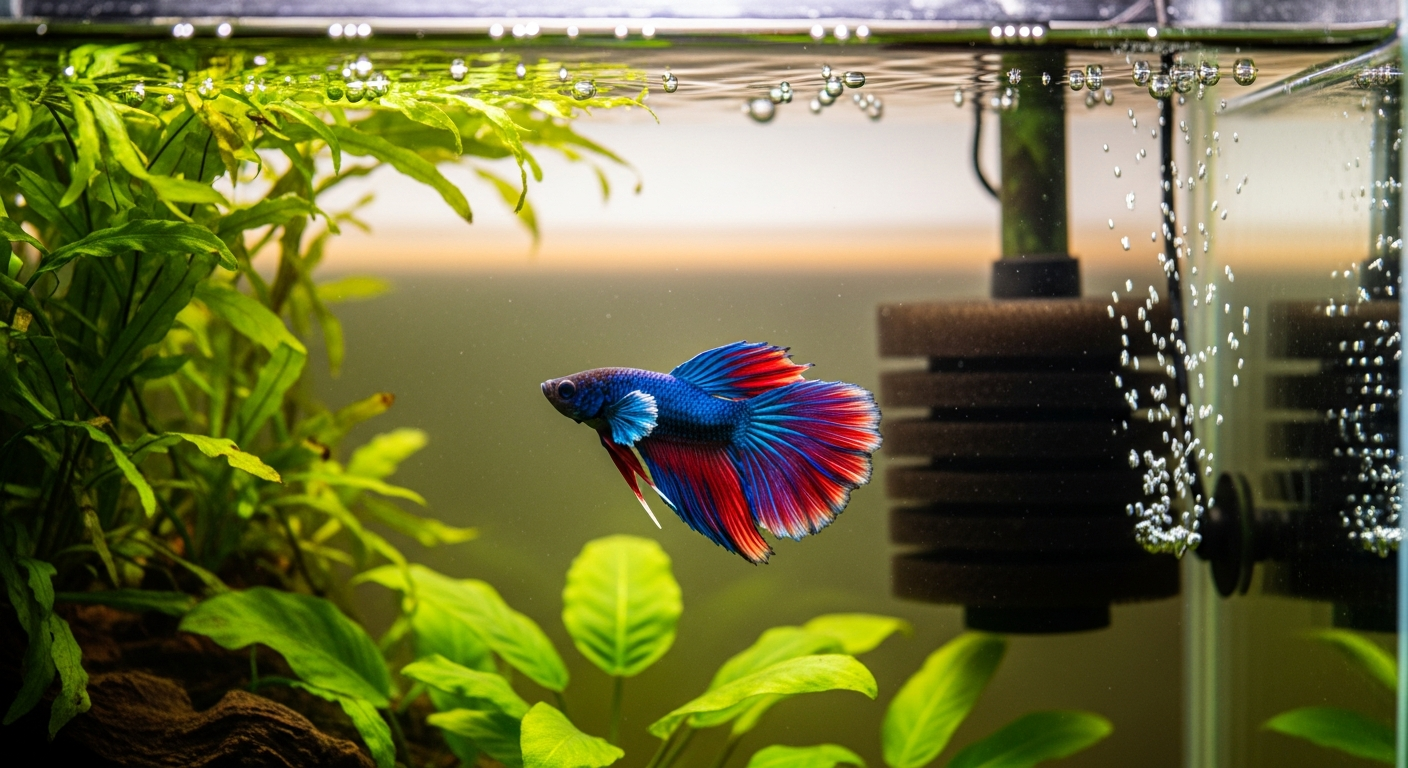
Filtration in small tanks requires particular care. Bettas have flowing fins and cannot fight strong current. A betta-safe filter for a five-gallon tank should run at low flow rate, typically under five times the tank volume per hour, and should have an adjustable output or a sponge prefilter to diffuse the return. Sponge filters powered by a small air pump are a popular choice for tanks under ten gallons precisely because they produce gentle, oxygenating flow without creating a current that exhausts the fish.
In a 10-gallon or larger tank, you have more equipment options. A hang-on-back filter with an adjustable flow, baffled to reduce surface turbulence, gives you biological filtration capacity that keeps pace with the nitrogen cycle even if you miss a week of maintenance.
Five Gallon vs. Ten Gallon: The Real Tradeoffs
The five-gallon versus ten-gallon decision comes down to your space, budget, and tolerance for maintenance frequency. A five-gallon setup is the right answer when counter space is genuinely limited, and properly managed it produces a healthy betta. The ten-gallon is the right answer for almost every other situation.
Cost difference between the two is smaller than most new hobbyists expect. A basic ten-gallon tank kit typically runs $10-25 more than its five-gallon equivalent. The filter, heater, and lighting you would buy for a five-gallon tank are often the same components you would choose for a ten-gallon setup at the same price point.
If you are reviewing options before buying, the best betta tanks section covers specific five-gallon and ten-gallon setups that are filtered, heated, and ready for a planted betta environment without requiring significant equipment upgrades out of the box.
Cycling Before You Add Your Betta
Tank size determines how long and stable the nitrogen cycle runs, but it does not replace the need to cycle. A cycled tank has an established colony of Nitrosomonas and Nitrospira bacteria that convert ammonia to nitrite and nitrite to nitrate continuously. An uncycled tank of any size will harm your fish.
Cycling a five-gallon tank takes three to six weeks using the fishless method: adding an ammonia source daily and testing until you see ammonia and nitrite drop to zero within 24 hours of dosing. A ten-gallon tank cycles at a similar rate but with a larger, more resilient bacterial colony once established. Bottled “instant cycle” additives can supplement the process but should not be treated as a substitute for an actual cycling period; test before adding your fish regardless of what the label claims.
Frequently Asked Questions
What is the minimum tank size for a betta fish?
The minimum recommended tank size for a single betta is 5 gallons. Smaller tanks produce ammonia spikes too quickly for the fish to remain healthy, and they cannot accommodate the heater and filter a betta needs for stable temperature and water quality.
Can a betta live in a 1-gallon bowl?
A betta can survive short-term in a 1-gallon bowl, but it will not thrive. Water quality deteriorates within 24-48 hours without a filter, temperature control is impossible without a heater sized for that volume, and the fish will show behavioral stress signs including fin clamping and glass surfing within days.
How big should a betta tank be for the best results?
A 10-gallon tank gives most bettas the best combination of swim space, water parameter stability, and room for live plants and enrichment. It tolerates minor lapses in maintenance far better than a 5-gallon setup and produces a noticeably more active, colorful fish.
Is a 5-gallon planted tank good enough for a betta?
Yes, a well-maintained 5-gallon planted tank with a cycled filter and proper heater is genuinely adequate for a healthy betta. Weekly water changes are non-negotiable at that volume, and overfeeding must be avoided since the smaller water mass magnifies waste buildup.
Is a long or tall tank better for bettas?
Long tanks are better. Bettas swim horizontally and explore laterally rather than diving through water column depth. A 10-gallon long (20″ x 10″ footprint) gives more usable territory than a 10-gallon tall of identical volume. Prioritize footprint when comparing tanks of the same capacity.
Marcus Chen
Aquarist & Founder, TanninLab
Marcus has been keeping planted tanks for 14 years. He tests every product recommendation in his own tanks and publishes the raw data.
Last updated: June 2026