Aquarium Gravel Vacuum: How to Clean Substrate Without Uprooting Plants
Updated October 2026
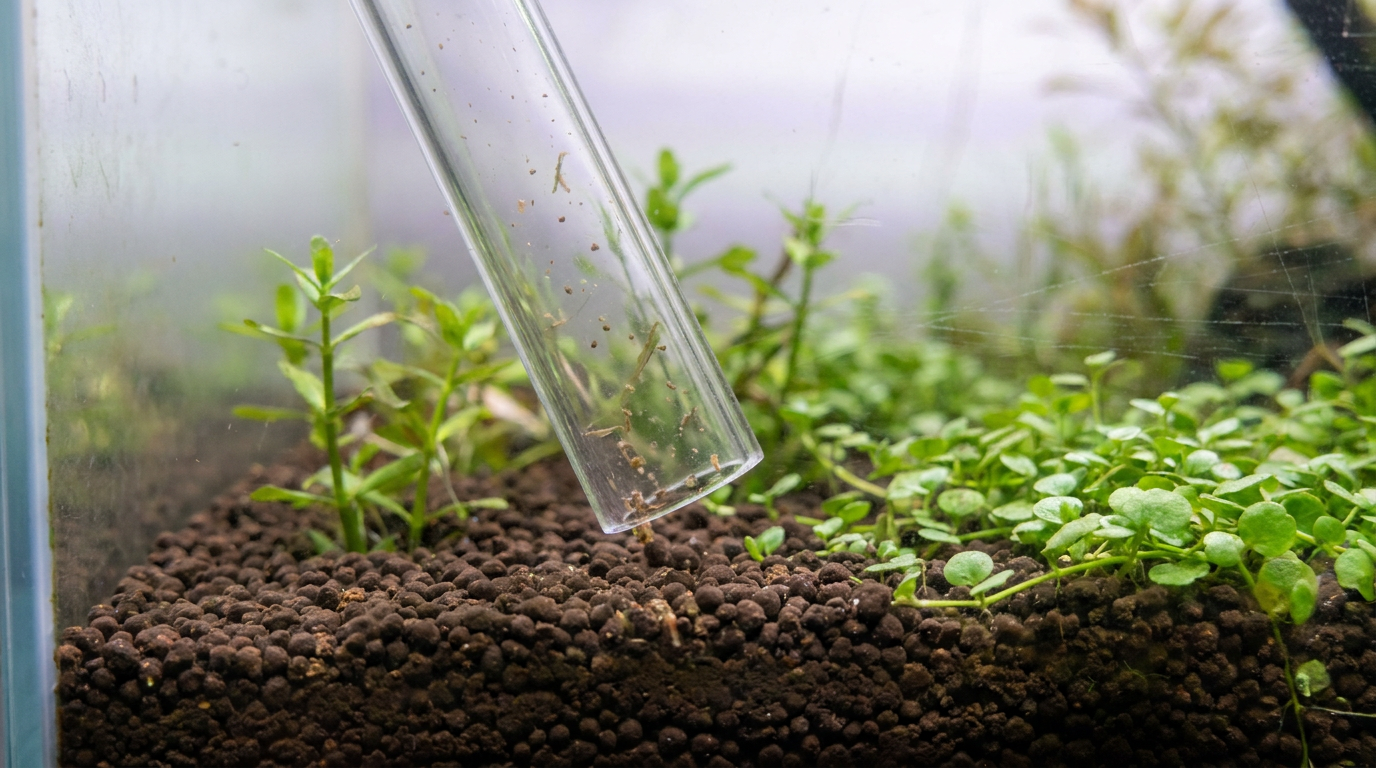
An aquarium gravel vacuum in a planted tank should hover just above the substrate, not dig into it. Skim the open areas, pinch the hose to slow the pull near roots, and leave carpets and rooted beds alone.
The deep plunge that cleans a bare gravel tank is exactly what damages a planted one. Here is how to adjust the routine.
Why planted substrate needs a different technique
In a fish-only tank, waste in the gravel is just waste. In a planted tank, some of that mulm feeds the roots, and the layer underneath is often aquasoil or gravel dosed with fertilizer.
Push a siphon tube deep into that bed and three things go wrong. Soft aquasoil granules crumble into the hose, root tabs get sucked out or broken open, and the roots of stem plants and carpets lose their grip.
If you are still choosing a base layer, our planted tank substrate comparison covers how soil, sand and gravel each react to a vacuum.
Video: Aquarium Co-Op
How deep to go, substrate by substrate
- Aquasoil: hover about half an inch above the surface. Lift mulm off the top, never press the tube in.
- Sand: hover higher, since fine grains lift into the tube at low flow. Stir the surface lightly with the tube tip.
- Plain gravel: you can push in an inch or two in open areas with no roots, but stay clear of root tabs.
- Carpets: skip them. Mulm trapped under a carpet mostly stays there, and siphoning it pulls runners loose.
Flow control matters more than depth. Pinch the hose with your fingers or use the valve on a tap-connected system to cut the pull whenever you work near a plant base.
Choosing a vacuum for a planted tank
Match the tube to the tank. A long, wide tube in a small tank pulls too hard and moves too much water before you finish. The figures below come from the sources named in each row.
| Model | Tube | Hose | Listed tank size | Source |
|---|---|---|---|---|
| Aqueon Siphon Vacuum, Mini | 5 in | 6 ft | 1 to 5 gallons | Aqueon product page |
| Aqueon Siphon Vacuum, Large | 16 in, 2 in diameter | 6 ft | 40 gallons and up | HardyPaw retailer listing |
| Python No Spill Clean and Fill, 25 ft | 10 in, 2 in diameter | 25 ft | 10 gallons and up | PetSmart listing, street price $59.99 |
A tap-connected system like the Python has one real advantage in a planted tank: its switch lets you throttle the flow without kinking the hose. The same system refills the tank, so dose dechlorinator for the full tank volume first.
A cleaning routine that spares the roots
Work the front glass and open sand paths first, since that is where mulm collects and shows. Then move to gaps between hardscape pieces.
Leave the rear planted beds for every few water changes, and even then just skim the surface. Replant any stem that lifts free straight away, before it floats into the filter intake.
Keep each session inside your usual water change volume. For a new tank, our planted tank setup guide explains why you should hold off on vacuuming fresh aquasoil at all during the first weeks.
Questions readers ask
Should you gravel vacuum a planted tank?
Yes, but lightly. Skim open areas and the front of the tank where mulm collects, and hover above the substrate instead of pushing the tube in. Skip carpets and dense rooted beds, since some of that mulm feeds the plants.
Can you use a gravel vacuum on aquasoil?
Only as a surface skim. Aquasoil granules are soft and break apart if you push a siphon tube into them, which clouds the water and wears down the substrate. Hold the tube about half an inch above the surface.
How do you stop a gravel vacuum sucking up sand?
Reduce the flow and raise the tube. Pinch the hose or close the valve partway, then hold the tube tip just above the sand so only the lighter debris lifts into it.