Best CO2 Diffusers for Planted Tanks
Updated October 2026
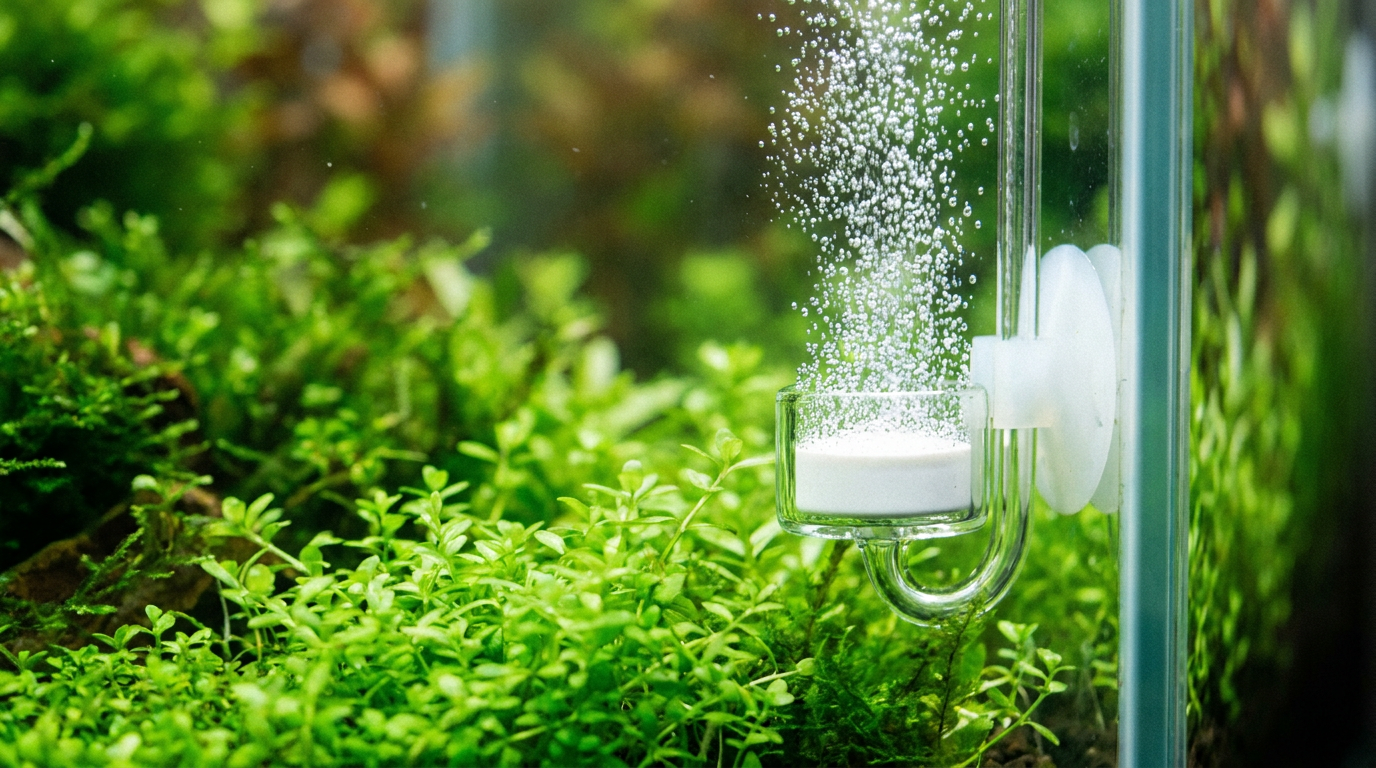
The best CO2 diffuser for most planted tanks is a ceramic disc atomizer sitting low in the tank, on the opposite side from your filter outflow. Bubbles that fine stay in the water column long enough for your plants to take them up.
Tannin Lab earns a commission on qualifying purchases through the Amazon links on this page, at no extra cost to you. Picks are chosen on performance and suitability, not on commission.
Ceramic disc diffusers
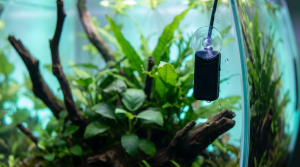
These are the glass or acrylic units you see clipped inside most scapes. Pressurised gas passes through a fused ceramic plate and leaves as a fine mist that drifts with the current.
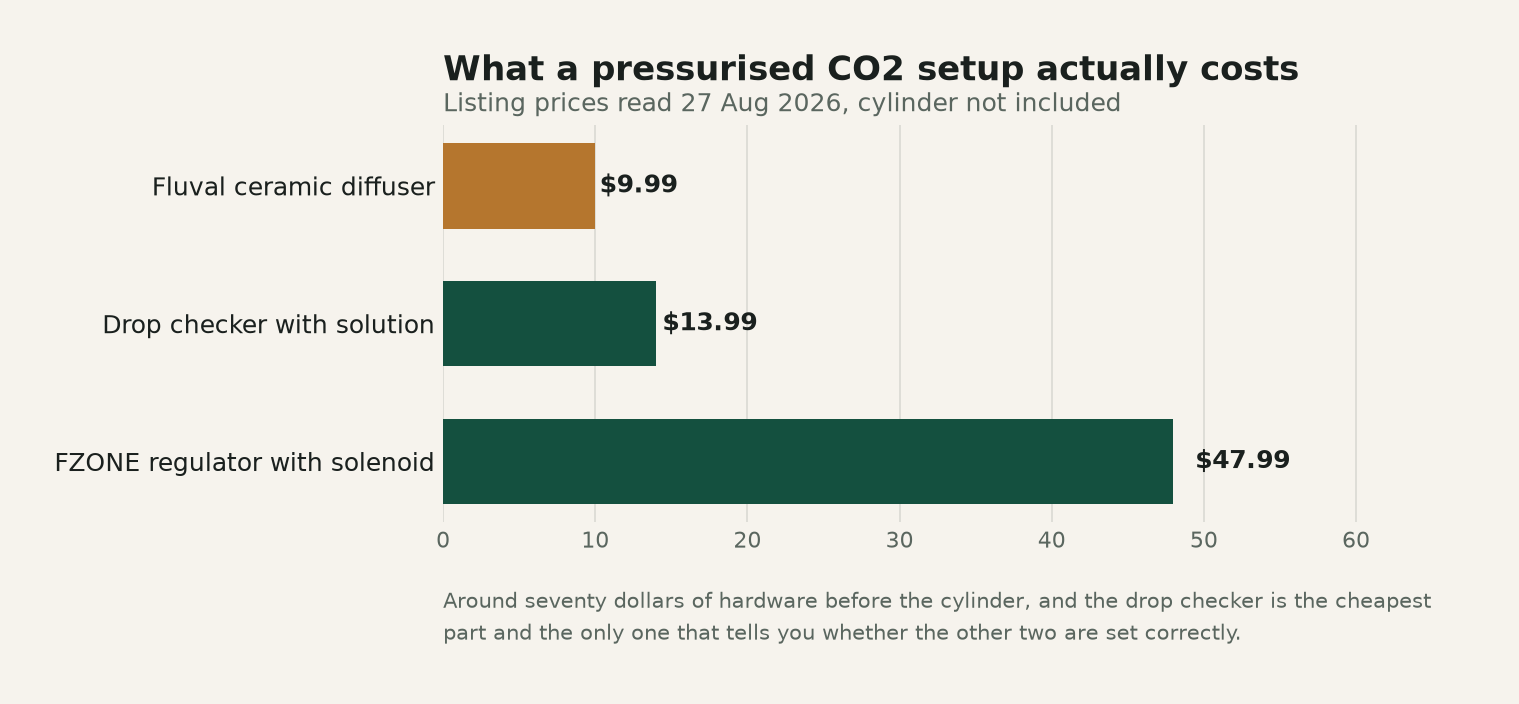
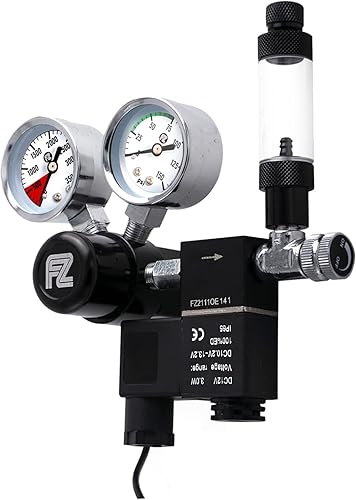
They need genuine working pressure to fire evenly, so they belong on a regulator rather than a DIY yeast bottle. If you are still assembling the system, the best CO2 kits for beginners bundle a regulator, solenoid and diffuser that already match.
The tradeoff is upkeep. Ceramic plates clog with mineral scale and biofilm, and a bleach soak every few weeks keeps the bubble pattern even.

Inline atomizers
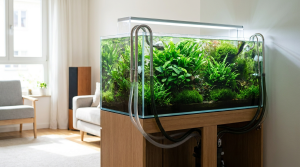
An inline atomizer splices into the outflow hose of a canister filter. Your filter current shreds the mist and carries it across the whole tank, which usually beats an in-tank disc running the same bubble rate.
You also get your glass back. Nothing hangs on the pane, which matters in a rimless nano where every object is visible.
Two catches: you need a canister, and the added restriction costs you some flow.
Prices move, and stock does too. Each of these opens the product page on Amazon in a new tab.
Bubble counters are not calibrated to each other, so a rate that works on one counter can be wrong on the next. Treat this as the setting you begin from and let the drop checker decide. Yellow means you are gassing the fish. Move the rate once a day at most, because the indicator lags the water by hours.
Reactors for larger tanks
Past roughly 40 gallons, a reactor wins. It traps gas in a chamber and spins it against a media bed until it dissolves fully, so no bubbles reach the display at all.
Reactors cost more and eat cabinet space. They earn it on high-light tanks where mist alone cannot keep pace with a heavy EI dosing schedule.
Placement changes your drop checker more than price does
Mount an in-tank diffuser near the substrate, opposite the outflow. The longer the path to the surface, the more gas dissolves on the way up.
Start the solenoid one to two hours before lights on and cut it an hour before lights off. Plants cannot use CO2 in the dark, so overnight injection only stresses your livestock.
Judge the result on the drop checker, not the bubble counter. Bubbles per second means nothing once you compare two different tank volumes.

When you can skip injection entirely
Low-light tanks do not need any of this. Anubias, java fern and the carpet plants that grow without CO2 do fine on surface exchange alone.
Adding pressurised gas to a low-light setup usually grows algae faster than it grows plants.